 Français (France)
 English (UK)
 English (US)
 Deutsch (Deutschland)

Contents
Do you need chains to drive over a mountain pass in winter? Sometimes on your tires, often only in your trunk, and the answer changes at the state line. Each state writes its own rule: California in three levels of chain control, Colorado by tire marking and tread depth, Washington and Oregon by signs that also look at your vehicle’s weight and drivetrain. We read the statutes, regulations, and transportation department pages behind those rules as they stood on November 10, 2026. For each state: what the text says, what it means for you, and where to read the roads the day you leave.
The four states at a glance
| State | When it applies | Who it covers | What counts | Fine | Where to check |
|---|---|---|---|---|---|
| California | When Caltrans posts chain controls, from R-1 to R-3 [1] | All vehicles; exemptions for light vehicles on snow tires (R-1) and 4WD on snow-tread tires (R-2) | Chains or traction devices; M+S snow-tread tires for the exemptions | The Highway Patrol can cite and fine; Caltrans gives no amount | QuickMap, 800-427-7623 |
| Colorado | When CDOT activates it; by law on I-70 from Dotsero to Morrison, September 1 to May 31, on icy or snow-packed roads [2] | Every motorist not driving a commercial vehicle [3] | Tires with 3/16 inch of tread and an M+S, mountain-snowflake or all-weather rating, or chains or an approved device [4] | $50 plus a $17 surcharge, per CDOT’s 2025 release [3] | COtrip.org, 511 |
| Washington | When WSDOT posts traction or chain requirements [5] | All vehicles; chains for anything over 10,000 lb GVWR as soon as traction tires are required [14] | Approved traction tires (4/32 inch, M+S or mountain-snowflake), chains, approved devices [6] | $500, statutory assessments included [5] | WSDOT mountain pass reports |
| Oregon | When ODOT posts snow zone signs, on any highway in the state [7] | All vehicles; chains for anything towing or rated over 10,000 lb GVW | Chains, or traction tires (studded or mountain-snowflake) where signs allow them | $800 for not using them; a class C violation for not carrying them [8] | TripCheck.com, 511 |
Rules as read on November 10, 2026. The posted sign and the instructions of state staff at a checkpoint always come first. Fines are the amounts given in the statute or by the agency; Colorado’s figures differ from one CDOT page to another (see below).
California: three levels of chain control
What the text says, first. When Caltrans sets chain controls, signs go up along the highway, and you must stop and put chains on when they say so; the California Highway Patrol can cite and fine you if you don’t. Caltrans uses three levels. At R-1, chains are required on all vehicles except passenger vehicles and light-duty trucks under 6,000 pounds gross weight with snow tires on at least two drive wheels, and those must still carry chains. At R-2, chains or traction devices are required on all vehicles except four-wheel and all-wheel drive vehicles with snow-tread tires on all four wheels, which must carry traction devices. At R-3, everyone chains up, no exceptions, and a highway is often closed before it gets there [1].
Towing changes R-1: all vehicles towing trailers must have chains on one drive axle, and trailers with brakes need them on at least one axle. With chains on, the speed limit is 25 or 30 mph. You’ll usually have about a mile between the “Chains Required” signs and the checkpoint, and Caltrans asks you to wait until you can pull completely off the roadway to the right before fitting them [1]. The Highway Patrol’s own rules add three details. Snow-tread tires worn below 6/32 inch, without traction devices, are a violation in a posted control area. Caltrans treats all-wheel drive as four-wheel drive. And an officer can turn away a vehicle, even one with devices, that seems unlikely to make it through [9].
What counts? Caltrans defines a snow-tread tire, after section 558 of the Vehicle Code, by its relatively deep and aggressive tread, and says you can spot one by MS, M/S, M+S, or MUD AND SNOW on the sidewall. A tire traction device, under section 605, is any device designed to improve traction, braking, and cornering on snow or ice, built not to come off, and marked with its maker’s name and country [1]. California keeps no list of approved products: the Highway Patrol says it doesn’t test or certify these devices, and their makers are responsible for their design and effectiveness [9].
Colorado: the Traction Law, then the Chain Law
Colorado works in two steps. Under the Traction Law, which CDOT has long called Code 15, your tires have to meet a standard; under the Passenger Vehicle Chain Law, Code 16, every vehicle needs chains or an alternative traction device [10]. The chain law is the last safety measure before the highway closes, and CDOT can put either one in effect on any state highway [11]. Both rest on section 42-4-106 of the Colorado Revised Statutes, which lets the Department of Transportation restrict a state highway when it’s icy or snow-packed [4].
The tire standard has just changed. Since August 12, 2026, the statute accepts tire chains or an alternate traction device, or tires with at least 3/16 inch (4.8 mm) of tread that carry a mountain-snowflake, M&S, M+S, or M/S marking, or that the manufacturer rates as all-weather. The words “four-wheel drive” and “all-wheel drive” are gone from the list [4]. Under the 2019 version, a 4WD or AWD vehicle could qualify with any tires 3/16 inch deep that were “adequate for the conditions” [2]. A 2025 law, in force since August 6, 2025, had already required those tires to carry a winter or all-weather marking [22]; the 2026 law extends the 3/16-inch depth to every vehicle and drops the drivetrain from the list. Drivetrain no longer buys an exemption: tires do. Colorado’s lawmakers have rewritten this sentence twice in two years, which keeps people like me in pencils.
On one stretch, no sign is needed. On Interstate 70 between milepost 133 (Dotsero) and milepost 259 (Morrison), the restriction is in effect from September 1 through May 31 of each year, whenever the road is icy or snow-packed. “Equipped” means using or carrying the right equipment, and “tire chains” means metal chains with at least nine cross chains [2]. CDOT approves alternative traction devices; its list includes AutoSock, EasySox, ISSE Tire Sock, and Alpha Trax [11]. Its 2025 release asks for chains or a device on two or more drive tires when your tires don’t meet the standard [3].
Washington: from traction advisory to chains on all vehicles
In Washington, the law lists the signs. Under RCW 47.36.250, when WSDOT finds that road conditions call for particular tires or chains, it can post a traction advisory that bars oversize vehicles, the same advisory plus chains required on vehicles over 10,000 pounds, or chains required on all vehicles except all-wheel drive. Failing to obey a requirement is a traffic infraction with a $500 penalty, all statutory assessments included [5]. WSDOT’s winter driving guide, published in 2019, spells it out: under “Traction Tires Required,” passenger vehicles need approved traction tires and anything rated over 10,000 pounds, large pickups, SUVs, and RVs included, needs chains; “Chains Required on All Vehicles,” in extreme weather, applies even to 4WD and AWD [14].
What counts as a traction tire is in the State Patrol’s rules: at least 4/32 inch (3.2 mm) of tread, an aggressive pattern, and an M and S marking or the mountain/snowflake symbol on a sidewall. For vehicles under 10,000 pounds, an all-wheel drive vehicle is exempt from “chains required” signs when all wheels are in gear, it has approved traction devices, and it carries chains for one set of drive tires [6]. When chains are required, a 4WD or AWD vehicle over 10,000 pounds GVWR must install them [15]. From November 1 to April 1, vehicles over 10,000 pounds must also carry chains on routes such as I-90 between North Bend and Ellensburg, over Snoqualmie Pass, and SR-2 between Index and Dryden, over Stevens Pass [6].
Studded tires are legal from November 1 through March 31, for every vehicle in the state, out-of-state ones included, but never on vehicles over 10,000 pounds [15], and they never replace chains: where chains are required, they go on over the studs. WSDOT puts the risk of not chaining up at a $500 fine, and adds that a vehicle manufacturer’s advice against chains doesn’t excuse you from state law; the State Patrol lists approved alternatives [17], and WSDOT’s guide names AutoSock among those for passenger vehicles [14]. The stakes show on the passes. On I-90 over Snoqualmie Pass, WSDOT counted 114 closures linked to traction or chain infractions between the winters of 2017 and 2024, 458 hours in all; non-compliant trucks accounted for 63% of the closures since 2017, according to the study [18].
Oregon: carry first, chain up next
Oregon’s chain law applies on every highway in the state, and its signs read like a ladder. “Carry chains or traction tires” means they must be in or on your vehicle, in the right size and number. Then come “chains required” signs for vehicles towing or rated over 10,000 pounds gross vehicle weight, and the version that covers everyone else: chains required, traction tires allowed on vehicles under 10,000 GVW that aren’t towing. In very bad conditions, ODOT can impose a conditional closure. On I-5 over Siskiyou Pass, a typical one requires chains on all vehicles except four-wheel drives that aren’t towing, and traction tires aren’t enough [7].
Watch the definitions. In Oregon, “traction tires” are studded tires, retractable studded tires, or tires that meet the industry’s standard for severe snow, marked with a mountain and snowflake; studs are legal from November 1 through March 31. “Chains” include any device attached to the wheel, the vehicle, or the outside of the tire that’s designed for traction on ice and snow [7]. M+S only appears in the four-wheel-drive exemption: a 4WD or AWD passenger vehicle is exempt from using chains when it weighs 6,500 pounds or less unloaded, powers both axles, carries chains, has mud-and-snow, all-weather radial, or traction tires on all wheels, isn’t towing, and isn’t losing traction [7]. Cars and light trucks chain one tire on each side of the primary drive axle, and one on each side of one axle of a trailer with brakes [19].
M+S or the mountain-snowflake: which marking counts
Two markings show up on winter sidewalls. One is M+S, also written M/S or spelled out as “mud and snow.” The other is the A symbol of a three-peaked mountain around a snowflake, molded on the sidewall of tires that meet the tire industry’s standard for use in severe snow conditions.: ODOT describes it as the mark of tires that meet Rubber Manufacturers Association standards for severe snow [8]. The four states don’t weigh them the same way. Colorado and Washington accept either, with a minimum tread depth [4, 6]. Oregon’s traction tire definition names only the mountain-snowflake, besides studs [7]. Caltrans’s page names only the M+S family [1].
Tread depth is the other half of the rule. Colorado asks for 3/16 inch [4]. In California, snow-tread tires worn below 6/32 inch, the same depth, no longer spare you chains in a posted control area [9]. Washington’s minimum is 4/32 inch, or 1/8 inch [6]. Colorado also accepts tires that their maker rates all-weather [4], and in Washington, any tire becomes a traction tire once chains are on it [17].
Vans, RVs, and trailers: where weight changes the rule
Weight thresholds differ, and they don’t all measure the same weight. In California, the R-1 snow-tire exemption stops at 6,000 pounds gross weight, and a trailer means chains on a drive axle [1]. In Washington and Oregon, the line is 10,000 pounds gross vehicle weight: above it, chains go on when the signs call for them, and in Washington even a 4WD or AWD vehicle has to chain up [6, 15, 7]. In Oregon, under any “chains required” sign, towing means chains whatever your weight, and the 4WD exemption uses unloaded weight, 6,500 pounds or less [7]. Colorado’s Traction Law covers every motorist who isn’t driving a commercial motor vehicle [3]. Your van’s weight rating is on its federal labels: our guide to reading GVWR and payload shows where.

Rental cars and camper vans: who brings the chains
Rental contracts are the part people forget. Enterprise says it doesn’t offer chains or traction devices and that they can’t be placed on its vehicles unless state law requires it; National uses the same wording and adds that a four-wheel-drive model can’t be guaranteed. Both note that in Colorado, chains and devices are allowed during Code 15 and 16 advisories [20, 21]. Colorado also makes information a duty: from September 1 to May 31, a rental company must tell you, when you rent, what Colorado’s traction and chain law requires, the penalty, and whether the vehicle complies [22]. In Mount Rainier National Park, a rental car carries chains like any other [16]. For a camper van, read the terms before you book; our guide to camper van rental terms shows where the exclusions sit.
Before you go: where to read the roads
- California: Caltrans’s QuickMap, which shows chain controls in real time, and the Caltrans Highway Information Network at 800-427-7623, which also covers western Nevada around Lake Tahoe and Reno [1].
- Colorado: COtrip.org, the COtrip Planner app, or 511 [3].
- Washington: WSDOT’s mountain pass reports, with current traction and chain requirements, and the WSDOT app [17].
- Oregon: TripCheck.com, 511, or 800-977-6368; from outside Oregon, 503-588-2941 [8].
Other states have their own rules; TripCheck itself links to the road reports of California, Idaho, Nevada, and Washington [7]. Whatever the website says, Caltrans is clear: the signs and the instructions of Caltrans or CHP staff at a checkpoint come first, even when they differ from a broadcast report [1].
A chain law reads like a weather report: it’s only true for the day it’s posted. So check before you go, twice: the state’s road report the morning you leave, then the signs on the way up, which outrank any web page, this one included. To fit this into the rest of your planning, our step-by-step guides cover the drive to a winter trailhead and the road on a camper van trip, and our guide to camper vans in winter covers the night that follows.
Worth watching
The Oregon Department of Transportation shows how to put on a set of tire chains and how to drive with them, and reminds you to practice before winter travel and keep the chains in your vehicle.
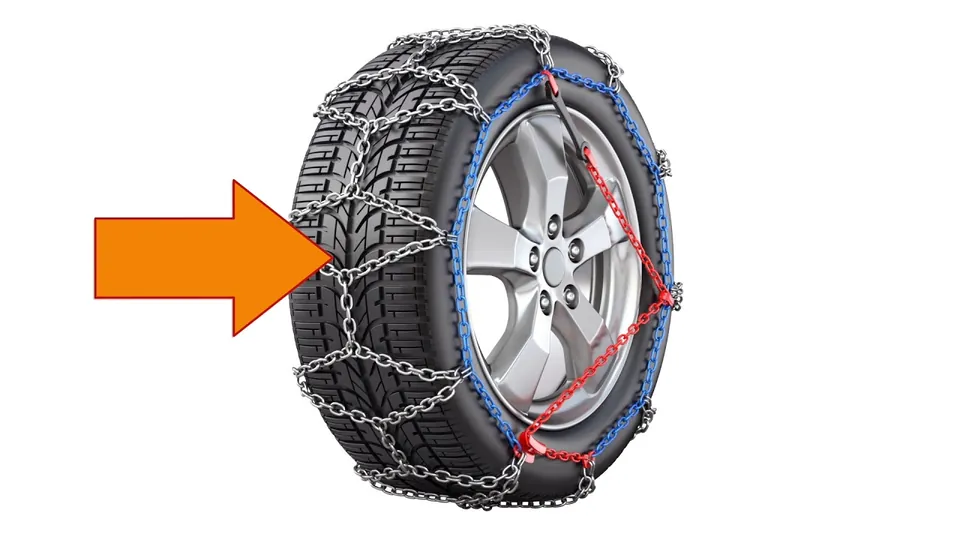
The video is hosted by YouTube (Google): nothing loads until you play it, and Google may then set cookies.
FAQ
Do I need chains if I have four-wheel drive?
Not always, but carry them. In California, 4WD or AWD with snow-tread tires on all four wheels is exempt at R-2, not at R-3. Washington exempts AWD under 10,000 pounds with approved traction devices, all wheels in gear, and chains on board. Oregon’s exemption stops at 6,500 pounds unloaded and at towing. Since August 12, 2026, Colorado’s Traction Law looks only at your tires.
Can I use AutoSocks instead of chains?
Where the state accepts them. Colorado’s list of approved alternative traction devices includes AutoSock, and Washington allows it for passenger vehicles under 10,000 pounds when chains are required, according to Mount Rainier National Park. California keeps no list: a device that meets the Vehicle Code’s definition counts, and the Highway Patrol doesn’t certify any. ODOT mentions snow socks for vehicles that can’t take chains, for short stretches.
When do chain laws apply?
Mostly when signs are posted: California’s chain controls, Washington’s traction and chain requirements, and Oregon’s snow zone rules take effect with the signs. Colorado’s Traction Law applies by law on I-70 from Dotsero to Morrison from September 1 through May 31 whenever the road is icy or snow-packed. And Oregon requires chains or traction tires on board in snow zones when snow is possible.
Can I put chains on a rental car?
Read the contract first. Enterprise and National say chains and traction devices can’t be placed on their vehicles unless state law requires them, and both allow them in Colorado during Code 15 and 16 advisories. Colorado requires rental companies to tell you about its traction and chain law from September 1 to May 31. In Mount Rainier National Park, rental cars must carry chains from November 1 to May 1.
How do I know if chain controls are on right now?
Use the state’s own report: Caltrans QuickMap or 800-427-7623 in California, COtrip.org or 511 in Colorado, WSDOT’s mountain pass reports in Washington, and TripCheck.com or 511 in Oregon. Then follow the signs on the road: Caltrans says posted signs and instructions at checkpoints come first, even when a broadcast report says otherwise.
Sources
- California Department of Transportation (Caltrans), Chain Controls / Chain Installation, accessed November 10, 2026. dot.ca.gov https://dot.ca.gov/travel/winter-driving-tips/chain-controls ↩
- Colorado General Assembly, House Bill 19-1207, signed act amending C.R.S. 42-4-106 (5) (traction-control standards for winter conditions), signed May 17, 2019, accessed November 10, 2026. leg.colorado.gov https://leg.colorado.gov/bill_files/62951/download ↩
- Colorado Department of Transportation, CDOT, CSP and safety partners share new Traction Law requirements, winter driving preparedness tips, news release, November 20, 2025, accessed November 10, 2026. codot.gov https://www.codot.gov/news/2025/november/new-traction-law-requirements ↩
- Colorado General Assembly, House Bill 26-1237, signed act amending C.R.S. 42-4-106 (5)(a)(I)(B), signed May 5, 2026, effective August 12, 2026, accessed November 10, 2026. leg.colorado.gov https://leg.colorado.gov/bill_files/115961/download ↩
- Washington State Legislature, RCW 47.36.250, “Dangerous road conditions requiring special tires, chains, or traction equipment, Signs or devices, Penalty,” accessed November 10, 2026. app.leg.wa.gov https://app.leg.wa.gov/rcw/default.aspx?cite=47.36.250 ↩
- Washington State Legislature, chapter 204-24 WAC (sections 204-24-040 and 204-24-050, the latter as amended effective December 5, 2020), accessed November 10, 2026. app.leg.wa.gov https://app.leg.wa.gov/wac/default.aspx?cite=204-24&full=true ↩
- Oregon Department of Transportation, TripCheck, Oregon Chain Law, accessed November 10, 2026. tripcheck.com https://tripcheck.com/Pages/Chain-Law ↩
- Oregon Department of Transportation, Winter Travel News Packet, Winter 2025-2026, accessed November 10, 2026. oregon.gov https://www.oregon.gov/odot/Documents/Winter_2025-26.pdf ↩
- California Highway Patrol, General Order 100.5: Regulated Devices, annex on tire traction devices and snow tires, revised December 2023, accessed November 10, 2026. chp.ca.gov https://www.chp.ca.gov/siteassets/policy/go/go-100.5-regulated-devices.pdf ↩
- Colorado Department of Transportation, CDOT encourages motorists to prepare vehicles now for winter driving, news release, November 17, 2016, accessed November 10, 2026. codot.gov https://www.codot.gov/news/2016-news-releases/11-2016/cdot-encourages-motorists-to-prepare-vehicles-now-for-winter-driving ↩
- Colorado Department of Transportation, Passenger Vehicle Traction and Chain Laws, accessed November 10, 2026. codot.gov https://www.codot.gov/travel/winter-driving/tractionlaw ↩
- Post Independent (Glenwood Springs, Colorado), As Colorado’s winter driving rules take effect, a new traction law is providing clarity for two-wheel-drive vehicles, September 3, 2026, accessed November 10, 2026. postindependent.com https://www.postindependent.com/news/colorado-winter-driving-rules-take-effect-traction-law/ ↩
- Colorado Department of Transportation, Frequently Asked Questions (FAQ), winter driving, undated, accessed November 10, 2026. codot.gov https://www.codot.gov/travel/winter-driving/faqs ↩
- Washington State Department of Transportation, Winter Driving Guide, publication 19-09-0427, 2019, accessed November 10, 2026. wsdot.wa.gov https://www.wsdot.wa.gov/publications/fulltext/winter/winter-driving-guide.pdf ↩
- Washington State Patrol, Vehicle & Equipment Requirements (section “Traction Tires”), accessed November 10, 2026. wsp.wa.gov https://wsp.wa.gov/driver/vehicle-equipment-requirements/ ↩
- Mount Rainier National Park, Tire Chain FAQ, National Park Service, last updated October 31, 2024, accessed November 10, 2026. nps.gov https://www.nps.gov/mora/planyourvisit/tire-chain-faq.htm ↩
- Washington State Department of Transportation, WSDOT is storm ready this winter. Are you?, news release, October 22, 2026, accessed November 10, 2026. wsdot.wa.gov https://wsdot.wa.gov/about/news/2026/wsdot-storm-ready-winter-are-you ↩
- Washington State Department of Transportation, Snoqualmie Winter Operations Study, December 2024, accessed November 10, 2026. wsdot.wa.gov https://wsdot.wa.gov/sites/default/files/2024-12/Snoqualmie-Winter-Operations-Study-December2024.pdf ↩
- Oregon Department of Transportation, Snow Zone Signs, accessed November 10, 2026. oregon.gov https://www.oregon.gov/odot/pages/winter-snow-zone.aspx ↩
- Enterprise Rent-A-Car, Are snow chains available for rental cars? (FAQ), accessed November 10, 2026. enterprise.com https://www.enterprise.com/en/car-rental-faqs/us-products/rental-car-snow-chains.html ↩
- National Car Rental, Can I add snow chains to the rental car? (FAQ), accessed November 10, 2026. nationalcar.com https://www.nationalcar.com/en/support/car-rental-faqs/snow-chains.html ↩
- Colorado General Assembly, Senate Bill 25-069, signed act on traction devices and notification of chain laws by rental companies (C.R.S. 6-1-208), signed May 15, 2025, accessed November 10, 2026. leg.colorado.gov https://leg.colorado.gov/bill_files/40803/download ↩

Fact-checking, regulations, and safety
Arnaud Couderc reviews our contributors’ articles and writes for Outfarer about regulations, safety, fishing, the ocean, and outdoor activities. He traces every rule back to its official text and every number to its source, so you head out with solid benchmarks.

 Nolwenn Bastide

 Julien de Jurquet
