 Français (France)
 English (UK)
 English (US)
 Deutsch (Deutschland)

Contents
On its gravel page, Canyon lets you filter bikes by tyre clearance: 50 mm, 54 mm, 57 mm or 2.40 inches [1]. That figure says most of what you need to know: a gravel bike is defined less by its name than by what it lets through between its stays. What remains is choosing the right tyre width and gearing, and knowing where the law lets you ride.
What is a gravel bike, and who is it for?
Cycling UK describes it as a blend of road bike and mountain bike: the direct descendant of the cyclocross bike, it keeps drop bars, takes lightly knobbled tyres for unsurfaced roads and almost always has disc brakes [2]. The German cyclists’ association ADFC adds plenty of mounting points on the frame and fork for bottle cages, accessories and luggage, frames mostly in aluminium or carbon, and tyres that are seldom narrower than 30 mm [3].
Who is it for? The ADFC points to riders who cover long distances on mixed surfaces: longer commutes, cycle touring and bikepacking. For everyday and touring use it recommends a more upright, comfortable position, and keeps race-oriented models for riders who want a more responsive bike [3].
Which tyre width should a beginner choose?
A tyre is read from its sidewall in ETRTO format: ‘40-622’ means 40 mm wide, for a rim 622 mm in diameter [4]. For a first gravel bike, the German magazine TOUR recommends a 40 to 45 mm tubeless tyre for most riders. It calls 40 mm the classic choice for fast gravel bikes and 45 mm a particularly versatile width [5]. Frame clearance sets the limit: Canyon defines it as the largest tyre you can safely fit in the frame [1].
| Width | What the sources say | Source |
|---|---|---|
| 30 to 40 mm | Tyres for mixed road-and-track riding (Michelin Power Adventure range) | Michelin |
| 40 mm | The classic choice for fast gravel bikes; 494 g for the Schwalbe G-One Bite | TOUR |
| 45 mm | A particularly versatile width; a lower pressure is possible at the same rider weight | TOUR |
| 50 mm | 602 g for the same G-One Bite; more than 40 mm advised for bikepacking | TOUR, Michelin |
The weights are for one model weighed by TOUR in 40 and 50 mm. Michelin’s advice covers its own gravel tyres.
The nominal width is the most misleading figure. For the G-One Bite, TOUR measured a rolling resistance on tarmac of 25.4 W at 4 bar (58 psi), 26.9 W at 3 bar (44 psi) and 31.3 W at 2 bar (29 psi); on gravel, two tyres tested gave about 40.5 W each. The magazine’s conclusion: tread pattern, casing and compound can matter more than the stated width [5]. For bikepacking, Michelin advises widths above 40 mm [6].
Tubeless or inner tubes, and what pressure?
DT Swiss sums up the case for tubeless: you can run lower pressures without pinch flats, with more grip and comfort, and the sealant closes small punctures and cuts on its own; an inner tube remains possible [7]. TOUR warns that a tubeless setup with a poor seal can lose air every day [5]. For holes sealant cannot close, Park Tool sells a tool that repairs small punctures and cuts without removing the tyre, with five vulcanised rubber plugs, for tubeless tyres used with sealant [8].
On pressure, Schwalbe is blunt: there is no general figure, it depends mostly on the weight of rider and luggage, and the permitted range is printed on the sidewall. A wider tyre, or a tubeless one, can run a little lower. Check it with a gauge at least once a month, because the thumb test is unreliable [9]. Manufacturers’ starting values are collected in Tyre pressure for mountain bikes and gravel bikes.

One chainring or two: what gearing to aim for?
Cycling UK describes the typical gravel drivetrain as a single chainring at the front with a wide-range cassette [2]; the ADFC speaks of gravel-specific groupsets with ratios suited to climbing [3]. SRAM gives one precise example: its XPLR rear derailleur, designed for a 12-speed cassette from 10 to 44 teeth (or 10 to 36), works only with a single chainring and no front derailleur [10].
Let us do the sum, taking a 40-tooth chainring as an example, not a recommendation. The ratio is the number of teeth on the chainring divided by the number on the sprocket.
For a 40-622 tyre the outer diameter comes to about 702 mm (622 + 2 × 40) [4]. The bike then travels about 2.0 m per pedal turn in the lowest gear and about 8.8 m in the highest, indicative values since the tyre squashes under load. The calculation is covered in Gear ratios and development.
Where can you ride in the UK?
The first trap for a beginner is legal rather than mechanical. In England and Wales, gov.uk lists bridleways as open to bicycles, restricted byways to any transport without a motor, and byways open to all traffic to any kind of transport. Footpaths are not on that list, and waymarks are yellow for footpaths and blue for bridleways [11]. Cycling UK says riding on a footpath is a trespass against the landowner, normally a civil matter rather than a criminal one [12].
Section 30 of the Countryside Act 1968 gives anyone the right to ride a bicycle on a bridleway, but cyclists must give way to pedestrians and people on horseback, and the right is subject to local authority orders and byelaws [13]. The Countryside Code repeats it: give way to walkers and horse riders on bridleways, stay on marked paths even when they are muddy, take your litter home, and tell someone where you are going and when you expect to be back [14].

Your first ride: what to set up and carry
- Choose a wide, smooth track that is open to bikes to get a feel for it.
- Set the pressure with a gauge for your total weight, within the range on the sidewall [9].
- Carry what you need to fix a puncture: inner tube, tyre levers, pump, multi-tool, and plugs if you ride tubeless [8].
- Keep a low gear in reserve for the climbs: that is what the wide cassette is for [10].
- Tell someone your route and when you expect to be back [14].
The rule to remember fits in one sentence: pick the terrain first, the tyre width second and the bike last.
Kit related to this article
No affiliation: no commission, no sponsored products.
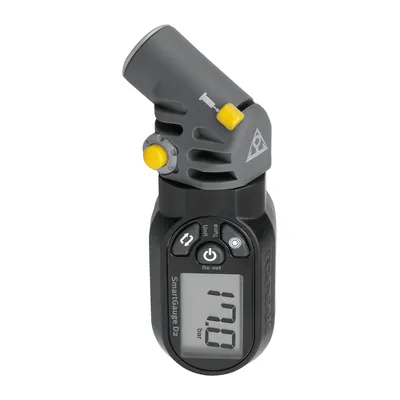
Topeak SmartGauge D2
A digital gauge for Presta and Schrader valves, reading in bar or psi up to 17 bar, with a bleed button: the digital reading WTB advises you to note before each ride.
View on Amazon (opens in a new tab)
Worth watching
Canadian Cycling Magazine lays out a spectrum from bikes built to race rough routes to bikes made for exploring, and how to choose between them for the riding you plan.
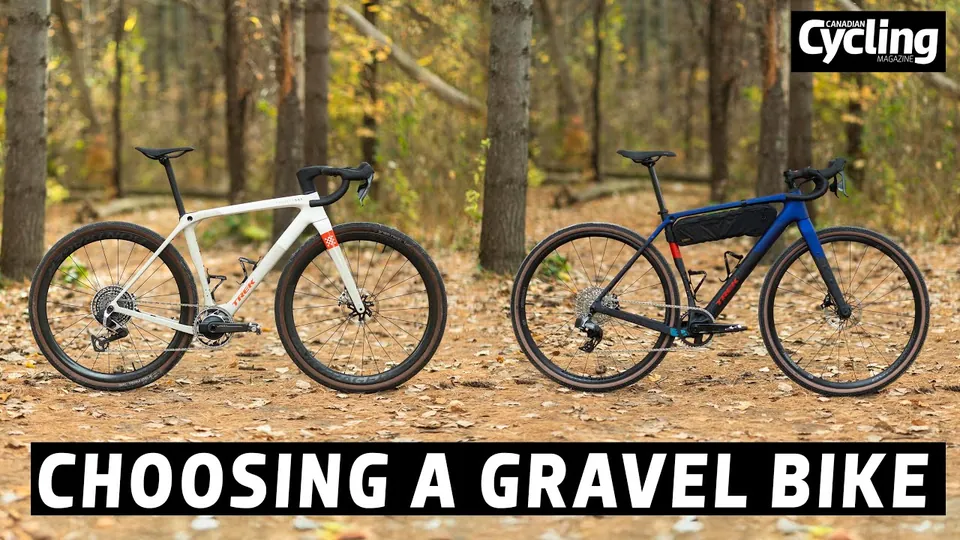
The video is hosted by YouTube (Google): nothing loads until you play it, and Google may then set cookies.
FAQs
What is the difference between a gravel bike, a road bike and a mountain bike?
According to Cycling UK, a gravel bike blends the two: drop bars, wider lightly knobbled tyres for unsurfaced roads, almost always disc brakes, and usually a single chainring. The ADFC adds the many luggage mounts and tyres seldom narrower than 30 mm. It is a drop-bar bike designed for mixed-surface distance riding.
Which tyre width should a beginner choose?
TOUR advises 40 to 45 mm tubeless for most riders: 40 mm for fast routes, 45 mm for more comfort and versatility. The limit comes from the frame: on Canyon’s range, maximum clearance runs from 50 to 57 mm. Always check what your own frame accepts before buying.
Can I ride a gravel bike on any footpath in England?
No. Gov.uk lists bridleways, restricted byways and byways open to all traffic as open to bicycles, not footpaths. Cycling UK says riding on a footpath is a trespass against the landowner, normally a civil matter. On bridleways, the Countryside Act 1968 requires cyclists to give way to pedestrians and horse riders.
Should I choose one chainring or two?
One chainring dominates: Cycling UK calls it the typical gravel setup, and all 20 models on the Canyon page we saw have one. With 40 teeth in front and a 10 to 44 cassette, ratios run from 0.91 to 4.0, or about 2.0 to 8.8 m per pedal turn with a 40 mm tyre.
Is tubeless compulsory?
No: DT Swiss notes that the tyre-and-inner-tube combination remains possible on its rims. Tubeless lets you run lower pressures without pinch flats, and the sealant closes small punctures. TOUR warns that a poorly sealed setup can lose air every day, so keep checking the pressure.
How often should I check tyre pressure?
At least once a month, according to Schwalbe, which considers a loss of about 1 bar (15 psi) a month normal for an inner tube, faster at high pressure. With latex tubes, check before every ride. Use a gauge: the thumb test is unreliable from about 2 bar (29 psi).
Sources
- Canyon, “Gravel bikes”, range page and tyre-clearance filters, consulted 19 November 2026. canyon.com https://www.canyon.com/en-gb/gravel-bikes/ ↩
- Cycling UK, “Which bike should I buy?”, gravel bike section, consulted 19 November 2026. cyclinguk.org https://www.cyclinguk.org/article/which-bike-should-i-buy ↩
- ADFC, “Gravelbikes: Rennräder für alles”, in German, consulted 19 November 2026. adfc.de https://www.adfc.de/artikel/gravelbikes-rennraeder-fuer-alles ↩
- Michelin, “Dimensions des pneus de vélo expliquées”, ETRTO notation, in French, consulted 19 November 2026. michelin.fr https://www.michelin.fr/bicycle/conseils-velo/notions-de-base-pneus-velo/dimensions-des-pneus-de-velo ↩
- TOUR, “Buying guide: the best gravel tyre for you”, width, tubeless, weights and rolling resistance, consulted 19 November 2026. tour-magazin.de https://www.tour-magazin.de/en/buying-advice/components/tyres/buying-guide-the-best-gravel-tyre-for-you/ ↩
- Michelin, “Comment choisir les meilleurs pneus gravel pour votre vélo ?”, in French, consulted 19 November 2026. michelin.fr https://www.michelin.fr/bicycle/conseils-velo/choisir-pneus-velo/choisir-pneus-gravel ↩
- DT Swiss, “Technologie tubeless”, in French, consulted 19 November 2026. dtswiss.com https://www.dtswiss.com/fr/roues/technologie-roues/technologie-tubeless ↩
- Park Tool, “TPT-1 Tubeless Tire Plug Tool”, product page, consulted 19 November 2026. parktool.com https://www.parktool.com/en-us/product/tubeless-tire-plug-tool-tpt-1 ↩
- Schwalbe, “Pression d’air des pneus de vélo”, technical FAQ, in French, consulted 19 November 2026. schwalbe.com https://www.schwalbe.com/fr/technique-faq/pression-d-air/ ↩
- SRAM, “What size cassettes work with the SRAM XPLR AXS rear derailleur?”, support, consulted 19 November 2026. support.sram.com https://support.sram.com/hc/en-us/articles/6042447056539-What-size-cassettes-work-with-the-SRAM-XPLR-AXS-rear-derailleur ↩
- GOV.UK, “Rights of way and accessing land: use public rights of way”, consulted 19 November 2026. gov.uk https://gov.uk/right-of-way-open-access-land/use-public-rights-of-way ↩
- Cycling UK, “Where in England and Wales can I ride off road?”, consulted 19 November 2026. cyclinguk.org https://www.cyclinguk.org/node/23306 ↩
- legislation.gov.uk, Countryside Act 1968, section 30, “Riding of pedal bicycles on bridleways”, consulted 19 November 2026. legislation.gov.uk https://www.legislation.gov.uk/ukpga/1968/41/section/30 ↩
- GOV.UK, “The Countryside Code: advice for countryside visitors”, consulted 19 November 2026. gov.uk https://www.gov.uk/government/publications/the-countryside-code/the-countryside-code-advice-for-countryside-visitors ↩
- NatureScot, Scottish Outdoor Access Code, home page, consulted 19 November 2026. outdooraccess-scotland.scot https://www.outdooraccess-scotland.scot/ ↩

Campervans, motorhomes, cycling and calculators
Julien de Jurquet writes for Outfarer about campervans, motorhomes, cycling and calculators. He reads instruction manuals to the very end and never lets a figure through without its unit, so that your choices rest on sums rather than promises.


