 Français (France)
 English (UK)
 English (US)
 Deutsch (Deutschland)

Contents
On the box of a bike lock you may read ‘level 15’, ‘Sold Secure Gold’ or a logo with two wheels. The three don’t say the same thing, and none of them says how long yours will last against a well-equipped thief. Independent labels do exist: Sold Secure in the UK [1], Stichting ART in the Netherlands [3], the FUB’s anti-theft commission in France [5]. What they have in common is that each rates a lock on a scale of its own. Sold Secure is the home-grown one for British readers, and the other two are worth knowing all the same.
Who tests what: three labels, three scales
Sold Secure, a company based in Rugby, awards four levels: Bronze, Silver, Gold and Diamond. A product is graded by how long it resists specific tools, and each level comes with its own tool list: basic for Bronze, enhanced for Silver, dedicated for Gold, specialist for Diamond [1]. The ratings page gives no durations in minutes: all that is known is that there is one, and that it grows with the level.
The category matters as much as the level. Sold Secure distinguishes ‘Pedal Cycle’ (pedal bikes) from ‘Powered Cycle’ (motorbikes and electric bikes), and the body states that in the second, a Diamond product is tested against the angle grinder while a Gold one is not [1]. In its catalogue, many locks carry two labels at once, for example ‘Powered Gold’ and ‘Pedal Diamond’ [2]. A ‘Gold’ with no category therefore doesn’t tell you much.
In the Netherlands, Stichting ART tests, approves and certifies the locks sold in the country, from D-locks to chains. The logo, with its stars and an approval number, appears on the product [3]. The scale runs from one to five stars: ART-1 for minimal protection, ART-2 for bicycles, ART-3 for mopeds, ART-4 and ART-5 for motorbikes [3]. The tests include hacksaw and bolt-cutter attacks, as well as lock-picking: the more attacks a lock withstands, the more stars it earns [4].

In France, the FUB’s anti-theft commission, which has been testing since 2002 with members of the federation, has put more than 700 locks through their paces [6]. It keeps just two levels, and in 2025 only 30 of the 46 locks tested earned the 2 roues [7]. The ‘1 roue’ (one wheel) level marks a lock that resists for one minute against hand tools shorter than 30 cm that are easy to conceal: it matches the smash-and-grab thefts of the public street. The ‘2 roues’ (two wheels) level demands the same minute against aggressive hand tools that are less discreet, up to 75 cm long, and only this level carries the ‘recommended by the FUB’ wording [5].
| Label | Country | Scale | What the body says |
|---|---|---|---|
| Sold Secure | United Kingdom | Bronze, Silver, Gold, Diamond | Length of resistance to a list of tools, rising with the level [1] |
| Stichting ART | Netherlands | 1 to 5 stars (ART-2 for a bicycle) | More attacks repelled, more stars [3, 4] |
| FUB | France | 1 roue, 2 roues | One minute against hand tools, discreet or not [5] |
| Manufacturers’ levels | Depends on the brand | From 6 to 15 levels depending on the brand | Neither standardised nor comparable from one brand to another [11, 12] |
Sources: Sold Secure, Stichting ART (via the ANWB), FUB, Stiftung Warentest.
Why no equivalence table exists
You will sometimes find tables that line up Gold, ART-3 and 2 roues. None of the three bodies publishes such a correspondence, and for good reason: the protocols differ in tools, durations and the way of counting. The FUB, for example, judges hand tools over one minute [5], whereas Sold Secure speaks of graded tool lists [1] and ART counts attacks repelled [4]. Putting an equals sign between these scales is rather like comparing shoe sizes with glove sizes.
Manufacturers’ own levels pose a sharper problem still. According to Stiftung Warentest, they are neither standardised nor verifiable: one brand offers six levels, another ten, a third fifteen [12]. In the 2023 test, a chain lock rated 5 out of 10 beat another, rated 10 out of 10, which weighs nearly four times as much and costs nearly €150 more [12]. That is not to say the level lies: the ranking also weighs handling. But it shows that a brand’s number says nothing about how two models from different brands compare.
What insurers ask for: the threshold changes with the policy
Use is what gives the labels their weight: the insurer of a stolen bike checks the lock before it pays. Its threshold varies with the company and with the date of purchase, as the three public examples below show.
| Insurer | Label required | Condition |
|---|---|---|
| Bikmo (UK) | Sold Secure Gold or Diamond | Policy taken out since 1 July 2025, whatever the value of the bike; before that, Bronze up to £250, Silver from £251 to £1,500, Gold or Diamond above [8] |
| Cycleplan (UK) | Sold Secure or Thatcham (1 to 7) | Bronze under £500, Silver under £1,000, Gold or Diamond from £1,000 [9] |
| ANWB (Netherlands) | ART-2 | At least one ART-2 lock; for an electric bike, two ART-2 locks, and an approved tracker from €4,500 [3] |
Sources: public pages of Bikmo, Cycleplan and the ANWB, accessed 8 November 2026. The conditions apply to the contracts concerned, not to every policy in the country.
For a £1,200 bike, Gold or Diamond is now required at Bikmo and at Cycleplan alike [8, 9], whereas Silver was enough at Bikmo before July 2025 [8]. In France, the FUB says that insurers require the 2 roues level [6]. After a theft, insurers also ask for proof: an invoice, a bank statement, the packaging or a photo of the lock at Cycleplan [9], a till receipt and both keys, the one in use and the spare, in the Netherlands [3].
The type of lock matters as much as the level
Testers agree on a ranking by type. According to the FUB, you need at least a D-lock rated 2 roues: it is the best protection against theft. Chains that reach this level are very heavy, folding locks are markedly more vulnerable than D-locks because of their flat arms, ‘boa’ armoured-cable locks resist far less, and cables are tested to show how inadequate they are [6]. The ADFC, on the German side, likewise puts D-locks at the top, with armoured chains and cables almost as secure [10].
The angle grinder is the breaking point: the ADFC writes that quality D-locks can hardly be forced except with one, and that models with a tungsten carbide coating resist it far better but cost several hundred euros [10]. Stiftung Warentest makes it the ‘final boss’ of its tests: its best lock costs €300, but it found break-in-resistant models from €50 and from 800 g [11].
Which level for which bike and which place
The sources give guidelines, not a grid. For Sold Secure, Bronze targets the opportunist thief, Silver the determined thief in a risk area, Gold the resolute thief in a high-risk setting, and Diamond the most determined thief in a very high-risk setting [1]. The ANWB reserves ART-3 for expensive electric bikes, speed pedelecs and stations or big cities, and judges a second ART-2 lock sufficient in a low-exposure area [4]. The ADFC, for its part, sets a minimum: a lock should hold for at least three minutes against a break-in attempt [10].
My reasoning comes down to three questions. What is the bike worth, and does the insurance contract fix the level? Where does it sleep: a locked cellar or a station hoop? How long does it stay parked? An electric mountain bike left for eight hours outside a workplace calls for a different level from a town bike left for twenty minutes outside a bakery. And the best rating is no use if the lock isn’t put to work.
Locking it properly: the level isn’t everything
- Secure it, don’t just close it: a bike that is merely blocked can be carried off; the frame must pass through the lock, tied to a fixed point [12].
- Keep the lock tight: hold it off the ground and limit the empty space, so the tool and the lever find less room [8].
- Double up: the ADFC recommends two locks of different types, as thieves often specialise in one type [10]; the ANWB finds that only 36% of Dutch cyclists add a second one [4].
- Keep the proof: invoice, photo of the lock and keys, which insurers require [3, 9].
- Mark the bike: a unique number, engraved and registered (BicyCode), helps get it back, and it is compulsory on new bikes sold by a professional [7].

In short: choosing without trusting the number
An independent label (Sold Secure, ART, FUB 2 roues) says that a lock was attacked in a laboratory under a protocol known to the body. That is more reliable than a manufacturer’s level, but it reads on its own scale, never on the neighbour’s. Keep your insurer’s threshold in mind, choose a D-lock of the right level before anything else, double it up in exposed places and always lock the frame. The guide to compulsory cycling equipment covers the rest of the ride.
Worth watching
Global Cycling Network shows how a portable angle grinder changes bike theft, how to lock a bike to deter opportunist thieves, and what the new angle-grinder-resistant locks offer.
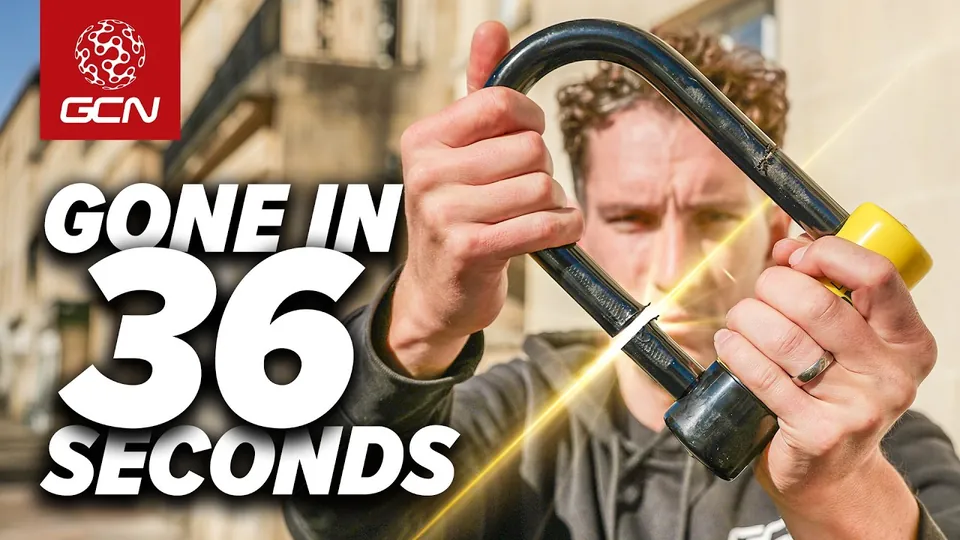
The video is hosted by YouTube (Google): nothing loads until you play it, and Google may then set cookies.
FAQs
Is Sold Secure Gold equivalent to ART-3 or to FUB 2 roues?
No. Sold Secure, Stichting ART and the FUB each have their own protocol, tools, durations and scale, and none of them publishes a correspondence with the others. Gold describes resistance to a dedicated list of tools, ART-3 a number of attacks repelled, and 2 roues one minute against hand tools up to 75 cm long. The three don’t overlap.
What lock level does my insurance require?
It depends on the contract and its date. One British insurer asks for Gold or Diamond on any policy taken out since 1 July 2025, another accepts Silver for bikes worth under £1,000, and the Dutch ANWB asks for an ART-2 lock. In France, the FUB says insurers require the 2 roues level. Read the lock condition in your own policy.
Is a brand’s level 15 out of 15 worth Diamond?
Nothing allows you to say so. Manufacturers’ levels are not standardised: according to Stiftung Warentest, one brand has six levels, another ten, a third fifteen. A brand’s level can only be compared with others from the same brand. To compare brands, use the independent labels or consumer tests, and look at their date.
Is a D-lock really the safest?
According to the testers, yes, for equal quality. The FUB names it as the best protection against theft and asks for at least a D-lock rated 2 roues. The ADFC also puts it first, ahead of armoured chains and cables. Its drawback: it leaves little choice of anchor points, which may push you towards a chain, more flexible but far heavier.
Does the angle grinder beat every lock?
It is the tool that makes the difference. The ADFC notes that quality D-locks can hardly be forced except with one, and that a tungsten carbide coating gives them much better resistance, at a cost of several hundred euros. Stiftung Warentest devotes a section of its test to it. No lock is unbreakable: the aim is to make the theft take longer.
Sources
- Sold Secure, “Sold Secure Ratings Explained”, page on the Diamond, Gold, Silver and Bronze levels, accessed 8 November 2026. soldsecure.com https://soldsecure.com/ratings ↩
- Sold Secure, “Bicycle Security” catalogue of locks rated Pedal Cycle and Powered Cycle, accessed 8 November 2026. soldsecure.com https://soldsecure.com/category/bicycle ↩
- ANWB, “Wat is een ART-slot?”, page on Stichting ART, the five categories and the requirements of the fietsverzekering (bicycle insurance), accessed 8 November 2026. anwb.nl https://www.anwb.nl/verzekeringen/fietsverzekering/art-slot ↩
- ANWB, “Fietsslotentest 2022: wat is het beste fietsslot ?”, test of twelve ART-2 and eight ART-3 locks, accessed 8 November 2026. anwb.nl https://www.anwb.nl/fiets/test/fietsslotentest-2022 ↩
- FUB, “Tests de résistance des antivols vélo, résultats du label FUB 2 roues”, dataset on data.gouv.fr, updated 26 March 2026, accessed 8 November 2026. data.gouv.fr https://www.data.gouv.fr/datasets/tests-de-resistance-des-antivols-velo ↩
- FUB, “Choisir son antivol”, lock categories and the 1 roue and 2 roues levels, accessed 8 November 2026. fub.fr https://www.fub.fr/types-antivols ↩
- BicyCode, “5 bonnes résolutions pour protéger son vélo en 2026”, 19 December 2025, accessed 8 November 2026. bicycode.eu https://bicycode.eu/en/news/5-bonnes-resolutions-pour-proteger-son-velo-en-2026/ ↩
- Bikmo, “What lock should I get?”, help centre, 6 May 2026, accessed 8 November 2026. support.bikmo.com https://support.bikmo.com/uk/locking/what-lock-should-i-get ↩
- Cycleplan, “Approved bike locks”, lock conditions of the bike insurance, accessed 8 November 2026. cycleplan.co.uk https://www.cycleplan.co.uk/approved-locks/ ↩
- ADFC, “Fahrradschloss-Typen”, lock types and quality criteria, accessed 8 November 2026. adfc.de https://www.adfc.de/artikel/fahrradschloss-typen ↩
- Stiftung Warentest, “Fahrradschloss-Test: Fahrradschlösser, sicher, preiswert, gut”, 18 February 2025 (89 locks), accessed 8 November 2026. test.de https://www.test.de/Test-Fahrradschloss-4841548-0/ ↩
- Berliner Zeitung, “Welches Fahrradschloss sichert am besten ?”, 23 November 2023, results of the 2023 Stiftung Warentest test, accessed 8 November 2026. berliner-zeitung.de https://www.berliner-zeitung.de/article/welches-fahrradschloss-sichert-am-besten-neue-ergebnisse-der-stiftung-warentest-2160908 ↩

Campervans, motorhomes, cycling and calculators
Julien de Jurquet writes for Outfarer about campervans, motorhomes, cycling and calculators. He reads instruction manuals to the very end and never lets a figure through without its unit, so that your choices rest on sums rather than promises.


 Damien Poirier-Boucard
