 Français (France)
 English (UK)
 English (US)
 Deutsch (Deutschland)

Contents
Wolves and cougars are skilled predators, but they’re not normally a danger to people, and very few confrontations with humans have been documented in Yellowstone, according to the National Park Service (NPS) [1]. So much for the big bad wolf. Your night in the tent will mostly be shared with smaller animals, and much hungrier ones. The good news: what draws them in is almost entirely up to you.
This guide expands on “The night” step of our guide to your first backcountry camping trip. It covers the smaller visitors of the American backcountry; bears have their own rules, which vary by park and come up further down. As for the tiniest camp guests, ticks, they get a guide of their own.
Who really visits a campsite at night
Raccoons top the list. At Pinnacles National Park in California, the NPS notes that they become active at night, searching for food left out by campers [2]. Skunks follow the same trail: at Shenandoah National Park, trash and leftover food draw skunks and raccoons to campsites [3]. In parts of the country, there’s a bigger customer. Feral swine, which the USDA’s Animal and Plant Health Inspection Service (APHIS) says are also known as wild boars or wild hogs, are descendants of escaped or released pigs first brought over by Europeans, a dangerous and destructive invasive species whose populations have expanded across the country [4]. In France, where the wild boar is native, the French Office for Biodiversity (OFB) notes that it rests by day and feeds mainly at night [5].
Coyotes are adaptable enough to live anywhere from wildlands to suburbs and even cities, and they’ll eat just about anything. At Golden Gate National Recreation Area, the NPS says they’re most active at dawn and dusk, though they can be active at any time [6].
Then there are the small rodents. At Grand Canyon, aggressive deer mice, living off the careless food storage habits of backpackers and river runners, have overrun popular backcountry campsites and beaches along the Colorado River, the park reports [7]. They’re more than a nuisance: the Centers for Disease Control and Prevention (CDC) lists the deer mouse among the rodents that can spread the hantaviruses behind hantavirus pulmonary syndrome, counts camping and visiting infested trail shelters among the activities that can put people at risk, and names eating food contaminated by rodent urine, droppings, or saliva as one way to get infected [8].
What draws them in: a smell, then a habit
Shenandoah National Park puts it bluntly: allowing a bear, or any other wild animal, to get human food, even once, can lead to aggressive behavior, and an aggressive animal that associates people with food may have to be removed or killed [3]. The Leave No Trace principles, as the NPS presents them, explain why you never feed animals: feeding wildlife damages their health, alters natural behaviors, habituates them to people, and exposes them to predators and other dangers [9].
The real trouble starts once an animal has found a meal. At Grand Canyon, the park notes that animals regularly revisit areas where they easily got food, so one camper’s carelessness puts the next ones at risk [7]. Habit is the detail that changes everything: a meal found once becomes a trail worth following.
Where to store your food at night
The Leave No Trace principles boil it down to one line: protect wildlife and your food by storing rations and trash securely, and pack out all trash, leftover food, and litter [9]. Shenandoah spells it out: before going to sleep or leaving the area, put all your food in a food storage locker, the locked trunk of your car, a bear-resistant canister, or a bear bag hung from a tree or bear pole, and never bring food, toiletries, or cooking utensils into the tent [3].
So, in the tent or outside? In the parks we looked at, the answer is outside, in something animals can’t open. Grand Canyon calls for an animal-proof food storage container, with metal cookie tins, bear canisters, and cooking pots with lockable lids as acceptable alternatives, and warns that food hung from a tree may still be within reach of ringtails, mice, and ravens. It also asks you to leave nothing in your pack overnight and to leave every pocket unzipped, so nocturnal visitors can snoop around without gnawing through your gear [7]. Rules vary by park, so check with park staff when you arrive, Pinnacles advises [2].
In bear country, the stakes go up: hanging bags and hard-sided bear canisters are required, discouraged, or banned depending on the park, and our article on backcountry permits and bear canisters goes through the rules, park by park.
The sounds of the night, and who makes them
A night outdoors is never quiet, and owls do much of the talking. The great horned owl’s deep, stuttering call sounds like “ho hoo hoo hoododo hooooo hoo,” while the barred owl’s distinctive staccato call sounds like “Who cooks for you?” according to the NPS, which lists night, dawn, and dusk as the times to listen for them [10].
A growl or a stamping sound in the dark may be a skunk: before spraying, it gives plenty of warning, stomping its feet, growling, fluffing up, and spitting, and it sprays mainly as a last resort, in self-defense, the NPS explains [11]. And the yips, yaps, barks, and howls that carry across the night often mean coyotes are around [6].
In the fall comes the elk rut. At Rocky Mountain National Park, the NPS describes the bull’s bugle as a crescendo of deep, resonant tones that rise to a high-pitched squeal before dropping into a series of grunts, an eerie call that echoes through autumn nights [12]. Yellowstone asks you to stay at least 25 yards (23 m) from elk at all times [1]. So I’d pitch my tent well away from a meadow where bulls are bugling. And if you can’t sleep, look up: our meteor shower calendar tells you what to watch for.
At first light: squirrels and jays
At first light, the day shift takes over. At Pinnacles, the NPS says squirrels and jays are common beggars, and that squirrels often approach people for food at campsites, trailheads, and picnic areas. They can transmit diseases such as rabies and bubonic plague, so if one comes up to you, scare it away right away and make sure your food is stored [2].
Yellowstone takes it a step further: never feed wildlife, even birds and squirrels. Animals that come to depend on human food may become aggressive toward people and have to be killed, and animals also carry diseases that can be transmitted to people [1].
Hence the rule: never feed a wild animal. The Leave No Trace principles also ask you to observe wildlife from a distance, without following or approaching it, and to avoid wildlife during sensitive times, such as mating, nesting, raising young, or winter [9]. Our guide to Leave No Trace hiking covers these principles, trash included.
Coyotes, bears, wolves: what to do in an encounter
Golden Gate National Recreation Area spells out what to do if you meet a coyote: don’t approach, slowly back away while keeping eye contact, and don’t run; make loud noises, like yelling or clapping, to scare it off. The park calls keeping your dog on a leash one of the most important things you can do to avoid a coyote interaction, and asks you to put trash, including food, in bins, or take it with you if they’re full [6]. We didn’t find official guidance specific to an animal coming up to a tent. For leashes and the rest, our guide to hiking with your dog covers the rules.
Bears are a chapter of their own, and the right moves depend on the species and the park. Yellowstone’s baseline: keep at least 100 yards (91 m) from bears at all times; in a close encounter, keep your group together and slowly back away, without running or making sudden movements, with your bear spray drawn and ready to use if the bear charges. The park also asks you to sleep at least 100 yards (91 m), preferably upwind, from where you cook, eat, and store your food, and to scatter all liquids at least 100 yards (91 m) from your tent site [1]. For food storage rules, park by park, see the article mentioned above.
As for wolves, Yellowstone asks you to keep at least 100 yards (91 m) away at all times. If one is too close or shows no fear of people, stand tall and hold your ground; if it approaches, wave your arms, yell, and flare your jacket. If that doesn’t discourage it, throw something at it or use bear spray, group up with other people, and tell a ranger as soon as possible [1].
| Animal | When | What draws it | What the sources ask |
|---|---|---|---|
| Raccoon | At night | Food left out by campers, trash | Store food and trash; never feed it |
| Skunk | Mostly at night | Trash and leftover food | Store your trash; heed its warnings |
| Coyote | Dawn and dusk, but any time | Just about anything, trash included | Leash your dog; back away, don’t run |
| Deer mice | Not specified by our sources | Poorly stored food at campsites | Animal-proof containers; avoid rodent droppings |
| Owls | Night, dawn, and dusk | Their own prey | Nothing: just listen |
| Squirrels, jays | By day | Picnics and handouts | Don’t feed them; scare off a squirrel that approaches |
Based on the NPS at Pinnacles [2], Shenandoah [3], Golden Gate [6], and Grand Canyon [7], the CDC [8], and NPS pages on owls [10] and skunks [11].
That night, you might hear a great horned owl, a coyote chorus in the distance, a raccoon padding past without stopping. Your food is locked away and nothing’s left out: let them get on with their night, and enjoy yours. The backcountry after dark isn’t hostile; it just has thinner walls than your bedroom.
Gear related to this article
No affiliation: no commission, no sponsored products.
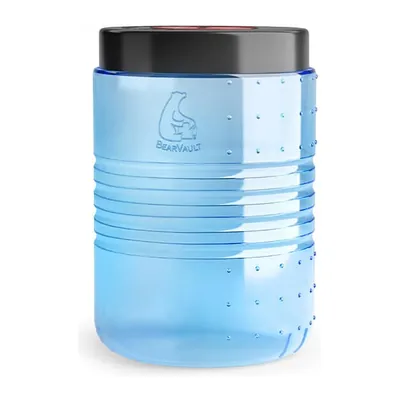
BearVault BV500 Journey Bear Canister
Hard-sided lockable canister of 700 cubic inches, sized for a week of food according to the maker, on the IGBC list of certified products. 2 lb 9 oz.
View on Amazon (opens in a new tab)
Worth watching
Leave No Trace shows how to use a hard-sided bear canister, which keeps bears and other wildlife out of your food, trash, and anything else that gives off a smell.
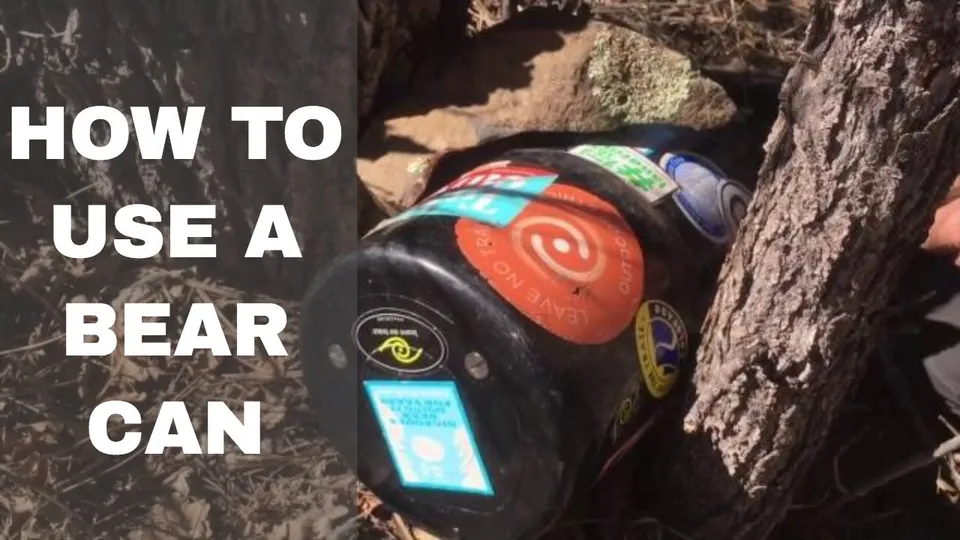
The video is hosted by YouTube (Google): nothing loads until you play it, and Google may then set cookies.
FAQ
Should you keep your food in your tent when backcountry camping?
No. Shenandoah National Park says never to bring food, toiletries, or cooking utensils into the tent, and to store food in a locker, a locked car trunk, a bear-resistant canister, or a hung bear bag. Grand Canyon calls for animal-proof containers in the backcountry. Rules vary by park, so check with park staff when you arrive.
What should you do if a coyote comes close?
Don’t approach it, and don’t run. Golden Gate National Recreation Area advises backing away slowly while keeping eye contact, then making loud noises, like yelling or clapping, to scare it off. Keep your dog on a leash, which the park calls one of the most important ways to avoid a run-in, and pack out your trash.
What animal makes noise at night in the woods?
Several suspects. The great horned owl, with its deep, stuttering hoots, and the barred owl, whose call sounds like “Who cooks for you?” Coyotes, with their yips, barks, and howls. A skunk stomping and growling before it sprays. And in the fall, bull elk bugling, a call that climbs to a high-pitched squeal before dropping into grunts.
Are wolves dangerous to campers?
In Yellowstone, the NPS says wolves aren’t normally a danger to people, and very few confrontations with humans have been documented there. Stay at least 100 yards away. If a wolf comes too close or shows no fear, stand tall and hold your ground; if it approaches, wave your arms, yell, and throw something at it or use bear spray.
Can you feed squirrels or birds at camp?
No. Yellowstone asks you never to feed wildlife, even birds and squirrels: animals that depend on human food may become aggressive and have to be killed. At Grand Canyon, rock squirrels fed by visitors are the leading cause of animal bites, and in national parks, feeding wildlife can get you a citation.
Sources
- National Park Service, Yellowstone National Park, “Safety,” updated July 28, 2026, accessed November 10, 2026. nps.gov https://www.nps.gov/yell/planyourvisit/safety.htm ↩
- National Park Service, Pinnacles National Park, “Keep Wildlife Wild,” updated October 16, 2024, accessed November 10, 2026. nps.gov https://www.nps.gov/pinn/planyourvisit/kww.htm ↩
- National Park Service, Shenandoah National Park, “Food Storage,” updated October 25, 2023, accessed November 10, 2026. home.nps.gov https://home.nps.gov/shen/planyourvisit/food-storage.htm ↩
- USDA Animal and Plant Health Inspection Service (APHIS), “Feral Swine: Managing an Invasive Species,” accessed November 10, 2026. aphis.usda.gov https://www.aphis.usda.gov/operational-wildlife-activities/feral-swine ↩
- French Office for Biodiversity (OFB), “Sanglier” (wild boar), species page, August 2022 (in French), accessed November 10, 2026. ofb.gouv.fr https://ofb.gouv.fr/especes/sanglier-sus-scrofa ↩
- National Park Service, Golden Gate National Recreation Area, “Coyotes,” updated January 8, 2026, accessed November 10, 2026. nps.gov https://www.nps.gov/goga/learn/nature/coyotes.htm ↩
- National Park Service, Grand Canyon National Park, “Backcountry Food Storage,” updated June 25, 2026, accessed November 10, 2026. home.nps.gov https://home.nps.gov/grca/planyourvisit/bc-food-storage.htm ↩
- Centers for Disease Control and Prevention (CDC), “You Can Prevent Hantavirus: How to Protect Yourself and Your Family from Hantavirus Pulmonary Syndrome in the United States,” brochure, accessed November 10, 2026. cdc.gov https://www.cdc.gov/hantavirus/media/pdfs/2025/01/HantavirusBrochure-508.pdf ↩
- National Park Service, “Leave No Trace Seven Principles,” updated June 16, 2022, accessed November 10, 2026. nps.gov https://www.nps.gov/articles/leave-no-trace-seven-principles.htm ↩
- National Park Service, “Owls,” updated August 12, 2024, accessed November 10, 2026. nps.gov https://www.nps.gov/thingstodo/owls.htm ↩
- National Park Service, “Species Spotlight: Striped Skunk,” updated September 2, 2025, accessed November 10, 2026. nps.gov https://www.nps.gov/articles/species-spotlight-striped-skunk.htm ↩
- National Park Service, Rocky Mountain National Park, “Elk,” updated September 23, 2026, accessed November 10, 2026. nps.gov https://www.nps.gov/romo/learn/nature/elk.htm ↩

Trail running, snow, water, nature and destinations
Nolwenn covers trail running, snow, water, nature and destinations for Outfarer. Curious about everything, from meteor showers to night-train schedules, she has a knack for digging up the one detail that changes everything, and nailing it in a single sentence.

 Guillaume Hoarau

 Julien de Jurquet

 Arnaud Couderc