 Français (France)
 English (UK)
 English (US)
 Deutsch (Deutschland)

Contents
Six in the evening at a hut above the Val Ferret: boots drying in the boot room, the long table filling up, walkers comparing notes on tomorrow’s pass. On the Tour du Mont-Blanc, that is how most days end, provided the bed was booked. In TMB huts, dinner is usually served around 6.30pm or 7pm, and lights go out around 10pm [1]. Everything that comes before, from the booking to the bus, is what this guide is about.
The TMB at a glance: 170 km, three countries
The Tour du Mont-Blanc loops around the Mont Blanc massif through France, Italy and Switzerland: about 170 km and 10,000 m of total ascent, with a high point of around 2,600 m on the classic route, according to the cross-border Espace Mont-Blanc website [2]. The official TMB website counts 10 to 11 stages, each a day’s walk of 10 to 20 km, with climbs that can exceed 1,000 m [3]. No mountaineering kit is needed: the paths are well waymarked [1].
| What | Figure |
|---|---|
| Distance | About 170 km |
| Total ascent | About 10,000 m |
| High point, classic route | About 2,600 m |
| Stages | 10 to 11, of 10 to 20 km each |
| Days | 7 at an athletic pace, 9 to 10 at a balanced one, 11 to 12 to take your time |
| Season | Mid-June to mid-September |
| Accommodation | €65 to €95 a night, dormitory with half board |
Sources: Espace Mont-Blanc (distance, ascent, high point) and the official TMB website (stages, days, season, accommodation), accessed 22 October 2026.
Most people walk it anticlockwise, the most common and best-waymarked direction; going clockwise can make it easier to find beds if your dates are fixed [1]. The classic start is Les Houches, near Chamonix, but you can also set off from Courmayeur, Les Contamines, Champex, Trient or several other villages [2].
Follow the green TMB logo, round or square, which runs the whole loop alongside the local waymarks: red and white in France, yellow in Italy, and in Switzerland yellow or white-red-white, the latter for mountain paths that can include exposed or technical sections [3].
The route, section by section
Here is the classic anticlockwise loop as the Espace Mont-Blanc describes it, in seven sections. They are not days: where each day ends depends on the beds you manage to book [2].
| Section | Key points | Main variant |
|---|---|---|
| 1. Les Houches to Les Contamines-Montjoie (France) | Col de Voza, Bionnassay, Champel | Col de Tricot, Chalets de Miage, Truc |
| 2. Les Contamines to Rifugio Elisabetta (France, then Italy) | Notre-Dame de la Gorge, Col du Bonhomme, Col de la Croix du Bonhomme, Les Chapieux, Col de la Seigne | Col des Fours |
| 3. Rifugio Elisabetta to Courmayeur (Italy) | Lac Combal, Col Chécrouit, Dolonne | None listed |
| 4. Courmayeur to Rifugio Bonatti (Italy) | Villair, Rifugio Bertone | Tête Bernarda, Col Sapin, Malatrà |
| 5. Rifugio Bonatti to La Peule (Italy, then Switzerland) | Arnouvaz, Rifugio Elena, Grand Col Ferret | Petit Col Ferret, La Léchère |
| 6. La Peule to Col de la Forclaz (Switzerland) | La Fouly, Praz-de-Fort, Champex-Lac, Bovine | Fenêtre d’Arpette |
| 7. Col de la Forclaz to Les Houches (Switzerland, then France) | Trient, Col de Balme, Tré-le-Champ, La Flégère, Col du Brévent | Vallorcine and Col des Montets |
Source: Espace Mont-Blanc, Tour du Mont Blanc route description, accessed 22 October 2026. A variant can be harder or easier than the main route.
One stretch has no mobile signal at all: the official site warns that the main dead zone runs from the Pont Romain in Les Contamines to Lac Combal, through the Chapieux valley and over the Col de la Seigne. Let people at home know you may be out of contact for a day or more [4].
Booking the huts: summer 2027 is already open
Bookings for summer 2027 opened on 15 October 2026 for all the huts in the wardens’ association, the Association des Gardiens de Refuges du Tour du Mont-Blanc, on the official TMB website. The site strongly recommends booking ahead, and calls it essential in high season: the most popular huts are often full several months in advance [1].
The steps: create an account, choose a date, a starting point, the type of accommodation and the number of walkers, compare availability, then pay a deposit. You can change your dates from your account up to 30 days before arrival; after that, you deal with the hut directly [1]. Huts outside the association, founded in 2011, cannot be booked on the site, so contact them yourself [1] [5].
Huts run to a timetable: arrivals between 4pm and 6pm, dinner around 6.30pm or 7pm, lights out around 10pm, and early starts. The official site suggests arriving at least an hour before dinner. In a dormitory, a sleeping bag liner, earplugs and a towel will be your friends [1]. Our guide to staying in a mountain hut covers hut etiquette.

What the TMB costs
For a walker booking huts directly, the official site puts a night in a dormitory with half board, meaning dinner and breakfast, at about €65 to €95, and accommodation for a 7 to 10-day trek at €500 to €900 [1]. Lunches, drinks, buses and lifts come on top. The site also recommends adding mountain rescue insurance, helicopter costs included, to the cancellation cover offered when booking [6].
Getting there from Geneva
Geneva Airport, the nearest major airport, is 88 km (55 miles) from Chamonix, according to the Chamonix tourist office. From the airport, the Léman Express runs to Saint-Gervais-Le Fayet station, where the Mont-Blanc Express continues up the valley to Les Houches and Chamonix. FlixBus also runs daily between the airport and Chamonix, and airport shuttles can be booked online. From Geneva’s main station, Cornavin, Chamonix is about 2 hours 40 minutes by train, and direct shuttles leave from Geneva bus station. The tourist office also lists Annecy and Lyon Part-Dieu stations, with BlaBlaCar Bus or FlixBus coaches on to the valley [7].
| Option | Route | Good to know |
|---|---|---|
| Train | Geneva Airport to Saint-Gervais-Le Fayet (Léman Express), then the Mont-Blanc Express | Stops include Les Houches and Chamonix |
| Train | Geneva Cornavin to Chamonix | About 2 hours 40 minutes; direct shuttles also leave from Geneva bus station |
| Coach | Geneva Airport to Chamonix | FlixBus runs daily |
| Shuttle | Geneva Airport to Chamonix | Book online in advance |
Source: Chamonix-Mont-Blanc tourist office, accessed 22 October 2026; Mont-Blanc Express stops from the official TMB website. Check timetables before you travel.
The loop itself is well served. Chamonix, Les Houches, Courmayeur, Bourg-Saint-Maurice and Champex are the main access points by train or bus, a bus links Chamonix to Courmayeur through the Mont Blanc Tunnel, and Swiss buses and trains serve La Fouly and Champex. Public transport can also get you off the route after an injury. One small snag: dogs are not allowed on the Les Chapieux shuttles [4].
When to go
The season runs from mid-June to mid-September, when the passes are clear of snow and the huts are open [1]. Each month makes for a different trip [4].
| When | What to expect |
|---|---|
| June | Lingering snow; paths and signposts can be hard to make out, map reading is essential, and poles or even crampons may be needed |
| July and August | The busiest months, with the most walkers and the most facilities open |
| September | Quieter paths, shorter days and cooler temperatures |
| Later in the autumn | Cold nights and possible snow on the summits: pack gloves, a hat and a head torch |
Sources: official TMB website, Planning your Tour and FAQ pages, accessed 22 October 2026.
Fitness, kit and who it suits
The TMB takes no technical skills, but it does take stamina: 5 to 8 hours of walking a day, several days in a row, with a pass to climb and descend almost every day. The official site recommends training with an 8 to 10 kg rucksack [1]. On the trail, aim for a 35 to 45 litre rucksack weighing no more than 8 to 12 kg, broken-in walking boots, a waterproof jacket, a three-layer clothing system and walking poles [4].
- 7 days: for athletic, experienced walkers comfortable with long, demanding stages [4].
- 9 to 10 days: the most popular format, with stages of 15 to 20 km and time to enjoy the huts [4].
- 11 to 12 days: shorter stages, with time for photos, views and variants [4].
- With children: over the age of 10, on a 10 to 12-day itinerary with family-friendly huts; the official site advises against taking a baby [1].
Dogs are possible but complicated: check that each hut accepts them, bring their food, and bear in mind that nature reserves on the route ban them, that lifts and some shuttles do not take them, and that you will pass large flocks of sheep watched by guard dogs [1]. To plan your daily timings, see our guide to estimating walking time.

Can you wild camp on the TMB?
Only in specific places. The official site says bivouacking is generally allowed only close to certain partner huts and at set times [1], and every country, municipality and nature reserve on the route has its own rules [8]:
- Italy, Aosta Valley: all forms of camping are banned, even for less than 24 hours, and bivouacking is banned below 2,500 m, which covers almost all of the TMB’s Italian section [9].
- Switzerland: wild camping is generally banned, except for a single night, not in a group and above the tree line, or in an emergency; the Valais municipalities on the route ban it or limit it to campsites and designated rest areas [9].
- France: Chamonix bans camping outside designated sites and allows only high-altitude bivouacs from sunset to sunrise, with outright bans at spots such as Lac Blanc; in the Les Contamines-Montjoie and Aiguilles Rouges nature reserves, you must book a pitch on a designated area [9] [8].
The rules change, so check them before each night. For the French side, our guide to wild camping law in France explains the national rules. For the Italian side, see our guide to wild camping in Italy, region by region.
Gallery: the TMB in six landscapes
Six real photos of the tour and its surroundings, in the direction of the loop from Les Houches, published under free licences on Wikimedia Commons by their authors, who are credited under each image. Tap or click a photo to enlarge it.
Kit related to this article
No affiliation: no commission, no sponsored products.
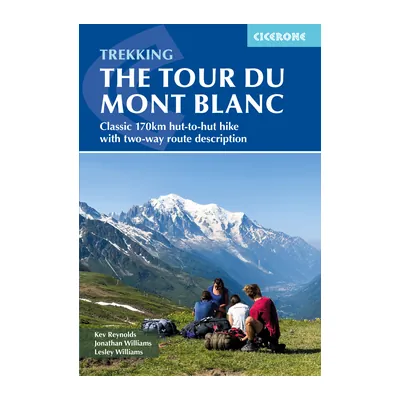
Trekking the Tour du Mont Blanc (Cicerone)
The classic 170 km hut-to-hut loop through France, Italy and Switzerland, described in both directions; sixth edition, reprinted in October 2025.
View on Amazon (opens in a new tab)
Worth watching
Trailblazer guidebook author Jim Manthorpe walks through the TMB stage by stage with maps, from Les Houches via Les Contamines, Courmayeur and La Fouly to Champex and beyond.
The video is hosted by YouTube (Google): nothing loads until you play it, and Google may then set cookies.
FAQs
How many days do you need for the Tour du Mont-Blanc?
Usually 7 to 12, depending on your pace. The official TMB website describes 7 days as an athletic format for experienced walkers, 9 to 10 days as the most popular, with 15 to 20 km a day, and 11 to 12 days as a relaxed pace that leaves time for variants. The loop is usually split into 10 to 11 stages.
When do Tour du Mont-Blanc hut bookings open for 2027?
Bookings for summer 2027 opened on 15 October 2026 for all the member huts of the TMB hut wardens’ association, on the official website. The site strongly recommends booking ahead, and says it is essential in high season, because the most popular huts are often full several months in advance.
How much does the Tour du Mont-Blanc cost?
For accommodation, the official site gives about €65 to €95 a night in a dormitory with half board, or €500 to €900 for a 7 to 10-day trek. Add lunches, drinks, transport and insurance: the site recommends cancellation cover and mountain rescue insurance, helicopter costs included.
Can you wild camp on the Tour du Mont-Blanc?
Mostly, no. In the Aosta Valley, camping is banned and bivouacking is banned below 2,500 m. Switzerland bans wild camping with narrow exceptions, and Chamonix allows only high-altitude bivouacs between sunset and sunrise. Some huts and designated areas accept tents, sometimes only with a booking.
How do you get to the Tour du Mont-Blanc from Geneva?
Geneva Airport is 88 km (55 miles) from Chamonix. The Léman Express train links the airport to Saint-Gervais-Le Fayet, where the Mont-Blanc Express continues to Les Houches, the classic start, and Chamonix. FlixBus also runs daily from the airport to Chamonix, shuttles can be booked online, and Chamonix is about 2 hours 40 minutes by train from Geneva Cornavin.
Sources
- Official Tour du Mont-Blanc website, FAQ, accessed 22 October 2026. montourdumontblanc.com https://www.montourdumontblanc.com/en/faq ↩
- Autour du Mont-Blanc, Espace Mont-Blanc website run by the Fondazione Montagna Sicura, Tour du Mont Blanc, route description, accessed 22 October 2026. autourdumontblanc.com https://www.autourdumontblanc.com/en/routes/all-routes/tour-du-mont-blanc ↩
- Official Tour du Mont-Blanc website, The Tour du Mont-Blanc route, accessed 22 October 2026. montourdumontblanc.com https://www.montourdumontblanc.com/en/the-route ↩
- Official Tour du Mont-Blanc website, Planning your Tour, accessed 22 October 2026. montourdumontblanc.com https://www.montourdumontblanc.com/en/get-ready ↩
- Official Tour du Mont-Blanc website, About the Tour, accessed 22 October 2026. montourdumontblanc.com https://www.montourdumontblanc.com/en/about ↩
- Official Tour du Mont-Blanc website, Terms and conditions of sale, last updated August 2026, accessed 22 October 2026. montourdumontblanc.com https://www.montourdumontblanc.com/en/cgv ↩
- Chamonix-Mont-Blanc tourist office, How to get here, accessed 22 October 2026. en.chamonix.com https://en.chamonix.com/plan-my-stay/usual-information-services/how-to-get-here ↩
- Official Tour du Mont-Blanc website, Bivouacking on the Tour du Mont-Blanc, accessed 22 October 2026. montourdumontblanc.com https://www.montourdumontblanc.com/en/wild-camping ↩
- Autour du Mont-Blanc, Espace Mont-Blanc website, Bivouac and wild camping, accessed 22 October 2026. autourdumontblanc.com https://www.autourdumontblanc.com/en/accomodations/bivouac ↩

Camping, wild camping, bushcraft and hiking
Guillaume Hoarau writes for Outfarer about camping, wild camping, bushcraft and hiking. A survival-skills enthusiast and a collector of old field manuals, he likes clear explanations, lists that earn their place and other people’s stories, which he tells well.

 Nolwenn Bastide

