 Français (France)
 English (UK)
 English (US)
 Deutsch (Deutschland)

Contents
How far can you take a paddleboard or kayak? At sea in France, 300 m from a shelter, unless strict conditions are met, according to Division 240 as revised in spring 2026. Elsewhere, the rule changes in kind: a licence on English canals, a name and address on the board on Lake Constance, locks closed to paddleboards on Germany’s federal waterways. Here are those rules one by one: what the text says, what it means for you, and what changes from one country to the next.
At sea in France: 300 m from a shelter, then 2 nautical miles with conditions
The reference text is Division 240, the regulation annexed to the French order of 23 November 1987 on the safety of vessels; its current version includes the order of 21 May 2026, published in the Journal officiel on 8 June 2026 [1]. It starts by sorting craft into categories. A kayak, canoe or paddleboard powered solely by human effort is an ‘Beach craft’: a small craft that Division 240 limits to 300 m from a shelter, in daylight, with no compulsory equipment. if it is under 3.50 m long, or if it is longer but fails the watertightness, stability and buoyancy requirements of article 245-4.03 [1].
Those requirements, set out in Division 245, call for a self-draining craft or one made watertight with a spraydeck and hatches, and enough reserve buoyancy to stay afloat with its load even when completely swamped; an inflatable must meet them with its largest air chamber fully deflated [2]. At the risk of sounding like a customs officer to the last: a 3.20 m paddleboard remains beach craft, however well it is made.
What this means for you, then. At sea, kayaks and paddleboards may only be used in daylight, no more than 300 m from a shelter, with no compulsory equipment, and navigation is ‘strictly prohibited’ inside buoyed swimming areas [1]. Beach craft go no further, except during an activity run by an organisation affiliated to an approved sports federation, with a qualified instructor on the water and each paddler wearing a buoyancy aid or a wetsuit [1].
Up to 2 nautical miles from a shelter, or 3.7 km, a kayak or paddleboard that is not beach craft may go out, still in daylight only, if all these conditions are met [1]:
- a device that lets you stay in contact with the craft after a capsize, climb back on and set off again, alone or with help from a companion;
- a A buoyancy aid or lifejacket, rated by its buoyancy in newtons (N); Division 240 abbreviates it as EIF. of at least 50 newtons for each person on board, or a wetsuit or drysuit worn at all times that protects the chest and abdomen and floats;
- a waterproof light that lasts at least 6 hours;
- a bailer, bucket or pump if the craft is not self-draining, and, for a sea kayak, a fitting that braces the hips and legs.
Up to 6 nautical miles, or 11 km, the text opens the door to kayaks but not to paddleboards: at least two craft together, or one alone if the paddler belongs to a registered association for the activity, with a waterproof VHF radio, three red hand flares, a compass, nautical charts and the collision regulations on board [1]. The craft must then be registered, whereas registration remains optional up to 2 nautical miles [3]. Beyond 6 nautical miles, navigation is prohibited. One last point that is often overlooked: if the manufacturer sets stricter conditions of use than the text, the manufacturer’s conditions apply [1].
On the beach: the 300 m strip is first the mayor’s business
France’s 300 m coastal strip, by contrast, is measured from the water’s edge. Article L. 2213-23 of the French local authorities code gives the mayor powers over swimming and over water activities launched from the shore with beach craft and unregistered craft; the maritime prefect regulates registered craft and activities coming in from the open sea, as an order by the Mediterranean maritime prefect dated 14 August 2026 points out [4]. That prefect’s orders are issued municipality by municipality, like this one, which covers Le Grau-du-Roi [4].
In practice, each buoyed beach has its own buoyage plan: swimming areas, where craft may not pass through, and channels where speed is limited to 5 knots [5]. In Pornichet, in Loire-Atlantique, the municipal order of 3 June 2025 reserves the first 100 m of the swimming areas for swimming alone, creates a channel ‘dedicated exclusively to stand-up paddles and recreational kayaks’, bans surfing in the transit channels and makes a leash compulsory for stand-up paddleboards [6]. Its rules only apply when the buoys are in place [6].
Rivers, lakes and canals in France: free to use, but not without rules
On French rivers, the principle is freedom. Article L. 214-12 of the French environment code states that, unless an approved water management plan says otherwise, non-motorised leisure craft may move freely on watercourses, subject to policing rules and the rights of riverside owners; the prefect may regulate this on non-state-owned rivers after consultation, as France’s highest court, the Cour de cassation, recalled on 31 January 2018 [8]. Free does not mean unlimited: a prefectoral order can set a minimum age or other conditions, like the one for the Ardèche gorges described in our guide to canoes and kayaks.
On equipment, the French ministry’s leaflet on the order of 10 February 2016 is clear: in a canoe, kayak or on a paddleboard, you must have a personal flotation device worn at all times, or a wetsuit or protective suit; on Waters classed as such in Annex I of the French order of 10 February 2016, where more equipment is required., an individual light is required as well [9]. The same leaflet states that beach craft are not covered by its information [9]: for a kayak or paddleboard under 3.50 m on a lake, the text is not clear-cut, and the safest course is to apply the same rule.
The ministry’s 2026 guide to freshwater water sports adds that a paddleboard leash is compulsory, that the right-of-way rules on lakes and enclosed waters are those used at sea, and that the alcohol limit is the same as on the road, 0.5 g per litre of blood [10]. It asks you to check the general inland navigation regulations and the local regulations for the stretch before you set off, to make sure navigation is allowed there; navigation hours are often limited to 7am to 8pm [10].
On French rivers and canals, the general navigation regulations class any boat with a hull under 20 m as a ‘Small craft’: any boat with a hull under 20 m long, under the French transport code., canoes and kayaks included; such craft must leave other boats the room they need to hold their course and manoeuvre, and cannot require them to give way [11]. Paddleboards are not named: the safest course is to apply the same rules. As for cost, the toll sticker of Voies navigables de France (VNF) is only due for craft longer than 5 m or fitted with an engine of 9.9 hp or more [12].
United Kingdom: a licence for canals and managed rivers
Closer to home, the question is not the buoyancy aid but the licence. The Canal & River Trust, which looks after 2,000 miles (about 3,200 km) of canals and rivers in England and Wales, leaves no room for doubt on a page updated on 20 October 2026: canoes, kayaks, paddleboards, dinghies, rowing boats and inflatables all need a valid licence [13].
There are two ways to get one. The easiest, according to the Trust, is Paddle UK’s ‘waterways licence’, which opens up 5,000 miles (about 8,000 km) of inland waterways, including those of the Environment Agency and the Broads Authority; otherwise, the Trust sells its own licences, from around £5 a day, valid on its canals and rivers but not on its reservoirs [13]. On the non-tidal Thames, from Cricklade to Teddington, the Environment Agency requires every boat to be registered, canoes, kayaks, paddleboards and light inflatables included, and an annual registration is valid on all its waterways [14]. Members of British Canoeing or Canoe Wales are covered by their membership, provided they carry their card [14].
| Period | 2026 charge |
|---|---|
| One day | £6.10 |
| One week | £12.90 |
| One month | £24.60 |
| ‘Explorer’: 15 days in the year | £21.40 |
| One year | £54.90 |
Source: Environment Agency, River Thames charges from 1 January to 31 December 2026, updated 6 November 2025. Annual and ‘Explorer’ registrations are valid on all the agency’s waterways.
Paddle Cymru, the Welsh governing body, sums up the other side: on the coast, on tidal waters or on lakes, you may not need a licence; on a waterway that requires one, paddling without it could land you with what it calls a hefty fine [15]. Paddlers living in Wales buy their licence from Paddle Cymru, those living in England from Paddle UK, and either covers both sides of the border [15].
Germany: federal waterways, state lakes and locks
In Germany, everything depends on who manages the water. On federal waterways, the Binnenschifffahrtsstraßen-Ordnung (BinSchStrO), last amended on 14 October 2025, requires every small craft without an official number to be permanently marked: its name or motto on the outside, in Latin letters at least 10 cm high, and the owner’s name and address, inside or outside [18]. Craft propelled by muscle power alone, canoes and kayaks included, do not need an official number, the federal waterways administration adds [19].
The text exempts sailboards ‘or a comparable small craft’ from this marking; it does not say whether a paddleboard is one [18]. The safest course is therefore to write your name and address on the board, as Lake Constance and Switzerland require. One ban, on the other hand, leaves no doubt: since a general order by the federal waterways directorate on 26 July 2018, paddleboards may no longer use the locks on federal inland waterways. The board has to be carried overland, and portaging does not in itself give you the right to enter the lock site; the staff’s instructions take precedence [20].
Away from federal waterways, each German state has its own regulations, and Bavaria’s are not the German rule. As last amended on 26 March 2019, they cover all surface waters in Bavaria except Lake Constance and federal waterways: a small unpowered craft needs no permit there, but must show a white light visible from all directions after dark and in poor visibility, give way to scheduled passenger boats and keep out of the prohibited areas signposted on the bank; offences carry fines of up to €5,000 [21].
Lake Constance: a name, an address and a buoyancy aid offshore
Lake Constance (Bodensee), shared by Germany, Austria and Switzerland, has its own navigation regulations, revised on 1 April 2022. Unpowered paddleboards, canoes and kayaks do not need a registration number there, but must carry the owner’s name and address, whatever their length [22]; the lake police recommend adding a phone number, for example to avoid needless searches when a board is found drifting empty [23].
Beyond the The 300 m strip along the shore of Lake Constance, where special rules apply. of 300 m, the regulations require a lifejacket with a collar of at least 100 newtons on board for every person weighing 40 kg or more; on craft without watertight storage, such as paddleboards, canoes and kayaks, a 50-newton buoyancy aid to EN ISO 12402-5, carried or worn, takes its place [22]. The lake police put it simply: beyond 300 m, a buoyancy aid must be on board [23]. Two more rules concern paddlers: reed beds and other aquatic plants are off limits, with a distance of at least 25 m, and closed areas apply to everyone; as soon as an engine, even an electric one, is fitted, the craft needs a navigation permit [23].

Switzerland and Austria: marking, buoyancy aids and a minimum age
Paddleboard and kayak rules: the summary table, country by country
| Where are you paddling? | Licence, number, marking | Equipment required by the text | Prohibited or restricted |
|---|---|---|---|
| France, at sea | Registration optional up to 2 nautical miles, compulsory beyond | Nothing up to 300 m; beyond, a 50 N flotation device or wetsuit worn, a waterproof light, a way to stay in contact | Paddling after dark; buoyed swimming areas; beyond 300 m for beach craft, 2 nautical miles for paddleboards, 6 for all |
| France, rivers, lakes and canals | VNF toll sticker only above 5 m | Flotation device worn or wetsuit; a light on exposed waters; a white light after dark on navigable waterways | Entering a lock without being invited; stretches closed by local regulations |
| England and Wales | Canal & River Trust or Environment Agency licence, or membership of the governing body | None on the pages consulted | Paddling without a licence on a waterway that requires one |
| Scotland | Access rights; local byelaws on canals | None in the access code | Access rights do not apply to locks |
| Germany, federal waterways | No official number for a paddle craft; name or motto, owner’s name and address | None found for a leisure craft | Locks, for paddleboards, since 2018 |
| Bavaria, outside federal waterways and Lake Constance | No permit for a small unpowered craft | White light after dark | Signposted prohibited areas; fines of up to €5,000 |
| Lake Constance | No registration; owner’s name and address | Beyond 300 m: 100 N lifejacket, or 50 N buoyancy aid on craft without watertight storage | Reed beds, at least 25 m away; any engine without a permit |
| Switzerland | No registration; owner’s name and address | Beyond 300 m on lakes, and on rivers: lifejacket or 50 N buoyancy aid; white light after dark | Swimming zones and buoyed reserves; beyond 150 m for craft under 2.5 m |
| Austria, outside waterways and Lake Constance | Name or motto, owner’s name and address | None found | Being in charge of a craft under the age of 12 without supervision |
Based on the texts listed in the sources, as read on 24 October 2026. Local orders (French municipalities and prefects, German states, Swiss cantons) may add their own rules.
Before you set off: the checks
- Your craft: under 3.50 m, or without reserve buoyancy, it is beach craft, limited to 300 m from a shelter at sea in France [1].
- The beach buoyage plan: swimming areas, channels, and a compulsory leash if it says so [6].
- The rules for the stretch of water: local regulations, prefectoral orders, hours, closed sections [10].
- Your licence in England and Wales: Canal & River Trust, Environment Agency, or governing body membership, card in your pocket [13, 14].
- Marking in Germany, on Lake Constance, in Switzerland and in Austria: the owner’s name and address on the hull or board [18, 22, 24, 27].
- The equipment the local text requires: buoyancy aid, light, a white light after dark.
A navigation rule is read with its date and its place: last summer’s rule, or the next beach’s, will not necessarily hold for yours. So, worth checking before you set off: the buoyage plan posted on the beach, and the rules for the water you launch on. For the rest, our guides to inflatable paddleboards, river trips by canoe and calling for help without signal take over.
Kit related to this article
No affiliation: no commission, no sponsored products.
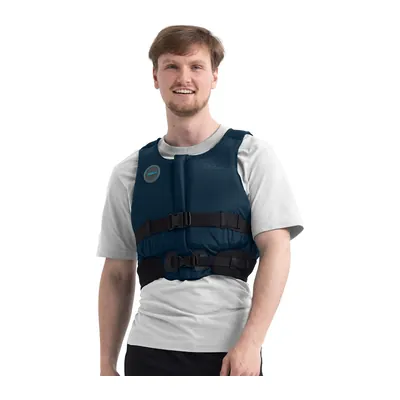
Jobe Adventure
An ISO-certified 50-newton buoyancy aid, cut short to stay comfortable when sitting in a kayak or canoe, with a zip and two buckles. Unisex, several sizes.
View on Amazon (opens in a new tab)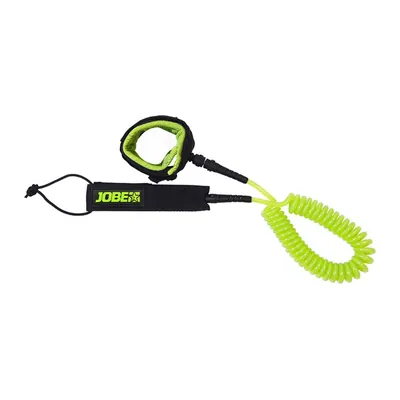
Jobe SUP Leash Coil 10FT
A 3.04 m coiled TPU leash with an ankle cuff and key pocket: it keeps the board within reach after a fall, as some local beach rules require.
View on Amazon (opens in a new tab)
Worth watching
From Paddle UK: the waterways licence, weir safety, river hazards, canals, lakes and lochs, the essentials to check before launching a canoe, kayak or paddleboard on inland water in the UK.
The video is hosted by YouTube (Google): nothing loads until you play it, and Google may then set cookies.
FAQs
How far out can you paddleboard at sea in France?
Up to 300 m from a shelter by default, and only in daylight. A paddleboard of 3.50 m or more that stays afloat even when swamped may go up to 2 nautical miles, or 3.7 km, with a way to stay in contact with the board, such as a leash, a 50 N flotation device or a wetsuit worn, and a waterproof light. Beyond 2 nautical miles, paddleboards are prohibited under France’s Division 240.
Is a buoyancy aid compulsory for kayaking or paddleboarding?
It depends on the water. At sea in France, no equipment is required within 300 m of a shelter; beyond that, a 50 N flotation device per person or a wetsuit worn is. On French inland waters, the ministry’s leaflet requires a flotation device worn at all times. On Lake Constance and on Swiss lakes, a buoyancy aid becomes compulsory on board beyond 300 m from the shore.
Do you need a licence to paddleboard in the UK?
Yes on Canal & River Trust canals and rivers and on Environment Agency waterways such as the non-tidal Thames: every canoe, kayak or paddleboard needs a licence or registration there, from around £5 a day. Membership of Paddle UK or Paddle Cymru includes one. On the coast, on tidal waters or on a lake, you may not need one.
Can you take a paddleboard through a lock?
In Germany, no: since an order of 26 July 2018, paddleboards are banned from the locks on federal waterways, and the board has to be carried overland. In France, the general navigation regulations forbid small craft from demanding a special lock operation: they enter the chamber only when invited by the lock-keeper, after the other boats. In Scotland, access rights do not apply to locks.
Do you have to put your name on a paddleboard or kayak?
On Lake Constance and in Switzerland, yes: the owner’s name and address must be clearly visible, whatever the length. On German federal waterways and in Austria, small craft carry a name or motto and the owner’s address; the German exemption for sailboards might cover paddleboards, but that is not certain. At sea in France, registration remains optional up to 2 nautical miles from a shelter.
Sources
- French ministry for the Sea, Division 240, ‘Règles de sécurité applicables à la navigation de plaisance en mer sur des embarcations de longueur inférieure ou égale à 24 mètres’, regulation annexed to the amended order of 23 November 1987, updated to the order of 21 May 2026 (Journal officiel of 8 June 2026) (in French), accessed 24 October 2026. mer.gouv.fr https://www.mer.gouv.fr/sites/default/files/2025-05/division-240-11.10.2024-2.pdf ↩
- French ministry for the Sea, Division 245, ‘Référentiel technique des navires de plaisance exclus du marquage CE de longueur de coque inférieure ou égale à 24 mètres’, article 245-4.03, Journal officiel edition of 22 September 2023 (in French), accessed 24 October 2026. mer.gouv.fr https://www.mer.gouv.fr/sites/default/files/2023-10/Division%20245_%2822.09.2023%29.pdf ↩
- French ministry for the Sea (DICOM/DGAMPA), ‘Les loisirs nautiques en mer’, leaflet, March 2024 (in French), accessed 24 October 2026. mer.gouv.fr https://www.mer.gouv.fr/sites/default/files/2024-01/Loisirs%20nautiques%20en%20mer_6p_2024.pdf ↩
- Mediterranean maritime prefecture, order no. 342/2026 of 14 August 2026 regulating navigation in the 300 m coastal strip off Le Grau-du-Roi (in French), accessed 24 October 2026. premar-mediterranee.gouv.fr https://www.premar-mediterranee.gouv.fr/uploads/mediterranee/arretes/528ad0c8806bdf1daff84cea5d4d6f66.pdf ↩
- French ministry for the Sea (DICOM/DGAMPA), ‘Le balisage des zones de loisirs’, leaflet, March 2025 (in French), accessed 24 October 2026. mer.gouv.fr https://www.mer.gouv.fr/sites/default/files/2020-11/Balisage_zones_loisirs_4p_DEF_Web.pdf ↩
- Town of Pornichet, municipal order no. ARR2025-381 regulating swimming and water activities on the coast, signed 3 June 2025 (in French), accessed 24 October 2026. ville-pornichet.fr https://ville-pornichet.fr/wp-content/uploads/2026/03/ARR2025-381-REGLEMENTANT-LA-BAIGNADE-ET-LES-ACTIVITES-NAUTIQUES.pdf ↩
- Mediterranean maritime prefecture, ‘Lancement de la campagne de sécurité des loisirs nautiques et de la plaisance 2026 en Méditerranée’, press release of 5 May 2026 (in French), accessed 24 October 2026. premar-mediterranee.gouv.fr https://www.premar-mediterranee.gouv.fr/communiques-presse/lancement-de-la-campagne-de-securite-des-loisirs-nautiques-et-de-la-plaisance-2026-en-mediterranee ↩
- Le Monde du droit (LegalNews), ‘Compétence du juge judiciaire en cas d’atteinte au droit de propriété des riverains des cours d’eau’, on the Cour de cassation ruling of 31 January 2018 and article L. 214-12 of the French environment code (in French), accessed 24 October 2026. lemondedudroit.fr https://www.lemondedudroit.fr/judiciaire/325-procedure-civile/58948-competence-du-juge-judiciaire-en-cas-datteinte-au-droit-de-propriete-des-riverains-des-cours-deau-.html ↩
- French ministry for the Sea, ‘L’équipement de sécurité des bateaux de plaisance en navigation intérieure’, leaflet on the order of 10 February 2016, March 2024 (in French), accessed 24 October 2026. mer.gouv.fr https://www.mer.gouv.fr/sites/default/files/2020-11/equipement_secu-bateaux_de_plaisance_en_navigation_interieure_DEF_Web.pdf ↩
- French ministry for the Sea (DICOM-DGAMPA), ‘Guide des loisirs nautiques en eau douce’, 2026 edition (in French), accessed 24 October 2026. mer.gouv.fr https://www.mer.gouv.fr/sites/default/files/2020-11/13058_Guide-loisirs-nautiques-en-EAU-DOUCE_web_planches.pdf ↩
- French directorate general for infrastructure, transport and the sea, ‘Police de la navigation intérieure : règlements de police’, compendium of the general inland navigation regulations, September 2019, published by Voies navigables de France (in French), accessed 24 October 2026. vnf.fr https://www.vnf.fr/vnf/app/uploads/2020/01/recueil_rgpni___2019_09.pdf ↩
- Voies navigables de France, ‘Péage plaisance : tarifs’ (in French), accessed 24 October 2026. vnf.fr https://www.vnf.fr/vnf/services/peage-plaisance-tarifs/ ↩
- Canal & River Trust, ‘Licensing your craft’, last edited 20 October 2026, accessed 24 October 2026. canalrivertrust.org.uk https://canalrivertrust.org.uk/things-to-do/canoeing-and-kayaking-near-me/licensing-your-canoe ↩
- Environment Agency, ‘River Thames boat registration and other charges: 1 January 2026 to 31 December 2026’, updated 6 November 2025, accessed 24 October 2026. gov.uk https://www.gov.uk/government/publications/river-thames-boat-registration-charges/river-thames-boat-registration-and-other-charges-1-january-2026-to-31-december-2026 ↩
- Paddle Cymru, ‘Why do I need a licence?’, waterways licence FAQs, accessed 24 October 2026. paddlecymru.org.uk https://www.paddlecymru.org.uk/waterways-licence-FAQs ↩
- NatureScot, Scottish Outdoor Access Code, ‘Canoeing, rafting, rowing, sailing’, last updated 15 August 2023, accessed 24 October 2026. outdooraccess-scotland.scot https://www.outdooraccess-scotland.scot/practical-guide-all/watersports/canoeing-rafting-rowing-sailing ↩
- NatureScot, Scottish Outdoor Access Code, ‘Canals’, last updated 10 February 2025, accessed 24 October 2026. outdooraccess-scotland.scot https://www.outdooraccess-scotland.scot/practical-guide-all/water/canals ↩
- German Federal Ministry of Justice, ‘Binnenschifffahrtsstraßen-Ordnung (BinSchStrO)’, § 2.02, last amended 14 October 2025 (in German), accessed 24 October 2026. gesetze-im-internet.de https://www.gesetze-im-internet.de/binschstro_2012/BinSchStrO.pdf ↩
- German federal waterways and shipping administration (ELWIS), ‘Kennzeichnung Kleinfahrzeuge auf Binnenschifffahrtsstraßen’, as of 8 July 2026 (in German), accessed 24 October 2026. elwis.de https://www.elwis.de/DE/Sportschifffahrt/Binnenbereich/Kennzeichnung-Kleinfahrzeuge/Kennzeichnung-Kleinfahrzeuge-node ↩
- Generaldirektion Wasserstraßen und Schifffahrt, ‘Allgemeinverfügung zur Regelung der Benutzung von Schleusen an Binnenschifffahrtsstraßen’, 26 July 2018 (in German), accessed 24 October 2026. elwis.de https://www.elwis.de/DE/Sportschifffahrt/Binnenbereich/Stand-Up-Paddle-Boards-Allgemeinverfuegung.pdf?__blob=publicationFile&v=4 ↩
- Free State of Bavaria, ‘Bayerische Schifffahrtsverordnung (BaySchiffV)’, as amended on 26 March 2019 (in German), accessed 24 October 2026. gesetze-bayern.de https://www.gesetze-bayern.de/Content/Pdf/BaySchiffO?all=True ↩
- Landratsamt Bodenseekreis, ‘Die Bodensee-Schifffahrts-Ordnung (BSO) wurde zum 1. April 2022 novelliert’, main changes (in German), accessed 24 October 2026. bodenseekreis.de https://www.bodenseekreis.de/fileadmin/02_verkehr_wirtschaft/schifffahrt/downloads/aktuelles/bodenseeschifffahrtsordnung_aenderungen_2022.pdf ↩
- Lake Constance lake and water police (Thurgau cantonal police), ‘Hinweise für Schlauchboote ohne Motor, Stand-up-Paddler, Kanus’, April 2022 (in German), accessed 24 October 2026. kapo.tg.ch https://kapo.tg.ch/public/upload/assets/131621/BSO22%20Hinweise.pdf?fp=1 ↩
- Association of Swiss navigation offices (vks), ‘Merkblatt Nr. 6: Stehpaddler SUP’, in force from 1 April 2017, published by the Bern road traffic and navigation office (in German), accessed 24 October 2026. svsa.sid.be.ch https://www.svsa.sid.be.ch/content/dam/svsa_sid/dokumente/de/allg-dokumente/schifffahrt/svsa-sf-vks-M-6-SUP-d.pdf ↩
- Bern cantonal police, ‘Vorschriften auf Binnengewässern’, leaflet, 2021 (in German), accessed 24 October 2026. bern.ch https://www.bern.ch/themen/sicherheit/pravention/aare-you-safe/tipps-aareschwimmen/gut-zu-wissen-welches-rettungsmaterial/infobroschueren-der-kantonspolizei-bern/flyer-vorschriften-binnengewasser-kantonspolizei-1.pdf/download ↩
- Republic of Austria, RIS, ‘Seen- und Fluss-Verkehrsordnung’, § 4, version in force since 1 February 2019 (in German), accessed 24 October 2026. ris.bka.gv.at https://www.ris.bka.gv.at/Dokumente/Bundesnormen/NOR40212989/NOR40212989.pdf ↩
- Republic of Austria, Federal Law Gazette II no. 98/2013, ‘Seen- und Fluss-Verkehrsordnung (SFVO)’, §§ 1, 3 and 34, 15 April 2013 (in German), accessed 24 October 2026. ris.bka.gv.at https://www.ris.bka.gv.at/Dokumente/BgblAuth/BGBLA_2013_II_98/BGBLA_2013_II_98.pdf ↩
- Service-Public.fr, ‘Quels sont les numéros en cas d’urgence (Samu, pompiers...) et les numéros d’écoute ?’, checked 25 August 2026 (in French), accessed 24 October 2026. service-public.gouv.fr https://www.service-public.gouv.fr/particuliers/vosdroits/F33954 ↩
- Maritime and Coastguard Agency, organisation page on GOV.UK, ‘In an emergency at the coast’, accessed 24 October 2026. gov.uk https://www.gov.uk/government/organisations/maritime-and-coastguard-agency ↩

Fact-checking, regulations and safety
Arnaud Couderc reviews our contributors’ articles and writes for Outfarer about regulations, safety, fishing, the sea and outdoor pursuits. He traces every rule back to its official text and every figure to its source, so that you set off with sound benchmarks.

 Nolwenn Bastide

