 Français (France)
 English (UK)
 English (US)
 Deutsch (Deutschland)

Contents
There is no national fishing license in the United States: you fish on a license from the state where you cast your line. Even on a federal wildlife refuge, the Fish & Wildlife Service says, you need the state license [1]. That’s the rule, and the rest of a first outing follows from it. This guide takes the steps in order: the water, the license, the rules of the day, the gear, a first rig, where to stand, safety on the bank, then what to do with the fish. Texas, New York, and Colorado serve as worked examples, with prices and limits read on each agency’s own page on November 20, 2026.
It’s written for an adult or a family that has never fished, from the bank of a pond, a lake, or a river, with a rod and reel, bait, and a bobber. Fly fishing gets a pointer at the end; ice fishing, boat fishing, and offshore fishing aren’t covered. A fishing rule comes with a date and a place: the state sets the frame, and one lake or one park can tighten it [2, 3, 4]. At each step, this guide says what the text says, what it changes for you, and what to check before you leave.
| When | What to do |
|---|---|
| Right now | Pick a public water near you and find the state agency that manages fishing there; note when your license year turns over (Texas packages end August 31, Colorado annual licenses run from March 1); look up the free fishing days |
| A few days before | Buy the license online; read the regulations for that water: season, size and daily limits, lines, bait and hook rules; line up a rod and reel (borrow one if you can), hooks, sinkers, a bobber, and bait |
| The night before | Print the license or save it on your phone; check the forecast, thunderstorms above all; locate overhead power lines near your spot; tell someone where you’re going and when you’ll be back |
| On site | Set up well away from overhead lines; tie on the hook and the rig; look for weeds, rocks, or a change in the bottom; carry the rod horizontally when you move |
| Afterward | Measure what you catch, then keep what’s legal or release it quickly; pick up line, hooks, and sinkers; clean and dry your gear and waders before the next water |
A summary of this guide: each point is explained, with its source, in the step that covers it.
1Where to fish, and what to fish for
For a first time, panfish make the easiest target. MassWildlife steers beginners toward pumpkinseed, bluegill, and yellow perch, which are plentiful and take less technique, and notes that panfish usually hang out in shallow, weedy beds next to the shoreline [5]. New York’s Department of Environmental Conservation adds that sunfish can be found around all types of structure, including weeds, rocks, brush, docks, and overhanging branches, and that in spring, before they spawn, crappies can be caught easily around weeds and brush in 3 to 6 feet of water [6]. Those are Northeast guides: your region’s fish and seasons may differ, so your state agency’s beginner page is worth a look.
Where you may fish comes next, and public water is the simple answer. Texas manages 18 Neighborhood Fishin’ lakes in most major urban centers, meant for families and new anglers [7], and lets anyone fish from the bank, a dock, or a pier at more than 70 state parks without a license, though park entry fees still apply [8]. Colorado counts 20 state parks with lake, pond, stream, or river fishing, and its Fishing Atlas searches waters by species or by distance from home [9]. National fish hatcheries and wildlife refuges are on the list too, with the state license in your pocket [10, 1].
Private water is another matter. Colorado’s brochure is blunt: it’s illegal to go onto private land to fish without permission, including touching any part of private land by person or watercraft, and private land doesn’t have to be posted or fenced [4]. A license answers only half the question: whether you may be on that water is the owner’s call, so ask first.
To start with company, look for a clinic. In New York, the DEC and other organizations run free, instructor-led Learn to Fish clinics, and a clinic approved by the DEC waives the license requirement for participants 16 and older [11]; Colorado’s outreach programs offer clinics, seminars, advice, and in-field experiences for people of all ages and abilities [9]. The table in the last step lists what each of our three states offers.
2The license: your state, not a national one
The rule is short: the license comes from the state where you fish, and each state decides who needs one, what it costs, and when it expires. In Texas, anyone under 17 is exempt; New York and Colorado ask for a license from age 16 [12, 13, 14]. What that means for you: the table below shows three states, not the whole country, so read your own state’s page before you buy.
| License | Texas | New York | Colorado |
|---|---|---|---|
| Needed from age | 17 (under 17 exempt) | 16 | 16 (15 and under fish free) |
| Resident annual | $30 freshwater package; $40 all-water package | $25 (ages 16 to 69); $5 (ages 70 and up) | $44.87 (ages 18 to 63), plus a $12.76 Habitat Stamp |
| Resident short-term | $11 for one day, all-water | $5 for one day; $12 for 7 days | $18.07 for one day |
| How long it lasts | From the day of sale to August 31 | 365 days from purchase | March 1 through March 31 of the next year (13 months) |
| Free fishing days | First Saturday in June (June 5, 2027); all year at state parks | Several a year (in 2026: Feb. 14-15, June 27-28, Sept. 26, Nov. 11) | First full weekend of June, every year |
Resident prices and rules as listed by each agency on November 20, 2026 [12, 13, 14]; free-day dates from Texas Parks and Wildlife, New York’s DEC, and the Colorado brochure [8, 11, 4]. Nonresidents pay more.
Read the fine print. Texas sells packages, not just licenses: $30 buys the resident freshwater package, a fishing license plus the freshwater An add-on to the license that covers freshwater or saltwater fishing., and $40 the all-water package, for fresh and salt water. Both run from the day of sale to August 31 [12], so a package bought in June still ends on August 31. In Colorado, adults 18 to 63 pay $44.87 for the annual license plus a $12.76 Habitat Stamp, which comes to $57.63, and the license runs from March 1 through March 31 of the following year [14]. New York keeps it simple: 365 days from the day you buy [13]. Both Texas and New York also sell lifetime licenses, to residents only [12, 13].
Each agency sells licenses online. Texas lists “Buy online or Find a retailer” beside every package [12], and New York offers online, in person at a license issuing agent, or by phone [13]. Colorado’s page tells you to print or write down your temporary authorization number, valid for 45 days after purchase until the license arrives in the mail, and to carry it while you fish [14]; its brochure asks anglers 16 and older to carry a physical license or the My CPW app license [4]. The practical rule: buy a few days ahead, and carry the proof.
Exemptions and free days differ too. Texas’s Free Fishing Day lets everyone fish without a license or endorsement on the first Saturday in June [8]; New York held free fishing days in 2026 on February 14 and 15, June 27 and 28, September 26, and November 11, and its 2027 calendar isn’t on the pages we read [11]; Colorado’s falls on the first full weekend of June every year, without a license or Habitat Stamp [4]. On free days, all other regulations still apply [11, 4]. One Texas trap: the state park exemption doesn’t cover a park run by a city, a county, a river authority, or the Corps of Engineers, where you need a license [15].
Saltwater has its own paper. New York asks for a marine fishing registration to fish for saltwater species [13], and Texas sells saltwater endorsements and all-water packages [12]. At the federal level, NOAA’s National Saltwater Angler Registry costs $12 a year, but most anglers don’t need it: a valid state saltwater license or permit exempts you, and the registration is not a license to fish anywhere [17].

3The rules: seasons, limits, lines, and special waters
Each state writes its own seasons, minimum sizes, and daily limits, species by species, in a regulations booklet or on its agency’s website. The table gives two rules from each of our three states. A minimum length is measured from the tip of the snout to the tip of the tail, New York specifies, with the tail spread or compressed to get the greatest length [18].
| State | Fish | Daily limit and minimum length |
|---|---|---|
| Texas | Black bass (largemouth, smallmouth, and others) | 5 a day in any combination; 14 inches minimum |
| Texas | Channel and blue catfish | 25 a day in any combination, only 10 of them 20 inches or longer; no minimum length |
| New York | Black bass | June 15 to Nov. 30: 5 a day, 12 inches minimum. Dec. 1 to June 14: catch and release only, artificial lures only |
| New York | Brown and rainbow trout in lakes and ponds | Open all year: 5 a day, only 2 longer than 12 inches |
| Colorado | Trout, Arctic char, grayling, salmon, and mountain whitefish (kokanee excepted) | 4 a day, 8 in possession |
| Colorado | Largemouth, smallmouth, and spotted bass | 5 a day, 5 in possession (smallmouth west of the Continental Divide: no limit) |
Sources: Texas, for September 1, 2026 through August 31, 2027 [2]; New York, regulations effective April 1, 2026 [3]; Colorado, 2026 brochure [4]. Many waters have exceptions: check the one you will fish.
A daily limit isn’t the same as a possession limit. In Texas, possession limits are twice the daily limits [2]. Colorado defines the daily limit as the most fish you can take in a day, whatever you do with them: fish put on a stringer or in a livewell, or not returned to the water immediately, count, while fish released immediately don’t [4]; New York says the same for fish you catch and immediately release uninjured [18]. Some Texas lakes add a A protected length range: fish inside it must be released, while shorter or longer fish may be kept.: on a lake with a 14-to-18-inch slot for bass, you can’t keep any bass between 14 and 18 inches, but you may keep smaller or larger ones, within the daily limit of five [15].
Gear rules are local too. New York allows no more than 3 lines, with or without a rod, each with no more than 5 lures or baits and 15 hook points, and you must stay in immediate attendance while your lines are in the water [18]. In Colorado, a line carries at most three common hooks, and a second rod takes a second-rod stamp, $14.24 at the time of writing [4, 14]. In a Texas community fishing lake, or from a dock, pier, or jetty in a state park, you may use no more than two poles [7].
Then the water itself. Texas warns that special regulations may apply to certain waterbodies [2]; New York lists special regulations by region, for inland trout streams, and for the Great Lakes [3]; Colorado’s chart reminds you that some waters have more restrictive limits [4]. National parks can go further: Yellowstone allows one rod per angler, only lead-free artificial lures or flies, barbless hooks or barbs pinched down, and no bait of any kind [19]. The worm-and-bobber rig in this guide wouldn’t be legal there.
Bait carries rules too. The Fish & Wildlife Service puts it plainly: some areas prohibit certain types of bait [10]. Two habits protect the water: never move fish or plants from one water body to another, and never dump unused live bait into the water, the agency says [10]; in Colorado, moving fish between waters is illegal [4].
4Starting gear
A first outing runs on simple gear. The Fish & Wildlife Service’s checklist for fresh water is short: a rod and reel, 4- to 12-pound-test monofilament line, a package of fishing weights, hooks in sizes 6 to 10, a plastic or cork A float that sits on the surface and bobs up and down as fish nibble the bait., live bait or lures, and a rubber net and glove, plus your state license [10]. Many outdoor retailers sell kits with everything in them, it adds, and some libraries, state agencies, national fish hatcheries, and wildlife refuges lend tackle to families and beginners [10].
Choose a rod you can hold comfortably in one hand. The agency names two common beginner reels: the closed spin-casting reel, which releases line with a push button and is “the easiest rod and reel for beginners,” and the open-bail spinning reel [10]. Colorado’s learn-to-fish page agrees that a closed-face spincast outfit is great for learning [9], and MassWildlife suggests a light, push-button spin-casting combo for kids, leaving bait-casting and fly rods at home [5].
States add their own small print. Colorado’s list is fishing line of 4 to 8 pounds, hemostats or needle-nose pliers, 1/8-ounce sinkers, bobbers, no. 8 or no. 10 hooks, and no. 10 swivels [9]. New York recommends hooks in sizes 6 to 10 for panfish, line of 6 to 8 pounds, and the smallest bobber you can use, and notes that a long-shank hook, an Aberdeen style for example, can help in removing a swallowed hook [6]. Our guide to hook sizes explains why a higher number means a smaller hook.
Then the bait. What goes on the hook depends on the fish, and Colorado’s beginner page pairs them as in the table, with a reminder to check the brochure’s list of waters for bait restrictions [9]. For kids, MassWildlife prefers bait to lures: garden worms, mealworms, crickets, or small, dense pieces of food like cheese, chicken, hot dogs, or bread [5].
| Fish | Baits and lures listed |
|---|---|
| Trout | Flies, lures, salmon eggs, jigs, worms |
| Sunfish and crappie | Jigs, worms, mealworms, salmon eggs |
| Catfish | Stink bait, worms, hot dogs, chicken livers |
| Bass | Jigs, worms, lures, soft baits |
Source: Colorado Parks and Wildlife, “Learn to Fish.” Check your state’s regulations for bait restrictions on the water you fish.

5Knots and your first rig
The rig reads from top to bottom: rod and reel, line, bobber, one or two sinkers, hook, bait. Tie on a hook, attach 1 or 2 sinkers 6 to 12 inches above it, and clip on a bobber, which moves up and down in the water as fish nibble the bait, the Fish & Wildlife Service explains [10]. Most bobbers attach with a spring clip and slide along the line, so you choose how deep the bait hangs [10]. New York’s panfish advice: use the smallest bobber that works, since a larger one lets you cast farther and see it better, but fish can feel it and ignore the bait [6].
To tie the hook on, the Fish & Wildlife Service teaches the improved clinch knot: pass the line through the hook eye, make 5 turns around the standing line, pass the loose end between the eye and the first loop, then through the large second loop, wet the line, and tighten slowly [10]. Illinois adjusts the turns to the line: six turns for light line (2 to 6 pounds), five for medium (8 to 12), four for heavy (14 to 20) [20]; Colorado says five or more [9]. A good knot keeps more than 90 percent of the line’s strength, a poor one less than half, Illinois adds [20]. Our guide to fishing knots covers the Palomar and the uni.

6Choosing your spot and reading the water
Fish aren’t spread evenly. The Fish & Wildlife Service’s advice for picking a spot: look for a weedy or rocky area where the water is several feet deep, and for places where the bottom changes, from sand to gravel or from sand to mud; stay quiet, cast as far from shore as you can, and watch the bobber. When a fish takes the bait, it will probably swim away and pull the bobber under: raise the rod tip quickly to set the hook, then reel in [10]. New York adds that bullheads are bottom feeders, with the best fishing generally in the evening or at night [6].
What time of day? The agency pages we read name no single best hour for beginners. Temperature does matter for fish you plan to release, and Texas Parks and Wildlife gives numbers for black basses, in the table below [21]. That is guidance for one group of fish in one state; it doesn’t extend to every species.
| Condition | What the agency says |
|---|---|
| Water above 70 °F (21 °C) | Catch and release is stressful to black basses |
| Water above 80 °F (27 °C) | Catch and release is very stressful |
| Water deeper than 30 feet (9 m) | Avoid catch and release |
Source: Texas Parks and Wildlife Department, “Catch and Release Black Basses.” Guidance for black basses; it does not apply to every species.
From a saltwater shore, the tide sets the day more than the clock: NOAA’s Tides and Currents site publishes the official U.S. high and low tide predictions [22], and our guide to tide times explains how to read them.
7The day itself and safety at the water
The hazard beginners know least hangs overhead. A rod is a long pole, and electricity can jump, or arc, the Electrical Safety Foundation International warns: its general rule is to stay at least 10 feet (3 m) away from any overhead power line and to carry long tools and equipment horizontally [23]. That leaflet is about power lines near your home and never mentions fishing, so treat its figure as a minimum, not a fishing rule. We found no U.S. utility or agency page that sets a distance for anglers. Electricity North West, a British network operator, does: fish at least 30 meters (100 feet) horizontally away from all overhead lines, and never estimate their height or distance from the ground [24].
The two figures don’t match, and no text unifies them: they come from different sources with different aims. The safe habit is the common one. Don’t fish under or near a line, and take the biggest margin the spot allows. Look up before you assemble the rod, as Electricity North West advises, and tell children never to fish near overhead lines, since they may not be able to judge the distance [24].
| Source | Distance | What it is |
|---|---|---|
| Electrical Safety Foundation International (U.S.) | At least 10 feet (3 m) from any overhead line | General safety rule, not written for fishing |
| Electricity North West (U.K. network operator) | At least 100 feet (30 m) horizontally from all overhead lines | Advice written for anglers |
Advice from a safety foundation and a network operator, not laws. We found no U.S. text that sets a distance for anglers. Beyond these figures, the common rule is not to fish under or near a line.
The second hazard is the water itself. Fish with a companion who can help in an emergency, the Fish & Wildlife Service says, and wear a Coast Guard-approved life jacket when wading or in a boat [10]. Pennsylvania’s Fish & Boat Commission points to the banks: steep or undercut banks make great fish habitat but can be dangerous, and a life jacket cushions a fall and keeps you afloat; the currents over a dam are too strong even for the best swimmer, so stay away [25]. Its wading tips: never wade alone, wear a wading belt with chest waders, lean on a staff, and avoid swift currents [25]. For kids, MassWildlife says life jackets even along the shore while they learn [5].
Thunder settles the question. In the National Weather Service’s beach-or-lake example, you go to your car, not to an open-sided shelter, and you wait 30 minutes after the last rumble before going back [26]. With no safe building or vehicle nearby, stay away from water, wet items, and metal objects: water and metal don’t attract lightning, but they conduct electricity well [26]. Check the forecast before you go, the Weather Service asks anyone fishing or boating, because the first strike can come out of a clear blue sky many miles ahead of the storm cloud [27].
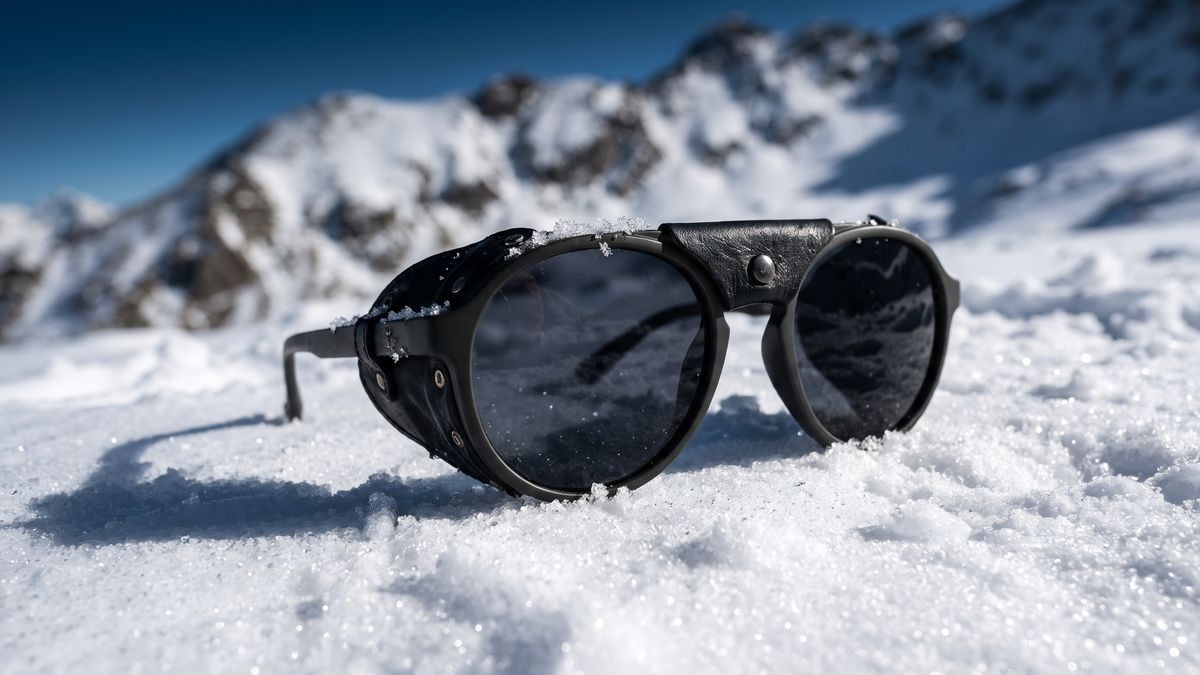
Then sun, hooks, and bites. The FDA recommends broad-spectrum sunscreen with an SPF of 15 or higher, reapplied at least every two hours and more often if you’re sweating [28]; MassWildlife adds that polarized sunglasses protect eyes from the sun and from tree branches and hooks [5], and our guide to sunglasses explains the categories. Look around before every cast: handle hooks with care and never cast near other people [10]. MassWildlife suggests barbless hooks, or barbs bent down with pliers, as a safety measure for kids, and Texas recommends barbless hooks when possible for fish you plan to release [5, 21]. Afterward, check your body for ticks and shower soon after, the Park Service advises [29]; our tick guide has the details.


8Keep or release, and handle the fish
Keep or release is decided by the regulations. A fish inside a protected slot, like the 14-to-18-inch slot on some Texas lakes, must be released immediately [15]. In New York, you may not fish for a species during its closed season, even to release it; a fish caught by accident must be unhooked and released immediately [18]. And some fish never go back: in New York, any snakehead caught while angling can’t be released, and must be killed immediately and reported to the DEC [18].
For a fish you release, the Fish & Wildlife Service has three tips: keep it as wet as possible, with wet hands or wet rubberized gloves and a rubber net; minimize airtime; and if it swallowed the hook, don’t tear it out, cut the line as close to the mouth as possible [10]. Texas puts it as a rule of thumb for black bass: keep the fish out of the water no longer than you can hold your breath, wet your hands first because dry hands remove protective slime, and never pick up a fish by the gill cover or the eye sockets [21]. Colorado asks you to avoid fighting a fish to exhaustion and to keep it in the water while you handle it, without touching the gills [4]. To revive a fish, the Fish & Wildlife Service says, move it gently back and forth in the water so water runs through its gills, and let it go once it swims normally [10].
If you keep fish to eat, Colorado suggests a cooler with ice, since fish left out may spoil [9]. One more check comes first. You can’t tell by look or smell whether a fish carries chemical pollutants, the EPA says; the only way is lab testing. So look for warning signs along the water’s edge and follow their advice, and if you see none, ask your local or state health or environmental protection department [32].

9Going further: fly fishing, clinics, and fishing with kids
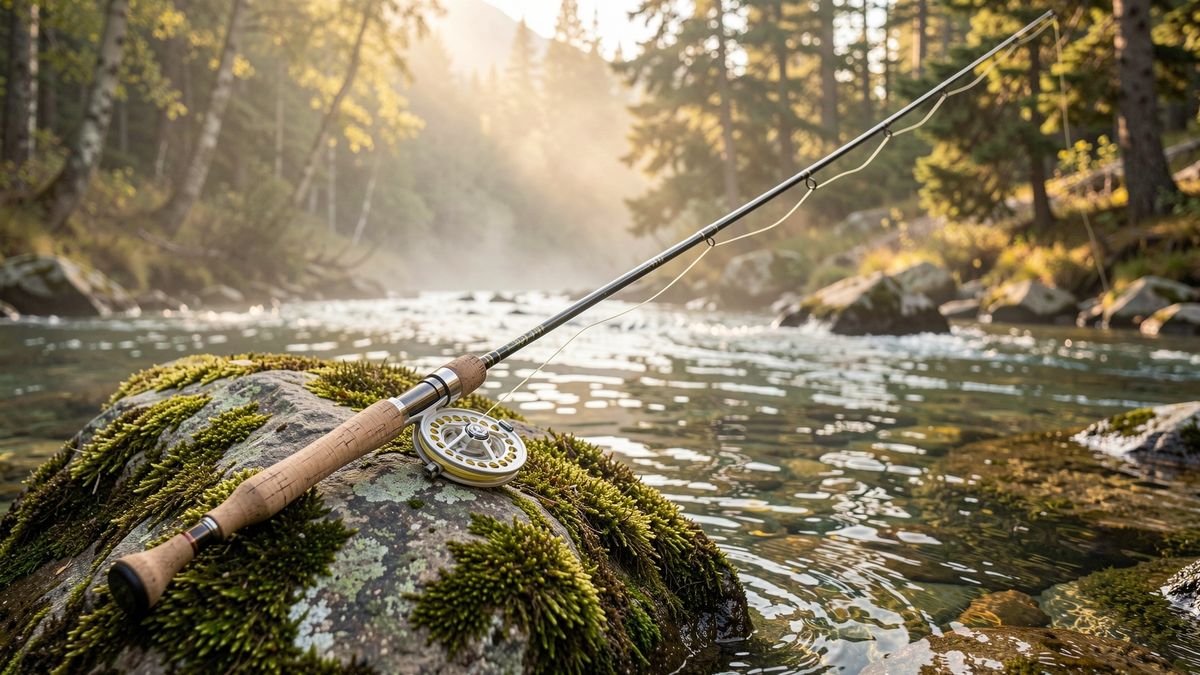
Fly fishing has its own codes, a rod number and a line weight: our guide to fly rod and line weights decodes them. Ask about the water first: as Yellowstone shows, flies and artificial lures are sometimes the only gear allowed [19].
To learn with company, or to borrow gear, each state has its own programs, listed in the table. Hiring a guide is another route: in Texas, anyone who accompanies fishers for pay needs a fishing guide license [12].
| State | What the agency offers |
|---|---|
| Texas | 18 Neighborhood Fishin’ lakes in or near major cities, for families and new anglers [7]; free fishing from the bank, a dock, or a pier at more than 70 state parks [8] |
| New York | Free instructor-led Learn to Fish clinics, with no license needed for participants 16 and older; a fishing rod loaner program; free fishing days [11] |
| Colorado | Clinics, seminars, advice, and in-field experiences for all ages and abilities; a Fishing Atlas to find waters; a free fishing weekend each June [9, 4] |
Federal help exists too: some libraries, state agencies, national fish hatcheries, and wildlife refuges run tackle loaner programs, the Fish & Wildlife Service says [10].
With kids, short trips work best. MassWildlife suggests an hour or two, a spot close to home with open space to cast, a simple hook, sinker, and bobber, and snacks, drinks, sunscreen, and bug spray [5]. Age rules differ: Texas exempts anyone under 17, New York and Colorado anyone under 16, though a second line in Colorado takes a second-rod stamp [12, 13, 4]. And before you leave, open your state agency’s page for the water you chose, read the season and the limits with their date, and buy the license. After that, the rest is patience.


The checklist before you head out
Check it off the night before, or print it and slip it in your bag.
- Public water chosen, or the owner’s permission; the managing agency identified
- State fishing license bought, printed or saved on your phone
- Regulations read for that water: season, size and daily limits, lines, bait and hook rules
- Rod and reel you can hold in one hand, 4- to 12-pound line, hooks 6 to 10, sinkers, bobber, bait
- Net, pliers, something to measure with, a cooler with ice if you plan to keep fish
- Overhead power lines located before you set up, spot well away from them
- Forecast checked, no thunderstorms; trip plan left with someone
- Life jackets for kids, and for wading or boating; steep banks and dams avoided
- Sunscreen, polarized sunglasses, tick check afterward
- Wet hands, quick release, barbless hooks where you can
- Fish and plants never moved between waters; waders and gear cleaned and dried
- Line, hooks, and sinkers picked up
- 911 in mind for an emergency
Gear related to this article
No affiliation: no commission, no sponsored products.
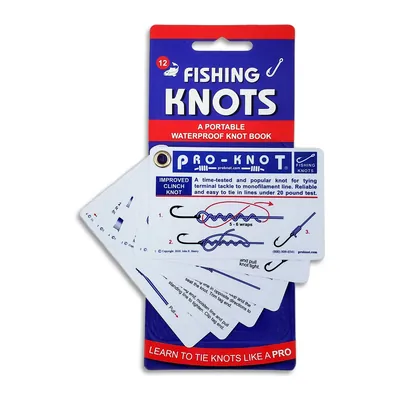
Pro-Knot Fishing Knots (waterproof knot cards)
Twelve fishing knots, the improved clinch among them, illustrated on six waterproof plastic cards held by a brass grommet: pocket-size at 3½ by 2¼ inches, made for a tackle box.
View on Amazon (opens in a new tab)
Worth watching
A short beginner video from Take Me Fishing, the nonprofit behind the national learn-to-fish campaign: freshwater spots, starter gear, and easy techniques shown on the water.
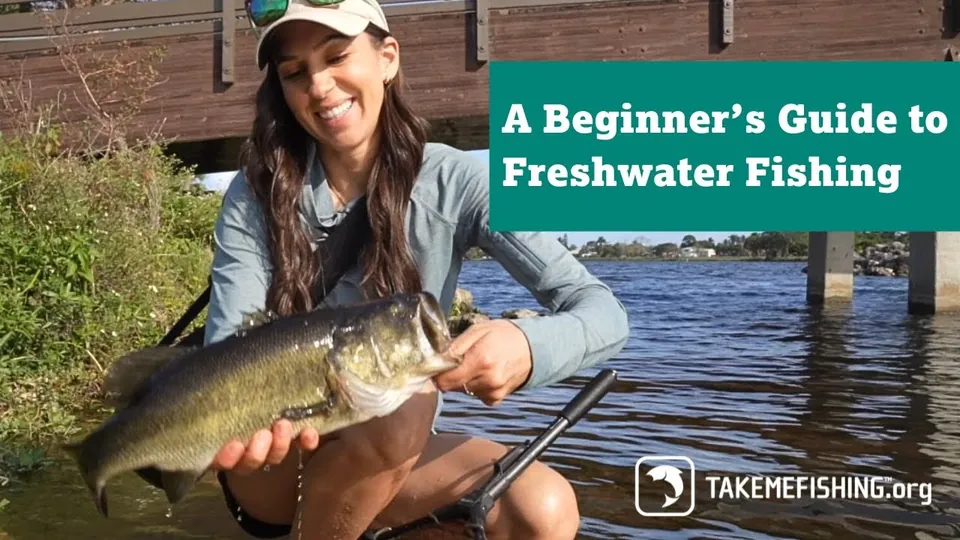
The video is hosted by YouTube (Google): nothing loads until you play it, and Google may then set cookies.
FAQ
Do I need a fishing license?
In the three states we read, yes, and it comes from the state where you fish: there’s no national license. Texas exempts anyone under 17, New York and Colorado anyone under 16. Exceptions exist, such as free fishing days and Texas state parks. National wildlife refuges ask for the state license too. Check your own state’s wildlife agency before you go.
How much does a fishing license cost?
It depends on the state. Resident prices: Texas, $30 for the freshwater package and $40 for the all-water package, both running to August 31; New York, $25 for a year (ages 16 to 69) and $5 for a day; Colorado, $44.87 plus a $12.76 Habitat Stamp for adults 18 to 63. Nonresidents pay more.
Where can I buy a fishing license?
Start with your state’s wildlife agency, which sells licenses online: Texas, New York, and Colorado all do. Texas and New York also list in-person sellers, such as retailers and license issuing agents. Print the license or save it on your phone, and carry it while you fish.
Do kids need a fishing license?
Often not, but the age differs. Texas exempts anyone under 17, New York and Colorado anyone under 16, and in Colorado a second line takes a second-rod stamp. Yellowstone lets children 15 and younger fish with a permit-holding adult, or with a free permit signed by an adult. Check your state’s page for kids’ rules.
What gear does a beginner need?
The Fish & Wildlife Service suggests a rod you can hold in one hand with a closed spin-casting reel, the easiest for beginners, plus 4- to 12-pound-test line, size 6 to 10 hooks, a bobber, weights, and bait or lures. Many stores sell kits, and some libraries, state agencies, and refuges lend tackle.
Can I eat the fish I catch?
Check first. You can’t tell by look or smell whether a fish carries chemical pollutants, the EPA says. Look for warning signs at the water and follow them; if there are none, call your state or local health or environmental agency. States issue advisories for specific waters and species, and for groups such as children and pregnant females.
Sources
- U.S. Fish & Wildlife Service, “Gone Fishing,” accessed November 20, 2026. fws.gov https://www.fws.gov/story/gone-fishing ↩
- Texas Parks and Wildlife Department, “Freshwater Bag and Length Limits” (valid September 1, 2026 through August 31, 2027), accessed November 20, 2026. tpwd.texas.gov https://tpwd.texas.gov/regulations/outdoor-annual/fishing/freshwater-fishing/bag-length-limits ↩
- New York State Department of Environmental Conservation, “Statewide Freshwater Fishing Seasons, Sizes, and Catch Limits” (regulations effective April 1, 2026), accessed November 20, 2026. dec.ny.gov https://dec.ny.gov/things-to-do/freshwater-fishing/regulations/statewide-season-sizes-catch-limits ↩
- Colorado Parks and Wildlife, “2026 Colorado Fishing” brochure (PDF), accessed November 20, 2026. cpw.widen.net https://cpw.widen.net/s/jh2qfkp7np/colorado-fishing-brochure ↩
- Massachusetts Division of Fisheries and Wildlife, “10 Tips for Taking Kids Fishing,” accessed November 20, 2026. mass.gov https://www.mass.gov/info-details/10-tips-for-taking-kids-fishing ↩
- New York State Department of Environmental Conservation, “Fishing for Panfish,” accessed November 20, 2026. dec.ny.gov https://dec.ny.gov/things-to-do/freshwater-fishing/learn-to-fish/tips-skills/panfish ↩
- Texas Parks and Wildlife Department, news release “Rainbow Trout Stocking Heads Back to Texas Waters Nov. 24,” November 17, 2026, accessed November 20, 2026. tpwd.texas.gov https://tpwd.texas.gov/newsmedia/releases/?req=20261117a ↩
- Texas Parks and Wildlife Department, “Free Fishing Opportunities,” accessed November 20, 2026. tpwd.texas.gov https://tpwd.texas.gov/regulations/outdoor-annual/licenses/fishing-licenses-stamps-tags-packages/free-fishing-opportunities ↩
- Colorado Parks and Wildlife, “Learn to Fish,” accessed November 20, 2026. cpw.state.co.us https://cpw.state.co.us/activities/fishing/learn-fish ↩
- U.S. Fish & Wildlife Service, “A Guide to Fishing for the First Time,” accessed November 20, 2026. fws.gov https://www.fws.gov/story/guide-fishing-first-time ↩
- New York State Department of Environmental Conservation, “Learn to Fish,” accessed November 20, 2026. dec.ny.gov https://dec.ny.gov/things-to-do/freshwater-fishing/learn-to-fish ↩
- Texas Parks and Wildlife Department, “Fishing Licenses and Packages,” accessed November 20, 2026. tpwd.texas.gov https://tpwd.texas.gov/regulations/outdoor-annual/licenses/fishing-licenses-stamps-tags-packages/fishing-licenses-and-packages ↩
- New York State Department of Environmental Conservation, “Fishing Licenses,” accessed November 20, 2026. dec.ny.gov https://dec.ny.gov/regulatory/permits-licenses/sporting-and-use/sporting/fishing-license ↩
- Colorado Parks and Wildlife, “Fishing Licenses and Dates,” accessed November 20, 2026. cpw.state.co.us https://cpw.state.co.us/activities/fishing/fishing-licenses-and-dates ↩
- Texas Parks and Wildlife Department, “Fishing FAQ,” accessed November 20, 2026. tpwd.texas.gov https://tpwd.texas.gov/faq/fishboat/fish/index.phtml ↩
- National Park Service, “Fishing,” Yellowstone National Park, accessed November 20, 2026. nps.gov https://www.nps.gov/yell/planyourvisit/fishing.htm ↩
- NOAA Fisheries, “National Saltwater Angler Registry,” accessed November 20, 2026. fisheries.noaa.gov https://www.fisheries.noaa.gov/recreational-fishing-data/national-saltwater-angler-registry ↩
- New York State Department of Environmental Conservation, “General Freshwater Fishing Regulations,” accessed November 20, 2026. dec.ny.gov https://dec.ny.gov/things-to-do/freshwater-fishing/regulations/general ↩
- National Park Service, Yellowstone National Park, “2026 Fishing Regulations” (PDF), accessed November 20, 2026. nps.gov https://www.nps.gov/yell/planyourvisit/upload/2026-Fishing-Regulations-digital.pdf ↩
- Illinois Department of Natural Resources, “Knot-Tying Guide” (PDF), accessed November 20, 2026. dnr.illinois.gov https://dnr.illinois.gov/content/dam/soi/en/web/dnr/publications/documents/00000150.pdf ↩
- Texas Parks and Wildlife Department, “Catch and Release Black Basses,” accessed November 20, 2026. tpwd.texas.gov https://tpwd.texas.gov/fishboat/fish/recreational/catchrelease/bassconserve.phtml ↩
- NOAA, “Tides and Currents,” accessed November 20, 2026. tidesandcurrents.noaa.gov https://tidesandcurrents.noaa.gov/ ↩
- Electrical Safety Foundation International, “Always Look Up: Be Aware of Overhead Power Lines Near Your Home” (PDF leaflet, April 2025), accessed November 20, 2026. esfi.org https://www.esfi.org/wp-content/uploads/2025/04/Always-Look-Up-Be-Aware-of-Overhead-Power-Lines-Near-Your-Home.pdf ↩
- Electricity North West (UK), “Safety advice for anglers,” accessed November 20, 2026. enwl.co.uk https://www.enwl.co.uk/advice-and-support/safety-advice-incident-reporting/safety-advice-for-anglers/ ↩
- Pennsylvania Fish & Boat Commission, “Wacky Wader Safety,” Pennsylvania Angler & Boater, March/April 2014, p. 51 (PDF), accessed November 20, 2026. pa.gov https://pa.gov/content/dam/copapwp-pagov/en/fishandboat/documents/education/activitiesandeducationportal/play07wacky.pdf ↩
- National Weather Service, “Lightning Safety: When a Safe Building or Vehicle is Nearby,” accessed November 20, 2026. weather.gov https://www.weather.gov/safety/lightning-outdoors ↩
- National Weather Service, “Inland Boating Tips,” accessed November 20, 2026. weather.gov https://www.weather.gov/safety/safeboating-inland ↩
- U.S. Food and Drug Administration, “Tips to Stay Safe in the Sun: From Sunscreen to Sunglasses,” accessed November 20, 2026. fda.gov https://www.fda.gov/consumers/consumer-updates/tips-stay-safe-sun-sunscreen-sunglasses ↩
- National Park Service, “Ticks and Tickborne Diseases,” last updated April 11, 2023, accessed November 20, 2026. nps.gov https://www.nps.gov/articles/000/ticks-and-tickborne-diseases.htm ↩
- MedlinePlus (U.S. National Library of Medicine), “Fishhook removal,” review date October 14, 2025, accessed November 20, 2026. medlineplus.gov https://medlineplus.gov/ency/article/000055.htm ↩
- National Park Service, “Outdoor Emergency Plan,” accessed November 20, 2026. nps.gov https://www.nps.gov/articles/gtgemergencyplan.htm ↩
- U.S. Environmental Protection Agency, “How Do I Know if a Fish I Caught is Contaminated?,” accessed November 20, 2026. epa.gov https://www.epa.gov/choose-fish-and-shellfish-wisely/how-do-i-know-if-fish-i-caught-contaminated ↩

Fact-checking, regulations, and safety
Arnaud Couderc reviews our contributors’ articles and writes for Outfarer about regulations, safety, fishing, the ocean, and outdoor activities. He traces every rule back to its official text and every number to its source, so you head out with solid benchmarks.

 Guillaume Hoarau

 Julien de Jurquet