 Français (France)
 English (UK)
 English (US)
 Deutsch (Deutschland)

Contents
A quarter of your body weight, says the Duke of Edinburgh’s Award for its youth expeditions [1]. Between 9 and 13 kg fully loaded, says the British outdoor brand Alpkit, which files percentages under ‘myths’ [2]. 20%, writes France’s walking federation, the FFRandonnée [3]. 30%, advises Isle Royale National Park, in the United States [4]. And never more than 10 kg, whatever your build, says the regional government of Galicia on its Camino de Santiago website [5]. Five serious sources, five answers. On paper, there’s reason to doubt all of them; in practice, they aren’t talking about the same trip.
This article picks up where our guide to rucksack size leaves off: there, litres; here, kilos. We compare the published benchmarks, work out a ceiling, then go looking for where the grams really go.
How much to carry: benchmarks aimed at different trips
Lined up side by side, the figures fall into two families. Some are percentages of body weight; others are fixed kilos, mostly published for routes where you sleep in mountain huts, hostels or other accommodation. The two British benchmarks head the list, and they already disagree with each other.
| Source | Country | Benchmark | For whom |
|---|---|---|---|
| Duke of Edinburgh’s Award | United Kingdom | A quarter of body weight | Youth expeditions, camping |
| Alpkit | United Kingdom | 9 to 13 kg fully loaded; a ‘warning zone’ over 20 kg | Multi-day trips, brand advice |
| FFRandonnée | France | 20%, a third at most | Long-distance walks of a few days |
| BFU | Switzerland | 20 to 25% at most | Well-trained person, over a long period |
| DAV Munich & Oberland section | Germany | 20 to 25% at most | Long treks, expeditions |
| DAV | Germany | A quarter of body weight | Mountain walking |
| Philmont Scout Ranch | United States | 25 to 30% | Scout treks |
| Isle Royale National Park | United States | 30%, under 23 kg | Multi-day trips with a tent |
| Tour du Mont-Blanc | Alps | 8 to 12 kg at most | Mountain huts |
| DAV, hut tour checklist | Alps | 12 kg at most | Hut-to-hut tour |
| Xunta de Galicia | Spain | 10 kg at most | Camino de Santiago pilgrims |
Percentages refer to the carrier’s body weight; kilos are fixed, whatever your build. Isle Royale gives its limit in pounds: 50 lb, about 23 kg.
Sources: Duke of Edinburgh’s Award [1], Alpkit [2], FFRandonnée [3], BFU [6], DAV Munich & Oberland section [7], German Alpine Club (DAV) [8, 9], Philmont [10], Isle Royale National Park [4], Tour du Mont-Blanc [11] and Xunta de Galicia [5].
Our reading of these gaps comes down to three points. First, the fixed kilos are aimed at routes where you carry no tent, no stove and no several days of food: 8 to 12 kg on the Tour du Mont-Blanc [11], 12 kg for a hut tour according to the DAV [9]. Second, the audiences differ: the DofE oversees young people’s expeditions [1], Philmont groups of Scouts [10]. Third, the same organisation can publish two rules: the DAV says no more than a quarter of your body weight on one page, and 12 kg at most on another [8, 9].
Alpkit goes further. For the brand, ‘no more than a third of your bodyweight’ and ‘maximum 20%’ get repeated often but rarely apply in practice: fitness, terrain, daily distance and trip length count for far more. It suggests a simpler test: can you walk comfortably for six hours with this weight [2]? The British Mountaineering Council’s guide to lightweight camping stops at a personal rule: set yourself a weight limit, the author’s being 15 kg, and stick to it [12].
Let’s do the maths: your ceiling in kilos
For a self-sufficient trip, with a tent and food on your back, a percentage remains the handiest starting point. Here’s what the three main ones give for three builds.
| Walker’s weight | 20% (FFRandonnée) | 25% (DofE, DAV) | 30% (Isle Royale) |
|---|---|---|---|
| 55 kg | 11 kg | 13.8 kg | 16.5 kg |
| 70 kg | 14 kg | 17.5 kg | 21 kg |
| 85 kg | 17 kg | 21.3 kg | 25.5 kg |
Our calculation, from the published percentages. [1, 3, 4, 8]
Two safeguards complete the table. Isle Royale advises staying under 50 lb, about 23 kg, whatever you weigh [4]; the FFRandonnée allows up to a third, but advises against it, because of falls, sprains and tendinitis [3]. And the Swiss Council for Accident Prevention (BFU, or BPA in French) gives 20 to 25% as a maximum, for a well-trained person over a long period at that [6].
Base weight, the only figure worth comparing
A rucksack weighs more at the start than on day five: you drink the water and eat the food. To compare two sets of kit, long-distance walkers therefore talk of the weight of the loaded rucksack minus whatever gets used up along the way: water, food and fuel, a term from the American trails, as defined by the Appalachian Trail Conservancy [13].
The definitions vary a little, depending on who is counting. So only compare two base weights calculated the same way.
| Source | Left out of base weight |
|---|---|
| Appalachian Trail Conservancy | Water, food and fuel |
| MSR | Everything you wear, hold or consume: food, fuel, trekking poles, even the sun cream |
| Alpkit | Food and water only |
And ‘ultralight’? No organisation defines it. On MSR’s blog, a thru-hiker reports that ‘some purists’ put it below 10 lb of base weight, about 4.5 kg, and sees it mostly as a state of mind [14]; Alpkit sets the same target at 4.5 kg [2]. A marker, not a standard.
What won’t get lighter: water, food and gas
Water is non-negotiable: a litre weighs a kilo. The DofE Expedition Guide, quoted in the award’s FAQs, has every participant set out with at least 2 litres, more on a hot day [1]; the FFRandonnée counts at least 1.5 litres per person for a summer day in the mountains [15]. Between two safe sources, water is often the heaviest item in the rucksack. Our guide to finding and treating water helps you carry no more than you need.
Food then weighs in at around a kilo a day. The Appalachian Trail Conservancy suggests 1.5 to 2 lb, 0.7 to 0.9 kg, if the food is high in calories, and more in winter or on big days [16]; an MSR guide puts it at 2 to 2.5 lb, 0.9 to 1.1 kg [14]. Our sums for eating on a wild camp land in the same zone.
Gas, finally, varies sixfold depending on who’s counting. Primus allows 100 g for a summer day and 230 g in winter, snow melting included, for one person [17]. With MSR’s figures, a freeze-dried dinner and breakfast need about 16 g [18], but wind, cold or snow can triple or quadruple consumption [19]. The gap comes from hot drinks through the day and from cartridge sizes, to which Primus seems to round up; our guide to stoves and gas cartridges sets out the calculation.
Take an example: 8 kg of base weight, 1.5 litres of water and four days of food at 1 kg a day. The rucksack weighs 13.5 kg at the start, then 10.5 kg on the last morning. For a 70 kg walker, that’s 19% of body weight at the start: just under the FFRandonnée’s 20%, and comfortably under the DofE’s quarter. The first day is the hardest, and it’s the one to plan for.
The big three: where the kilos are won
The rucksack, the shelter and the sleeping bag make up what the Appalachian Trail Conservancy calls the ‘big three’: often the bulkiest, heaviest and priciest items you carry [13]. For MSR, they account for the bulk of your base weight, so lightening them has an outsized effect on the total [14].
MSR’s guide, published in February 2023, compares three complete kits: shelter, sleeping bag, mat and rucksack [14]. The comfort kit weighs 14 lb 7 oz, or 6.55 kg; the lightweight kit 3.76 kg; the ultralight kit 2.13 kg. More than 4 kg apart for the same job, without touching the water or the food. All three sleeping bags carry the same ‘20’ rating, in °F, without saying whether that’s the comfort or the limit temperature.
Manufacturers’ spec sheets tell the same story, item by item.
| Item | Light version | Heavy version | Difference |
|---|---|---|---|
| Rucksack | Deuter Aircontact Ultra 50+5: 1,270 g | Gregory Baltoro, size S: 2.13 kg | 860 g |
| Shelter | MSR Hubba Hubba NX, two-person: 1.54 kg (minimum weight) | Vaude Campo Compact 2P, campsite tent: 2.7 kg | 1.16 kg |
| Sleeping bag | Deuter Astro 300, down: 800 g (comfort 7°C) | Deuter Orbit 0°, synthetic: 1,400 g (comfort 5°C) | 600 g |
Weights published by the manufacturers; the Deuter down bag is slightly less warm than the synthetic one it’s compared with. The Gregory comes from our guide to rucksack size. [20, 21, 22, 23, 24]
Deuter advises a 12 to 15 kg load on the Aircontact Ultra [20]: a light rucksack isn’t built to carry everything. For the tent, compare packed weight rather than minimum weight, as our guide to choosing a tent explains, and for sleeping, our guide to sleeping bag temperature ratings helps you compare like with like. The Gregory Baltoro is covered in our guide to rucksack size.
Our wild camping kit list comes to the same conclusion: four items, tent, rucksack, sleeping bag and mat, make up 84% of the kit’s weight.
Small gains, and the scales to find them
Once the big three are sorted, grams are won item by item, and the scales become your best tool. MSR’s guide recommends gram-accurate scales and a spreadsheet of all your kit, marking separately what you wear [14]. The duplicates soon show up: two knives, three lighters, a spare torch on top of the head torch.
Your feet deserve special attention. In a US Army review of load carriage, each kilo added to the feet raises energy expenditure by 7 to 10%, against 4% for a kilo on the thigh [25]. These figures come from soldiers, but they give the order of magnitude: grams saved on footwear count for more than the same grams in the rucksack. Our guide to walking boot categories helps you avoid going too low on support.
That leaves one last item, which a Scotland-based instructor interviewed by the British Mountaineering Council raises with a straight face: you can save 3 kg on expensive state-of-the-art kit and still be carrying the excess ‘after too many mince pies’ [12].
Packing and adjusting: the same weight feels lighter
The DAV, its Munich section and the BFU agree on the essentials: heavy items against your back, at shoulder height [8, 7, 6]. At the bottom, the Munich section and the BFU put light items, the DAV whatever you need least [7, 6, 8]. Alpkit calls it the middle zone, with the heaviest items against your back and lighter ones towards the front to hold them in place [2]. The FFRandonnée spells out the aim: a centre of gravity as close to the body as possible, neither too low nor too high, so the load sits mainly on the hips and a little on the shoulders; sleeping bag and spare clothes at the bottom, waterproofs and warm layers at the top [3]. The BFU puts small items in the lid, and the Munich section keeps the first aid kit there; it straps only light things outside, a mat or a waterproof, and only if it must [6, 7].
One nuance comes from the military review already quoted: bringing the load’s centre of gravity close to the body’s reduces energy expenditure, and a low or mid-back load may suit rough ground better, a high one even ground [25]. On mountain paths, the middle of the back remains the sensible compromise.
When it comes to adjusting, the hip belt comes first: Gregory aims for 70% of the weight on the hips and 30% on the shoulders [26], Alpkit for 70 to 80% on the hip belt [2]. A belt that slides down onto your stomach sends all the weight back to your shoulders; it belongs on your hip bones.
What the weight does to your body, according to the studies
There are plenty of studies on load carriage, but few of them involve walkers. They mainly say three things.
- Speed drops with load: among 15 American soldiers on a treadmill, the top walking speed reached in a graded exercise test fell from 1.95 m/s unloaded to 1.87 m/s with 22% of body weight, then 1.69 m/s with 44% [27].
- Balance suffers: among 20 young adults, ten minutes’ walking with a rucksack of 30% of body weight reduced their stability standing still [28].
- The link with injury is weaker than people say: among 128 long-distance walkers on the Appalachian Trail and the Pacific Crest Trail, rucksack weight was linked only to pins and needles, reported by 35% of those carrying 10 to 20 lb (4.5 to 9 kg) and 69% of those above 31 lb (14 kg) [29]. Among 1,201 students and instructors of NOLS, an American outdoor school, neither rucksack weight nor its ratio to body weight predicted the 26 acute injuries recorded [30].
The rule to remember fits in one sentence: weigh your rucksack the night before, water and food included, and hold it up against the benchmark for your trip; a rucksack nobody has weighed always feels lighter in your head than on your back.
Kit related to this article
No affiliation: no commission, no sponsored products.
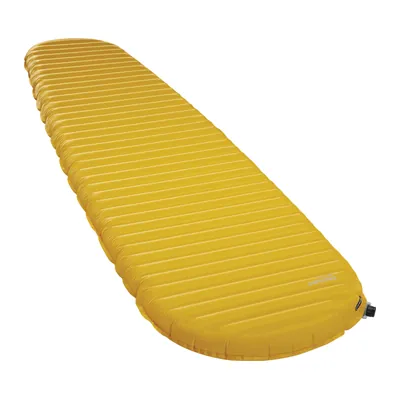
Therm-a-Rest NeoAir XLite NXT
A 7.6 cm inflatable sleeping mat with an R-value of 4.5 under ASTM F3340, 370 g in Regular: on top of an R 2 foam mat, the pair comes to about R 6.5.
View on Amazon (opens in a new tab)
Worth watching
The British Mountaineering Council’s quick guide to packing a rucksack for the hills: what goes where, and how to keep the load balanced and close to your back.
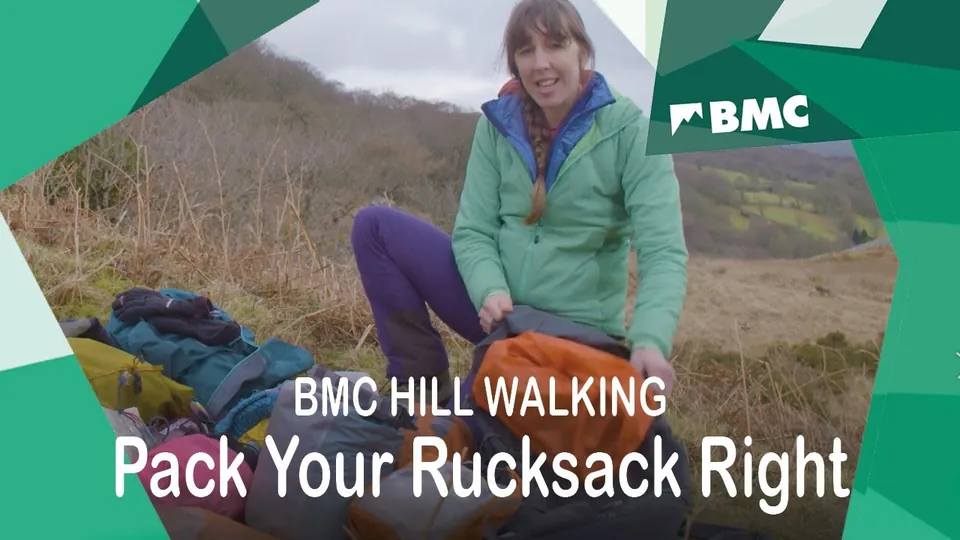
The video is hosted by YouTube (Google): nothing loads until you play it, and Google may then set cookies.
FAQs
How heavy should my rucksack be for a three-day walk?
It depends mainly on where you sleep. In huts or hostels, with no tent or stove, the Tour du Mont-Blanc website advises 8 to 12 kg and the German Alpine Club 12 kg at most. Camping and self-sufficient, France’s walking federation recommends at most 20% of your weight, 14 kg for a 70 kg walker, and the DofE sets a quarter as the limit. Weigh it the night before, water and food included.
What is the DofE rucksack weight limit?
The Duke of Edinburgh’s Award, quoting its Expedition Guide, sets a maximum of a quarter of the participant’s own body weight: about 13.8 kg for someone weighing 55 kg, 17.5 kg for 70 kg. The same guide asks every participant to set out with at least 2 litres of water, more on a hot day, which counts towards that weight from the first step.
What is base weight?
It’s the weight of your loaded rucksack minus what gets used up along the way: water, food and fuel, according to the Appalachian Trail Conservancy. It’s used to compare two sets of kit, since the rucksack gets lighter every day. Some brands also leave out what you wear or hold, and Alpkit leaves out only food and water: compare base weights calculated the same way.
How much food should I carry per day?
About a kilo a day, if the food is high in calories. The Appalachian Trail Conservancy suggests 1.5 to 2 lb, 0.7 to 0.9 kg, and more in winter or on big days; an MSR guide puts it at 0.9 to 1.1 kg. Over four days without a resupply, that’s roughly 4 kg of food at the start, to which you add the water.
Where should I save weight first?
On the big three: the shelter, the sleeping bag and the rucksack, which the Appalachian Trail Conservancy describes as the heaviest items you carry. In an MSR guide, three complete kits go from 6.55 kg down to 2.13 kg for the same job. Small items come next: gram-accurate scales soon show up the duplicates.
Sources
- The Duke of Edinburgh’s Award (DofE), ‘Expedition FAQs’, page modified 23 June 2026, accessed 14 November 2026. dofe.org https://www.dofe.org/run/expedition/faqs/ ↩
- Alpkit, Kenny Stocker, ‘How to pack a rucksack: 10 tips for comfort and balance’, 22 January 2026, accessed 14 November 2026. alpkit.com https://alpkit.com/blogs/spotlight/how-to-pack-your-backpack ↩
- Fédération française de la randonnée pédestre (FFRandonnée, the French walking federation), ‘Préparer son sac à dos’, 6 June 2024 (in French), accessed 14 November 2026. ffrandonnee.fr https://www.ffrandonnee.fr/randonner/conseils/preparer-son-sac-a-dos ↩
- National Park Service, Isle Royale National Park, ‘Packing Guide’, updated 25 September 2026, accessed 14 November 2026. nps.gov https://www.nps.gov/isro/planyourvisit/packing-guide.htm ↩
- Xunta de Galicia, official Camino de Santiago website for Galicia, ‘Consejos y recomendaciones’ (in Spanish), accessed 14 November 2026. caminodesantiago.gal https://www.caminodesantiago.gal/es/preparate/consejos-y-recomendaciones ↩
- Swiss Council for Accident Prevention (BFU, known as BPA in French), ‘Rando en montagne’ campaign, ‘Bien s’équiper’ (in French), accessed 14 November 2026. rando-en-montagne.ch https://www.rando-en-montagne.ch/fr/bien-s-equiper ↩
- Alpenverein München & Oberland (Munich section of the DAV), ‘Rucksack packen: Tipps & Tricks für deine Bergtour’ (in German), accessed 14 November 2026. alpenverein-muenchen-oberland.de https://www.alpenverein-muenchen-oberland.de/dav-ausruestungsverleih-in-muenchen/dav-packlisten/rucksack-packen ↩
- German Alpine Club (DAV), ‘Der gepackte Wanderrucksack’ (the packed walking rucksack), ‘Das ist…’ series, updated 29 November 2023 (in German), accessed 14 November 2026. alpenverein.de https://www.alpenverein.de/artikel/das-ist-der-richtig-gepackte-wanderrucksack_633664a0-ba50-4eb1-8251-470355129173 ↩
- German Alpine Club (DAV), ‘Checkliste für die Planung deiner Hüttentour’ (checklist for planning your hut tour), updated 7 April 2026 (in German), accessed 14 November 2026. alpenverein.de https://www.alpenverein.de/artikel/huettentour-checkliste-planung_31b06530-dd42-4d29-ad37-527ef742a2e9 ↩
- Philmont Scout Ranch (Scouting America), ‘Height and Weight Requirements 2026’, PDF document, accessed 14 November 2026. philmontscoutranch.org https://www.philmontscoutranch.org/wp-content/uploads/2026/01/Philmont-Height-and-Weight-Requirements-2026.pdf ↩
- Mon Tour du Mont-Blanc, official website of the route, ‘Get ready’, accessed 14 November 2026. montourdumontblanc.com https://www.montourdumontblanc.com/en/get-ready ↩
- British Mountaineering Council (BMC), ‘Hill skills: how to go lightweight camping’, undated, accessed 14 November 2026. services.thebmc.co.uk https://services.thebmc.co.uk/hill-skills-lightweight-camping ↩
- Appalachian Trail Conservancy, ‘Gear & First Aid Kits’, updated 12 November 2026, accessed 14 November 2026. appalachiantrail.org https://appalachiantrail.org/experience/hike-the-trail/essential-skills/what-to-carry/gear-first-aid-kits/ ↩
- MSR (Cascade Designs), Ashley Brown, ‘How to Choose Ultralight Backpacking Gear (Tips & Tricks from a Thru-Hiker)’, 8 February 2023, accessed 14 November 2026. cascadedesigns.com https://cascadedesigns.com/blogs/msr-gear-guides/ultralight-backpacking-gear-thru-hike-tips ↩
- Fédération française de la randonnée pédestre (FFRandonnée), ‘Recommandations pour la randonnée en montagne l’été’ (summer mountain walking recommendations), 19 October 2023 (in French), accessed 28 October 2026. ffrandonnee.fr https://www.ffrandonnee.fr/randonner/securite/recommandations-pour-la-randonnee-en-montagne-l-ete ↩
- Appalachian Trail Conservancy, ‘Food & Cooking’, updated 28 January 2026, accessed 14 November 2026. appalachiantrail.org https://appalachiantrail.org/experience/hike-the-trail/essential-skills/what-to-carry/food-cooking/ ↩
- Primus, online help, ‘How much gas do I need on my trip?’, accessed 14 November 2026. primus.gorgias.help https://primus.gorgias.help/en-GB/how-much-gas-do-i-need-on-my-trip-1107923 ↩
- MSR (Cascade Designs), PocketRocket 2 stove product page (European site), accessed 14 November 2026. cascadedesigns.com https://cascadedesigns.com/en-eu/products/pocketrocket-2-stove ↩
- MSR (Cascade Designs), ‘Stoves 101: How Much Fuel Should I Carry?’, accessed 14 November 2026. cascadedesigns.com https://cascadedesigns.com/blogs/msr-gear-guides/stoves-101-how-much-fuel-should-i-carry ↩
- Deuter, Aircontact Ultra 50+5 rucksack spec sheet, accessed 14 November 2026. deuter.com https://www.deuter.com/us-en/aircontact-ultra-50-5/4046051172057 ↩
- MSR (Cascade Designs), ‘Hubba Hubba NX 2-Person Backpacking Tent’, spec sheet (European site), accessed 14 November 2026. cascadedesigns.com https://cascadedesigns.com/en-eu/products/hubba-hubba-nx-2-person-backpacking-tent ↩
- Vaude, Campo Compact 2P tent product page, manufacturer’s outlet shop (in German), accessed 29 October 2026. outlet.vaude.com https://outlet.vaude.com/produkt/campo-compact-2p/ ↩
- Deuter, Astro 300 sleeping bag spec sheet, accessed 14 November 2026. deuter.com https://www.deuter.com/uk-en/astro-300-2c-36f/4046051182261 ↩
- Deuter, Orbit 0° sleeping bag spec sheet, accessed 14 November 2026. deuter.com https://www.deuter.com/uk-en/orbit-0c-32f/4046051174976 ↩
- J. J. Knapik, K. L. Reynolds, E. Harman, ‘Soldier load carriage: historical, physiological, biomechanical, and medical aspects’, Military Medicine, 169(1), 45-56, 2004, abstract on PubMed, accessed 14 November 2026. pubmed.ncbi.nlm.nih.gov https://pubmed.ncbi.nlm.nih.gov/14964502/ ↩
- Gregory, ‘How to choose the perfect hiking backpack for your adventure’, online guide, accessed 14 November 2026. eu.gregorypacks.com https://eu.gregorypacks.com/uk-en/blog/choose-your-gear/how-to-choose-perfect-hiking-backpack.html ↩
- D. P. Looney et al., ‘Effects of modern military backpack loads on walking speed and cardiometabolic responses of US Army Soldiers’, Applied Ergonomics, 94, 103395, 2021, abstract on PubMed, accessed 14 November 2026. pubmed.ncbi.nlm.nih.gov https://pubmed.ncbi.nlm.nih.gov/33652153/ ↩
- S. S. W. Li et al., ‘Effects of backpack and double pack loads on postural stability’, Ergonomics, 62(4), 537-547, 2019, abstract on PubMed, accessed 14 November 2026. pubmed.ncbi.nlm.nih.gov https://pubmed.ncbi.nlm.nih.gov/30482109/ ↩
- L. S. Anderson Jr et al., ‘The impact of footwear and packweight on injury and illness among long-distance hikers’, Wilderness & Environmental Medicine, 20(3), 250-256, 2009, abstract on PubMed, accessed 14 November 2026. pubmed.ncbi.nlm.nih.gov https://pubmed.ncbi.nlm.nih.gov/19737037/ ↩
- M. T. Hamonko et al., ‘Injuries related to hiking with a pack during National Outdoor Leadership School courses: a risk factor analysis’, Wilderness & Environmental Medicine, 22(1), 2-6, 2011, abstract on PubMed, accessed 14 November 2026. pubmed.ncbi.nlm.nih.gov https://pubmed.ncbi.nlm.nih.gov/21377112/ ↩
Campervans, motorhomes, cycling and calculators
Julien de Jurquet writes for Outfarer about campervans, motorhomes, cycling and calculators. He reads instruction manuals to the very end and never lets a figure through without its unit, so that your choices rest on sums rather than promises.

 Guillaume Hoarau


 Nolwenn Bastide