 Français (France)
 English (UK)
 English (US)
 Deutsch (Deutschland)

Contents
Saturday morning, in the tent aisle. Two green tents look like twins, both ‘2-person’, and one is noticeably lighter than the other. Your hand is already on the right box. Except the two labels aren’t weighing the same thing: one counts the pegs and the stuff sack, the other doesn’t. You choose a tent by its spec sheet, and a spec sheet reads like a contract, small print included.
That small print always covers the same lines: packaged weight, floor width, structure, flysheet and season, porch. This guide takes them one at a time, based on what the manufacturers themselves publish and what the standard says. For a first night out, our guide to your first wild camp finds a tent simpler than a tarp; all that’s left is choosing the right one.
Minimum or packaged weight: what each brand puts in
In 1998, outdoor gear makers got together with ASTM International, an American standards body, to set a method for weighing backpacking and mountaineering tents: the ASTM F1934 standard, which MSR says it follows voluntarily [1]. According to the standard’s summary, minimum and packaged weight are what consumers use to evaluate tents [2]. Packaged weight is everything in the package, as you buy it. Minimum weight covers only the The part you sleep in, with its groundsheet, often partly made of mesh., the The waterproof outer layer pitched over the inner tent, which keeps off rain and wind. and the poles, without pegs, guylines or stuff sacks [1].
| Tent | Minimum weight | Packaged weight | Difference |
|---|---|---|---|
| MSR Hubba Hubba NX, 2-person, freestanding | 1.54 kg | 1.72 kg | 180 g |
| Big Agnes Copper Spur UL2, 2-person, freestanding (‘trail’ and ‘total weight’) | 1.18 kg | 1.37 kg | 190 g |
| Hilleberg Akto, 1-person, tunnel | 1.3 kg | 1.7 kg | 400 g |
Figures published by each manufacturer on its spec sheet, accessed 29 October 2026; differences calculated by us. Each brand defines its two weights in its own way. [3, 4, 5]
Not everyone uses the same words, though. Vaude’s ‘Minimalgewicht’, or minimum weight, also includes the minimum number of pegs needed to pitch the tent, but not the stuff sack or the storm guylines, and the brand warns that a tent set up this way only holds in favourable conditions [6]. Big Agnes lists a ‘trail weight’ and a ‘total weight’ [4], Hilleberg a minimum weight and a packed weight [5], without spelling out on their spec sheets what each one includes. Hence the only fair comparison: packaged against packaged, never one tent’s minimum against another’s packaged weight.
Even the packaged weight isn’t always what ends up in your rucksack. MSR points out that most of its tents are sold without a A groundsheet cut to the shape of the tent floor, laid underneath to protect it, usually sold separately., whose weight you need to add if you take one [7]. Vaude supplies its tents with enough pegs for a first pitch, and leaves you to add more to suit the ground [8]. A tent pitched on trekking poles is weighed without them: 1.3 kg for the MT900 Minimal Editions from Forclaz, one of Decathlon’s brands, without the poles, naturally [9]. As a rough guide, Decathlon puts a light tent at around 1 to 1.5 kg per person [10], and Vaude advises staying under 2 kg on foot and 4 kg by bike [6], where flysheet and poles find room in the panniers, as our bikepacking kit list shows.
Gram-counters, and I know a few, will be reaching for the kitchen scales: MSR admits that a tent weighed at home can come out slightly above or below the advertised figure, depending on the thickness of the coatings or the cut of the fabric [1].
One, two or three people: measure the floor width
The number in the name gives the number of sleepers the tent is designed for [7], not how much room is left around them. Vaude specifies that its ‘1-person’ and ‘2-person’ ratings don’t include luggage [6]; Hilleberg, by contrast, says it builds its tents for their occupants plus their gear [11]. Same word, two promises. And for a two-person trekking tent, Decathlon warns that there will be just enough room for your sleeping mats, and advises checking their size [9].
Let’s do the maths with published figures. MSR’s Hubba Hubba NX has a floor of 213 by 127 cm [3]. A Therm-a-Rest NeoAir XLite NXT sleeping mat is 51 cm wide in the Regular size and 64 cm in Regular Wide [12]. Two standard mats leave 25 cm to spare; two wide ones need 128 cm, 1 cm too much, and press against the walls. Big Agnes’s Copper Spur UL2 tapers towards the foot end, from 132 cm to 107 cm [4]: two wide mats fit at the head but not at the feet, where the floor is 21 cm narrower than their 128 cm. According to Therm-a-Rest, most two-person backpacking tents are 127 to 132 cm wide [12], room for two standard mats, rarely for two wide ones.
Width isn’t everything. MSR advises looking at the height and slope of the walls as well: near-vertical walls let you sit close to the edge without hunching over, and two tents with the same floor area are not equal [7]. The Hubba Hubba NX peaks at 100 cm, the Copper Spur UL2 at 102 cm [3, 4], the Akto’s inner tent at 93 cm [5]. Vaude also recommends lying down in the tent with your mat and sleeping bag before you buy, as the length has to suit your height [6]. Hence the tip that both MSR and Decathlon mention: size up by one, a two-person tent for solo trips, a three-person tent for two [7, 9].
Freestanding, semi-freestanding or guyed out
Third line on the sheet: the structure. At MSR, a A tent whose poles hold its shape on their own, without pegs or guylines. tent stands on its poles alone; a semi-freestanding one also needs points pulled taut by pegs or guylines, like the FreeLite; tarp-style shelters go up with trekking poles or an accessory pole, and well-tensioned The cords that connect the fabric to the pegs driven in around the tent. [7]. A A tent with parallel, semicircular poles, tensioned from both ends., for its part, won’t stand without pegs [10]. But the words change from one brand to the next. Hilleberg calls a dome ‘self supporting’ when only its porches need pegging out, and keeps ‘freestanding’ for one that needs no pegs at all [11]; Decathlon writes that a semi-freestanding tent stands up even without pegs [10]. So read the brand’s definition, not just the word.
| Structure | What holds it up | Where it pitches best |
|---|---|---|
| Freestanding | Its poles alone | Rock slabs, gravel or sand, where pegs hold poorly |
| Semi-freestanding | Its poles, plus points pulled taut by pegs or guylines | Ground that takes at least those pegs |
| Tunnel | Parallel poles, tensioned with pegs | Anywhere pegs hold; on multi-day trips, the best ratio of space to weight |
| Tarp tent | Two trekking poles, pegs and guylines | Anywhere pegs hold, for walkers who use poles |
Based on the definitions of MSR, Hilleberg and Decathlon; the meaning of ‘semi-freestanding’ varies from brand to brand. [7, 10, 11]
A freestanding tent still benefits from being pegged and guyed out: MSR always recommends it, to pull it taut, gain room inside and avoid finding it blown away when you get back [7]. The tunnel tent stands up very well to wind while staying light, according to Decathlon [10], and Hilleberg considers it ideal for multi-day trips, when you pitch and strike it every day [11]. The Akto pitches with a minimum of four pegs, and comes with ten in the bag [5].
Then there is the tent pitched on trekking poles, often called a tarp tent: light, but it needs two walking poles, Decathlon reminds us [10]. If you walk without them, add the weight of an accessory pole, the other option MSR provides for its shelters [7], and check the instructions for the pole height required.
Single or double wall, three or four seasons
Most three-season tents are double-walled, with an inner of mesh or breathable fabric under a waterproof flysheet; single-wall tents, made of one layer of fabric, are mostly found in mountaineering and in tarp-style shelters, according to MSR [7]. The advantage of a double wall is simple: overnight moisture condenses on the underside of the flysheet and doesn’t get into the inner tent, Vaude explains [6].
On seasons, MSR classes all its backpacking tents as three-season tents, useful from spring to autumn in most places. A four-season tent keeps out snow and cold air and stands up to heavy snow loads and high winds, but it is harder to ventilate and heavier; as the brand puts it, if you need one, you probably already know [7]. Hilleberg sorts its tents by coloured labels instead: Black and Red Label for all seasons, Yellow Label for the snow-free months, in sheltered terrain or in warmer climates [13].
One detail on the sheet says a lot: does the flysheet reach the ground? Hilleberg warns that a flysheet that stops short can let in wind-driven rain and splashing water, and, if in doubt, urges you to go up a category [11]. Vaude, for its part, points out that weather in the mountains often changes quickly, and recommends a tent there that is quick to pitch and storm-proof [6].
The porch, and pitching in the rain
The The area covered by the flysheet in front of the door, outside the inner tent; also called a vestibule. is your pantry: Vaude uses it for bulky luggage, wet boots and dirty kit, away from where you sleep [8]. Decathlon recommends at least one large porch on a two-person tent, puts two on its own two-person models, and makes the case for two-door tents, so you can get out at night without climbing over your neighbour [9]. The spec sheets give the area: two of 0.81 m² on the Hubba Hubba NX, 0.8 m² on the Akto, which has only one door [3, 5]. Hilleberg also offers extended porches, handy with a lot of kit, a dog or children, at the cost of a bigger footprint on the ground and a little extra weight [11].
What the standards say, and what they leave out
There is indeed a standard for camping tents: ISO 5912, whose fifth edition dates from March 2020, adopted in Europe as EN ISO 5912:2020. It sets requirements for safety, performance and fitness for use, sorts tents into two categories, one of them for lightweight tents, and into three performance levels [14]. It also provides a sleeping capacity calculation and a rain test, summarised in the table below. What it no longer says matters just as much: its introduction explains that stability, though considered important, was removed for lack of a reproducible test method [14].
| Point | What the standard provides |
|---|---|
| Sleeping capacity | A calculation of the number of sleeping places, with a test area for each category |
| Rain | A rain resistance requirement, and a rain test |
| Fabrics | Resistance to water penetration, measured to the ISO 811 standard |
| Ventilation, insect mesh, entrance | General requirements |
| Information at the point of sale | Added in 2020, with an example display in an annex |
| Stability | No longer a requirement: removed in 2020 for lack of a reproducible test |
Based on the contents, references and introduction of the standard, in the official preview published by the Slovak standards office. [14]
Without a common criterion, wind resistance is tested each brand’s own way. Decathlon claims gusts of up to 70 km/h for its trekking domes and tunnels [10], Vaude puts its tents through a wind tunnel [6], and these results can’t be compared from one brand to another. None of the spec sheets or manufacturers’ advice pages cited here mentions ISO 5912, for that matter: the number of places shown doesn’t tell you whether it follows the standard’s calculation.
Tent or tarp for a first night
A tarp, a simple sheet of fabric pitched overhead, is very light but protects less well from the weather, according to Decathlon [10], and Hilleberg warns that riding out truly bad weather under such a minimal shelter can be miserable, if not downright dangerous; the lighter a tent, the brand adds, the less comfort it offers, and possibly the less security in bad weather [11]. For a first night, the tent keeps the edge for simplicity; the tarp can come later, with the pitches in our tarp guide. And the tent doesn’t make the whole night: the sleeping mat and its R-value and the sleeping bag decide how warm you are as much as the tent does.
Before you pay, six lines to check on the spec sheet, or to ask the shop about:
- The packaged weight, compared with another tent’s packaged weight, plus the footprint and poles if they are extra
- The floor width, at the head and at the feet, against the width of your sleeping mats
- The height and slope of the walls, and the length against your height
- The structure, freestanding, semi-freestanding, tunnel or pitched on poles, and the number of pegs supplied
- The flysheet, down to the ground or not, and the season it is designed for
- The porches, the doors and the pitching order in the rain
A good habit to get into, before you even look at the price: read the packaged weight, then get the tape measure out for the floor width, sleeping mats included. The rest of the sheet can wait for a quiet moment.
Kit related to this article
No affiliation: no commission, no sponsored products.
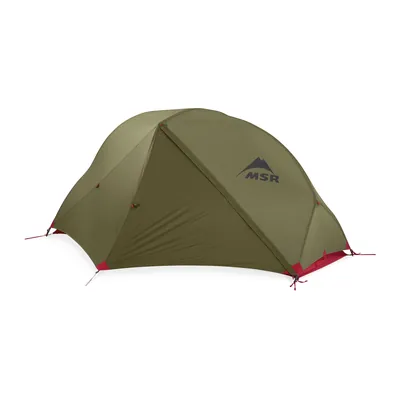
MSR Hubba NX Solo
A freestanding one-person tent, 1.12 kg minimum, with a 216 × 76 cm floor: a small tent to pitch in the evening and strike in the morning, wooden platforms included.
View on Amazon (opens in a new tab)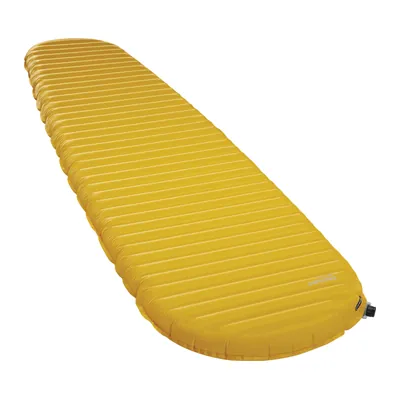
Therm-a-Rest NeoAir XLite NXT
A 7.6 cm inflatable sleeping mat with an R-value of 4.5 under ASTM F3340, 370 g in Regular: on top of an R 2 foam mat, the pair comes to about R 6.5.
View on Amazon (opens in a new tab)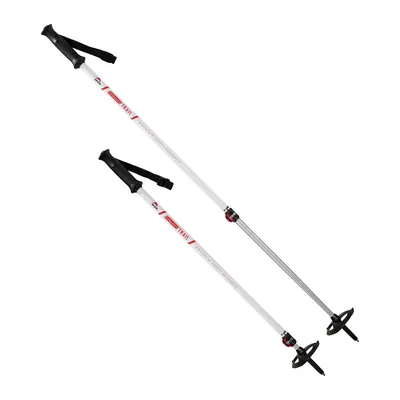
MSR DynaLock Trail Poles
Aluminium poles adjustable from 100 to 140 cm, with a DynaLock lever lock that tightens without tools, plus snow and summer baskets: shorter uphill, longer downhill.
View on Amazon (opens in a new tab)
Worth watching
Wild Camping Adam runs through the five essentials to weigh up when choosing a tent for wild camping in Scotland and the UK, then budget options and a few useful extras.
The video is hosted by YouTube (Google): nothing loads until you play it, and Google may then set cookies.
FAQs
What is the difference between a tent’s minimum and packaged weight?
At MSR, which follows the American ASTM F1934 weighing method, the minimum weight counts only the inner tent, the flysheet and the poles, without pegs, guylines or stuff sacks; the packaged weight includes everything in the package. Not every brand uses the same definitions: Vaude counts the pegs needed to pitch the tent in its minimum weight. So compare packaged with packaged, and add the footprint if you take one.
Is a two-person tent big enough for two people?
For sleeping, often yes, but only just. According to Therm-a-Rest, most two-person backpacking tents are 127 to 132 cm wide: room for two 51 cm sleeping mats, rarely for two wide 64 cm mats. Vaude doesn’t count luggage in its number of places. Check the width at the feet if the floor tapers, or take a three-person tent for two.
Freestanding tent or not: which should you choose?
A freestanding tent stands on its poles alone, which helps on rock slabs, gravel or sand, where pegs hold poorly. A tunnel tent or one pitched on trekking poles often gives more space for its weight, but won’t stand without pegs and guylines. Even a freestanding tent is better pegged and guyed out: MSR always recommends it.
What is a three-season tent?
It is a tent designed for spring, summer and autumn, usually double-walled, with an inner made partly of mesh. A four-season tent keeps out snow and cold air better and copes with heavy snow loads and high winds, but is harder to ventilate and heavier. According to MSR, anyone who needs a four-season tent probably knows it; for everyone else, a three-season tent is far more versatile.
Can you pitch the flysheet first when it’s raining?
It depends on the tent. On some, the inner and the flysheet go up together, as on Hilleberg’s Akto or Decathlon’s pre-assembled hiking tents. MSR lets you pitch many of its tents with just the flysheet, the poles and the footprint. On a tent whose inner goes up first, the inner gets wet in a downpour: read the instructions before you buy.
Sources
- MSR (Cascade Designs), ‘Understanding Tent Packaged Weight & Minimum Weight’, guide, 31 May 2023 (European site), accessed 29 October 2026. cascadedesigns.com https://cascadedesigns.com/en-eu/blogs/msr-gear-guides/understanding-tent-packaged-weight-minimum-weight ↩
- ASTM International, ‘F1934-98(2018) Standard Test Method for Weighing a Backpacking or Mountaineering Tent’, summary of the standard, accessed 29 October 2026. store.astm.org https://store.astm.org/f1934-98r18.html ↩
- MSR (Cascade Designs), ‘Hubba Hubba NX 2-Person Backpacking Tent’, spec sheet and FAQs (European site), accessed 29 October 2026. cascadedesigns.com https://cascadedesigns.com/en-eu/products/hubba-hubba-nx-2-person-backpacking-tent ↩
- Big Agnes Europe, ‘Copper Spur UL2 Ultralight Tent’, spec sheet, accessed 29 October 2026. eu.bigagnes.com https://eu.bigagnes.com/products/copper-spur-ul-two ↩
- Hilleberg, ‘Akto’, spec sheet, accessed 29 October 2026. hilleberg.com https://hilleberg.com/eng/products/tent/Akto ↩
- Vaude, ‘Welches VAUDE Zelt ist das beste für mich?’, blog, 10 June 2023, updated 30 April 2026 (in German), accessed 29 October 2026. vaude.com https://www.vaude.com/de/de/blog/post/welches-zelt-ist-das-beste-fuer-mich.html ↩
- MSR (Cascade Designs), ‘How to Choose the Best Backpacking Tent’, guide, 10 April 2024 (European site), accessed 29 October 2026. cascadedesigns.com https://cascadedesigns.com/en-eu/blogs/msr-gear-guides/how-to-choose-best-backpacking-tent ↩
- Vaude, ‘Aus welchen Teilen besteht ein Zelt?’, blog, 5 June 2024, updated 30 April 2026 (in German), accessed 29 October 2026. vaude.com https://www.vaude.com/de/de/blog/post/aus-welchen-teilen-besteht-ein-zelt.html ↩
- Decathlon, ‘Comment choisir sa tente pour deux ou trois personnes ?’, buying advice (in French), accessed 29 October 2026. decathlon.fr https://www.decathlon.fr/c/htc/comment-choisir-sa-tente-pour-deux-ou-trois-personnes_ccfbd9e9-e587-487c-a9a3-90426ec9e9f4 ↩
- Decathlon, ‘Comment choisir une tente de bivouac ?’, buying advice, updated 3 April 2026 (in French), accessed 29 October 2026. decathlon.fr https://www.decathlon.fr/c/htc/comment-choisir-une-tente-de-bivouac_8913b556-225e-43be-8efc-3ebdf74ac313 ↩
- Hilleberg, ‘Choosing the right tent’, accessed 29 October 2026. hilleberg.com https://hilleberg.com/eng/discover/choosing-the-right-tent ↩
- Therm-a-Rest (Cascade Designs), ‘NeoAir XLite NXT’ sleeping mat, spec sheet and FAQs (European site), accessed 29 October 2026. cascadedesigns.com https://cascadedesigns.com/en-eu/products/neoair-xlite-nxt-sleeping-pad ↩
- Hilleberg, ‘The Hilleberg Label System’, accessed 29 October 2026. hilleberg.com https://hilleberg.com/eng/discover/our-label-system ↩
- ISO 5912:2020 and EN ISO 5912:2020, ‘Camping tents, Requirements and test methods’, official preview (title page, contents, foreword and introduction) published by the Slovak standards office ÚNMS SR, October 2020, accessed 29 October 2026. normy.normoff.gov.sk https://normy.normoff.gov.sk/norma/131213/nahlad ↩
- NatureScot, Scottish Outdoor Access Code, ‘Camping’, accessed 29 October 2026. outdooraccess-scotland.scot https://www.outdooraccess-scotland.scot/practical-guide-all/camping ↩

Camping, wild camping, bushcraft and hiking
Guillaume Hoarau writes for Outfarer about camping, wild camping, bushcraft and hiking. A survival-skills enthusiast and a collector of old field manuals, he likes clear explanations, lists that earn their place and other people’s stories, which he tells well.


