 Français (France)
 English (UK)
 English (US)
 Deutsch (Deutschland)

Contents
- mAh or Wh: the only number worth comparing
- What a power bank actually delivers
- How many days without an outlet?
- Cold weather: less battery life, and sometimes no charging at all
- Outlets and solar panels: don’t count on plugging in
- Flying: TSA, FAA, and the new rules abroad
- Taking care of your power bank
- Gear
- FAQ
On paper, a 10,000 mAh power bank should fill a phone with a 3,692 mAh battery, like the iPhone 17, nearly three times [1]. Run the honest numbers and you get a lot less. Nothing shady about it: Nitecore, for example, lists its NB10000 with a 10,000 mAh cell at 3.85 V, or 38.5 Wh, and a rated energy of 6,400 mAh at 5 V [2]. The whole story fits in those two lines.
mAh or Wh: the only number worth comparing
Milliamp-hours mean nothing without the voltage. Energy is counted in A watt-hour (Wh) measures an amount of energy: the voltage in volts multiplied by the capacity in amp-hours.: voltage times capacity. The FAA gives air travelers the formula (multiply the battery voltage by the amp-hours) and notes that newer lithium-ion batteries have the Wh rating marked on them [3]. When it isn’t there, you’re left with the mAh, which has the merit, for a box, of being the bigger number.
Cell voltage varies from one brand to another. Anker says most power banks use 3.7 V cells [4]; Goal Zero lists 3.6 V for its Flip 24 [5], Nitecore 3.85 V [2]. Let’s do the math: 10,000 mAh stores 36 to 38.5 Wh, depending on the cell. Anker says it outright: when comparing power banks, look at Wh rather than mAh [4].
What a power bank actually delivers
First loss, inside the power bank: the cell voltage has to be stepped up to the 5 V of USB. Anker puts that efficiency at 80 to 85% [4]. Nitecore publishes the result for its NB10000: 6,400 mAh at 5 V, or 32 Wh delivered out of 38.5 Wh stored, 83% [2]. Second loss, inside the phone as it charges: Anker puts it at 10 to 20%, an efficiency of 80 to 90% [4].
At the end of the chain, the 32 Wh delivered turn into 25.6 to 28.8 Wh in the phone. Now you just divide by the energy of the phone’s battery, and that’s where it gets tricky: Apple and Google publish mAh, 3,692 for the iPhone 17 and a typical 4,970 for the Pixel 10 [1, 6], but not the voltage, so not the Wh. The only phone in watt-hours we could find is Anker’s theoretical example, at 18.2 Wh [4]: with that one, a 10,000 mAh power bank gives 1.4 to 1.6 full charges.
Brands that promise a number of charges stay vague about the phone. The American brand Goal Zero promises “3 Recharges” of a smartphone from its Venture 35, at 35.52 Wh [7], and “about two recharges on most phones” from its Flip 24, at 24.12 Wh [5]. Those numbers only work with a small phone; with a recent model, trust the math above.
The weight gap is just as telling. The NB10000 weighs 5.3 oz (150 g) for 38.5 Wh [2]; the waterproof Venture 35 weighs 10.1 oz (286.9 g) for 35.52 Wh [7]. That’s about 7.3 Wh per ounce on one side and 3.5 on the other. For a multi-day pack, that ratio says more than the mAh number.
How many days without an outlet?
Neither Apple, Google, nor the National Park Service publishes how much battery a phone burns while navigating. Google just advises against using navigation and GPS for long periods [8], and Apple notes that a weak signal hurts battery life because the phone keeps searching for a better one [9]. The NPS warns about the same thing in the backcountry [10]. So the only reliable number is yours: note the percentage you use on an ordinary day on the trail, with your settings and your map.
- Airplane mode where there’s no coverage: Apple gives it as the way to save battery on a weak signal [9].
- Location Services turned off for apps that don’t need them, and the screen dimmed [9].
- Low Power Mode: it turns itself off once the phone is charged back to 80%, so turn it on again after a top-up [11].
- A satellite messenger keeps its own books: Garmin rates the inReach Mini 2 at 2 days under moderate tree cover with frequent tracking, and up to 30 days under open sky with sparse tracking [12].
For your mapping app and offline maps, our roundup of hiking apps in the US covers the settings, and our guide to calling for help without cell service explains why to keep some battery in reserve for an emergency.
Cold weather: less battery life, and sometimes no charging at all
Apple designs its iPhones for ambient temperatures of 32 to 95 °F (0 to 35 °C); any colder and battery life drops temporarily, and a device that gets too cold might not charge or could stop charging [13]. Power banks have their own limits: 14 to 104 °F (-10 to 40 °C) for the NB10000 according to its manual [14], down to -40 °F (-40 °C) for the SUMMIT 10000, built for the cold [15]. Garmin rates the inReach Mini 2 for use from -4 to 140 °F (-20 to 60 °C), but only charges it between 32 and 113 °F (0 and 45 °C) [12].
The explanation is chemistry: below 32 °F (0 °C), lithium ions move more slowly through the electrodes and the electrolyte, and forcing a charge can plate metallic lithium onto the anode, at the expense of safety and lifespan [16]. The fix follows from those temperature ranges: at night, phone and power bank sleep in your sleeping bag; during the day, in an inside pocket.
Outlets and solar panels: don’t count on plugging in
In the backcountry, the question mostly answers itself. At White Sands National Park, the NPS spells it out: there are no outlets to charge phones or other electronics anywhere in the park, so arrive fully charged and bring a portable charger [17]. The NPS Ten Essentials list says it in one line: “Pack an extra battery for your phone.” [18] Heading to the Alps? Don’t count on the hut either: the French hiking federation warns that isolated huts mostly run on solar-charged batteries, and energy is limited [19]. Our guide to mountain huts in France explains how they work.
What about a solar panel? Goal Zero’s Nomad 10, 10 W for 1.12 lb (0.51 kg), takes 4.5 to 9 hours to charge a Venture 35 according to the panel’s page, and 6 to 12 hours according to the power bank’s, with the company warning that it all depends on elevation, time of year, and angle to the sun [20, 7]. For a bit less than its 18 oz (510 g), you can carry three NB10000s: 15.9 oz (450 g) and 115.5 Wh, no sunshine required. The panel still makes sense on very long, sunny trips; for a week on the trail, the second power bank wins.
Flying: TSA, FAA, and the new rules abroad
In the US, the FAA rule is simple: spare lithium batteries, power banks included, go in your carry-on only, and if your bag gets checked at the gate, take them out and keep them with you in the cabin [3]. Each one is limited to 100 Wh; with airline approval, you can also bring up to two larger ones, from 101 to 160 Wh [3]. The TSA agrees: power banks are fine in carry-on bags, never in checked bags [21]. On quantity, the FAA says “none for most batteries,” but warns that many airlines set stricter limits on how many power banks you can bring [3].
Fly abroad, or on a foreign airline, and the rules get tighter. Since March 27, 2026, an addendum to the ICAO Technical Instructions, the international standard, limits passengers to two power banks each, bans recharging them on board, and says they shouldn’t be used to charge other devices in flight, as the UK Civil Aviation Authority spells out [22]. The FAA page, last updated August 11, 2026, mentions neither rule [3]: treat them as what you’ll find abroad and on the airlines that apply them. Some go further. The Lufthansa Group has banned using or charging power banks on board since January 15, 2026 [23], and Emirates accepts only one, under 100 Wh, and has banned using power banks on board since October 1, 2025 [24]. For 2027, the IATA tables only list power banks up to 100 Wh, two per passenger [25].
Taking care of your power bank
The NB10000 manual says to recharge it every three months when it’s not in use, not to use it if it’s damaged, and to stop using it immediately if you notice leakage or an unusual smell [14]. Apple adds that ambient temperatures above 95 °F (35 °C) can permanently damage battery capacity [9]: a dashboard in the sun at the trailhead isn’t a good place to leave it. And recalls happen: on June 12, 2025, the CPSC announced the recall of about 1,158,000 Anker PowerCore 10000 power banks, model A1263 only, whose battery can overheat, posing fire and burn hazards [26].
A dedicated standard was still in draft form in 2023: in an October letter on the first edition draft of UL 2056, the Standard for Safety for Power Banks, CPSC staff wrote that an effective standard was “much needed,” the agency having recalled over 500,000 power banks in the previous year [27]. The letter gives its staff’s views, not the Commission’s.
The rule to remember: count in watt-hours, take off a quarter to a third for losses, and never count on finding an outlet.
Gear related to this article
No affiliation: no commission, no sponsored products.
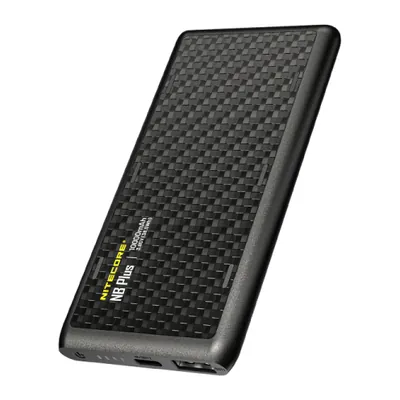
Nitecore NB Plus 10000
10,000 mAh (3.85 V, 38.5 Wh) power bank with USB-C and USB-A ports, 22.5 W maximum output, 155 g (5.47 oz), IPX7. Operating range stated by Nitecore: 14 to 95 °F (-10 to 35 °C).
View on Amazon (opens in a new tab)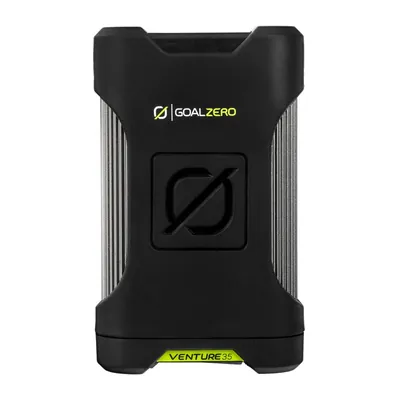
Goal Zero Venture 35
9,600 mAh (35.52 Wh at 3.7 V) power bank with an IP67 housing and protective sleeve, USB-C and USB-A ports, 50-lumen flashlight, 10.12 oz. Operating range stated by Goal Zero: 32 to 113 °F.
View on Amazon (opens in a new tab)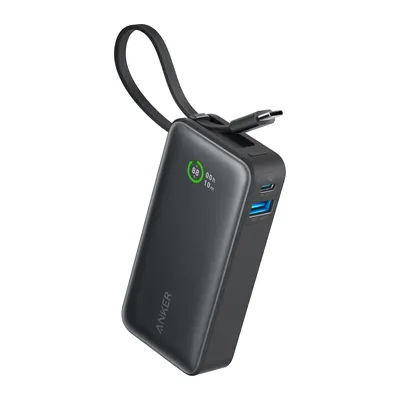
Anker Nano Power Bank 10,000 mAh (A1259)
10,000 mAh power bank with a built-in USB-C cable, one USB-C and one USB-A port, 30 W maximum on USB-C, 7.58 oz. Anker’s page gives neither voltage nor Wh.
View on Amazon (opens in a new tab)
FAQ
How many phone charges do you get from a 10,000 mAh power bank?
Fewer than the number suggests. A 10,000 mAh power bank stores about 36 to 38.5 Wh, delivers about 32 Wh at 5 V according to Nitecore, and the phone loses another 10 to 20% while charging according to Anker. With the 18.2 Wh phone Anker uses as an example, that makes 1.4 to 1.6 full charges. A recent phone with a big battery will get fewer.
What size power bank do I need for a 5-day backpacking trip?
It depends on your phone and how you use it, which Apple and Google don’t publish: measure your own use on an ordinary day on the trail. If your phone loses half its battery a day, five days take 150% on top of its own charge, which is roughly a 10,000 mAh power bank delivering 1.5 charges. Keep a margin for cold weather and for an emergency call.
What is the TSA limit for power banks?
The TSA allows power banks in carry-on bags only, never in checked bags. The size limit comes from the FAA: 100 Wh per battery, about 27,000 mAh for a 3.7 V cell, with no approval needed; with airline approval, up to two between 101 and 160 Wh. The FAA sets no quantity limit for most batteries, but many airlines do, and abroad an ICAO rule limits you to two power banks per person.
Do power banks work in cold weather?
Less well, and each model has its own range: 14 to 104 °F (-10 to 40 °C) for a Nitecore NB10000, down to -40 °F (-40 °C) for one designed for the cold. Your phone is designed for 32 to 95 °F (0 to 35 °C) and may refuse to charge when it’s too cold. Keep both close to your body during the day and in your sleeping bag at night.
Solar panel or a second power bank for a long backpacking trip?
For a week on the trail, the second power bank usually wins: a Goal Zero Nomad 10 panel weighs 1.12 lb (0.51 kg) and takes 4.5 to 12 hours to fill a 35 Wh power bank, according to the company’s own pages, while a 10,000 mAh Nitecore NB10000 weighs 5.3 oz (150 g). The panel earns its place on very long, sunny trips, far from any outlet.
Sources
- Apple, EU product information sheet, iPhone 17, model A3520 (PDF, August 2025), accessed November 13, 2026. regulatoryinfo.apple.com https://regulatoryinfo.apple.com/cwt/api/ext/file?fileId=energyLabels%2FA3520_V1%2FA3520%2FA3520_Product_Information_Sheet_EN_EU.pdf ↩
- Nitecore, “NITECORE NB10000 Ultra Lightweight Carbon Fiber Energy Brick,” product page, accessed November 13, 2026. nitecore.com https://www.nitecore.com/mobile-product/nb10000 ↩
- Federal Aviation Administration, “PackSafe: Lithium Batteries,” last updated August 11, 2026, accessed November 13, 2026. faa.gov https://www.faa.gov/hazmat/packsafe/lithium-batteries ↩
- Anker, “Why is the Rated Capacity of Power Banks Lower Than Expected?” help page, accessed November 13, 2026. service.anker.com https://service.anker.com/au/article-description/Why-is-the-Rated-Capacity-of-Power-Banks-Lower-Than-Expected ↩
- Goal Zero, “Flip 24 Portable Power Bank,” product page, accessed November 13, 2026. goalzero.com https://goalzero.com/products/flip-24-power-bank ↩
- Google, “Pixel phone hardware tech specs,” Pixel Phone Help, accessed November 13, 2026. support.google.com https://support.google.com/pixelphone/answer/7158570?hl=en ↩
- Goal Zero, “Venture 35 Power Bank,” product page, accessed November 13, 2026. goalzero.com https://goalzero.com/products/venture-35-power-bank ↩
- Google, “Stretch a low battery’s power on Pixel phone,” Pixel Phone Help, accessed November 13, 2026. support.google.com https://support.google.com/pixelphone/answer/6187455?hl=en ↩
- Apple, “Batteries: Maximizing Performance,” accessed November 13, 2026. apple.com https://www.apple.com/batteries/maximizing-performance/ ↩
- National Park Service, “Hike Smart,” last updated June 13, 2024, accessed November 13, 2026. nps.gov https://www.nps.gov/articles/hiking-safety.htm ↩
- Apple, “Use Low Power Mode to save battery life on your iPhone or iPad,” September 21, 2026, accessed November 13, 2026. support.apple.com https://support.apple.com/en-us/101604 ↩
- Garmin, inReach Mini 2 owner’s manual (PDF, September 2026), accessed November 13, 2026. www8.garmin.com https://www8.garmin.com/manuals/webhelp/GUID-802DEF62-EBB2-463C-8C51-C58FB29F89E3/EN-US/inReach_Mini_2_OM_EN-US.pdf ↩
- Apple, “If your iPhone or iPad gets too hot or too cold,” May 14, 2026, accessed November 13, 2026. support.apple.com https://support.apple.com/en-us/118431 ↩
- Nitecore, NB10000 user manual (PDF, May 2025, several languages), accessed November 13, 2026. nitecore.com https://www.nitecore.com/storage/images/manual/nb10000.pdf ↩
- Nitecore, “NITECORE SUMMIT 10000 Low Temperature Resistant Carbon Fiber Power Bank,” product page, accessed November 13, 2026. nitecore.com https://www.nitecore.com/mobile-product/summit10000 ↩
- “Lithium-Ion Batteries under Low-Temperature Environment: Challenges and Prospects,” Materials, 2022, 15(22):8166, accessed November 13, 2026. pmc.ncbi.nlm.nih.gov https://pmc.ncbi.nlm.nih.gov/articles/PMC9698970/ ↩
- National Park Service, White Sands National Park, “Backcountry Camping Tips,” last updated May 8, 2024, accessed November 13, 2026. nps.gov https://www.nps.gov/whsa/planyourvisit/backcountry-camping-tips.htm ↩
- National Park Service, “Ten Essentials,” last updated May 28, 2026, accessed November 13, 2026. nps.gov https://www.nps.gov/articles/10essentials.htm ↩
- Mon GR (French hiking federation, FFRandonnée), “Les clés pour une bonne nuit en refuge” (in French), accessed November 13, 2026. mongr.fr https://www.mongr.fr/conseils/sinformer/les-cles-pour-une-bonne-nuit-en-refuge ↩
- Goal Zero, “Nomad 10 Foldable Solar Panel,” product page, accessed November 13, 2026. goalzero.com https://goalzero.com/products/nomad-10-solar-panel ↩
- Transportation Security Administration, “What Can I Bring? Power Banks,” last updated May 14, 2025, accessed November 13, 2026. tsa.gov https://www.tsa.gov/travel/security-screening/whatcanibring/items/power-banks ↩
- UK Civil Aviation Authority, “Changes to rules on the carriage of lithium cells/batteries and power banks” (ICAO rule effective March 27, 2026), accessed November 13, 2026. caa.co.uk https://www.caa.co.uk/commercial-industry/airlines/dangerous-goods/changes-to-rules-on-the-carriage-of-lithium-cellsbatteries-and-power-banks/ ↩
- Lufthansa Group, “Power banks on board: updated regulations starting 15 January 2026,” January 12, 2026, accessed November 13, 2026. business.lufthansagroup.com https://business.lufthansagroup.com/be/en/program/experts/news/power-banks-on-board--updated-regulations-from-january-2026 ↩
- Emirates, “Emirates does not allow power bank usage onboard flights,” September 30, 2025, accessed November 13, 2026. emirates.com https://www.emirates.com/media-centre/emirates-safety-rules-for-customer-usage-of-power-banks-onboard---now-in-full-effect/ ↩
- IATA, Dangerous Goods Regulations, 68th edition, effective January 1, 2027, table 2.3.B (PDF), accessed November 13, 2026. iata.org https://www.iata.org/contentassets/6fea26dd84d24b26a7a1fd5788561d6e/dgr-68-en-2.3.b.pdf ↩
- U.S. Consumer Product Safety Commission, “More than One Million Anker Power Banks Recalled Due to Fire and Burn Hazards; Manufactured by Anker Innovations,” recall 25-338, June 12, 2025, accessed November 13, 2026. cpsc.gov https://www.cpsc.gov/Recalls/2025/More-than-One-Million-Anker-Power-Banks-Recalled-Due-to-Fire-and-Burn-Hazards-Manufactured-by-Anker-Innovations ↩
- U.S. Consumer Product Safety Commission staff, letter to UL on the first edition draft of UL 2056, Standard for Safety for Power Banks (PDF), October 20, 2023, accessed November 13, 2026. cpsc.gov https://www.cpsc.gov/s3fs-public/UL-letter-UL-2056-proposal-October-2023-6b-final.pdf?VersionId=MANz61lpYfq.EmqujjkQJvakjSywOjt2 ↩

Vans, RVs, biking and calculators
Julien de Jurquet writes for Outfarer about camper vans, RVs, biking, and calculators. He reads manuals cover to cover and never lets a number slide without its unit, so your choices rest on math, not promises.


 Guillaume Hoarau

 Nolwenn Bastide